
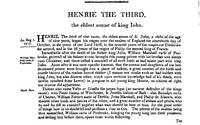
Chronicles of England, Scotland and Ireland (2 of 6): England (08 of 12)
Let's be clear from the start: this isn't a novel with a single plot. Raphael Holinshed's 'Chronicles' is a massive, collaborative project from the 1570s that aimed to document the history of Britain. This particular section focuses on England, and it reads like a grand, sprawling, and occasionally messy conversation. It stitches together everything from the arrivals of mythical founders like Brutus of Troy, through the Roman occupation and the Anglo-Saxon kingdoms, right up to the more recent Plantagenet and Tudor monarchs. Think of it as a giant scrapbook compiled by several writers, where sober records of tax laws sit right next to dramatic tales of royal betrayal and folklore about giants.
The Story
There is no traditional 'story' in the way we think of it today. Instead, Holinshed and his team present a year-by-year, reign-by-reign account. You'll get lists of kings, descriptions of battles, notes on famines and plagues, and accounts of parliamentary acts. But woven into this administrative detail are the narratives that captured the Elizabethan imagination: the murder of Thomas Becket, the adventures of Richard the Lionheart, the tragic reign of Richard II, and the brutal conflicts of the Wars of the Roses. It's a raw, unvarnished, and multi-voiced attempt to capture a national identity, complete with its triumphs, sins, and founding myths.
Why You Should Read It
You read this for the vibe, not for a streamlined narrative. The magic is in seeing history before it was fully sanitized and separated from legend. The prose has a direct, earnest quality that can be gripping. When it describes a battle, you feel the chaos. When it recounts a rumor about a king's death, you sense the political uncertainty of the time. Most fascinatingly, you're seeing the source material that shaped a culture. You can literally spot the passages that inspired Shakespeare's most famous scenes. It gives you a profound appreciation for how stories become history and how history, in turn, becomes the stories we tell about ourselves.
Final Verdict
This is not for the casual beach reader. It's perfect for history enthusiasts who want to go beyond modern summaries and get their hands on the primary source, for literature fans curious about Shakespeare's inspiration, and for anyone fascinated by how nations craft their own origin stories. Approach it like an archaeological dig: sift through the sections, enjoy the unexpected finds (like a random description of a two-headed calf), and appreciate it as a monumental, human endeavor to understand the past. It's a challenging but uniquely rewarding experience.
There are no legal restrictions on this material. Preserving history for future generations.
Ashley Martinez
10 months agoThis digital copy caught my eye due to its reputation, the inclusion of diverse viewpoints strengthens the overall narrative. Thanks for making such a high-quality version available.
William Lee
1 year agoAfter a thorough walkthrough of the table of contents, the breakdown of complex theories into digestible segments is masterfully done. A solid investment for anyone's personal development.
Barbara Thomas
8 months agoThe digital index is well-organized, making research much faster.
Matthew Thompson
3 months agoSolid information without the usual fluff.





Joseph Moore
2 years agoRight from the opening paragraph, the cross-referencing of different chapters makes it a great study tool. A solid investment for anyone's personal development.