
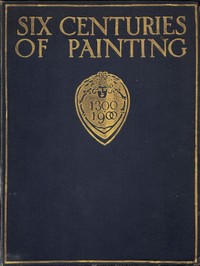
Six Centuries of Painting by Randall Davies
Randall Davies's Six Centuries of Painting is exactly what it says on the tin: a guided walk through Western art from the 14th to the 19th century. But don't let the straightforward title fool you. This isn't a dry encyclopedia. Davies writes like the most enthusiastic docent you've ever met, eager to point out what makes each period special.
The Story
There's no fictional plot, but there is a clear narrative: the story of painting itself. Davies starts in Italy with the early Renaissance, when art woke up from its medieval style and began trying to capture the real world—human emotions, believable space, and light. He then follows this thread north, exploring how artists in Flanders and Germany put their own spin on these ideas. The book marches through the grand drama of the Baroque, the elegance of the Rococo, and the stern ideals of Neoclassicism. It culminates with the 19th century's revolutions: the Romantic focus on feeling, the Realist focus on everyday life, and finally, the Impressionist break with tradition that changed everything. Davies connects these movements, showing how each one was a reaction to what came before.
Why You Should Read It
I love this book because it gave me a framework. Before reading it, I liked paintings, but they often felt like isolated beautiful objects. Davies showed me the links. He explains how technical advances, like oil paint, changed what artists could do. He talks about how society—the rise of the middle class, scientific discovery—shaped what artists wanted to paint. You finish a chapter and suddenly a whole section of the museum makes more sense. His writing is clear and personal, full of clear opinions about which artists he thinks are brilliant and why. It feels like learning from a friend who's just really, really excited about art.
Final Verdict
This is the perfect book for anyone who wants to go from casually enjoying art to genuinely understanding it. It's for the museum-goer who wants to know the context behind the canvas, the student looking for a readable overview, or the curious reader who just loves a good story about human creativity. It's not an exhaustive academic text, and that's its strength. It's a welcoming, insightful first step into a rich and wonderful world.
You are viewing a work that belongs to the global public domain. It is now common property for all to enjoy.
Joshua Anderson
1 year agoFinally a version with clear text and no errors.
James Davis
1 year agoHaving read this twice, the depth of research presented here is truly commendable. Don't hesitate to start reading.
Emma Taylor
1 year agoFast paced, good book.
Melissa Smith
1 year agoI had low expectations initially, however the clarity of the writing makes this accessible. Absolutely essential reading.



Sarah Brown
3 months agoHaving read the author's previous works, the data points used to support the main thesis are quite robust. I appreciate the effort that went into this curation.