
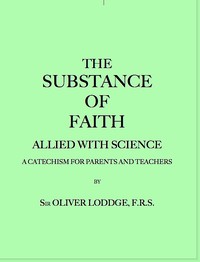
The Substance of Faith Allied with Science (6th Ed.) by Sir Oliver Lodge
This isn't a novel with a plot, but the 'story' here is an intellectual and cultural one. Sir Oliver Lodge, a real-life physicist famous for his work on radio waves, wrote this book at a time when science and religion were often seen as locked in a fight to the death. The book is his direct response. He lays out his case that the two worlds can, and should, coexist. He uses scientific concepts of his day (like the ether, or energy) to suggest how a spiritual reality might function. A huge part of the book is also dedicated to discussing evidence for life after death, particularly through the then-popular study of psychic phenomena and séances, which he took very seriously.
Why You Should Read It
You should read this not as a source of modern scientific facts, but as a fascinating historical document. Lodge's voice is sincere, thoughtful, and deeply concerned. You can feel his desire to comfort and provide a rational basis for hope. It’s incredibly revealing of the anxieties and hopes of the Edwardian era. For me, the most compelling parts weren't his specific arguments about ether, but his broader plea for intellectual humility—the idea that science describes the 'how' of the universe, but maybe not the ultimate 'why.' It’s a perspective that feels refreshingly open-minded, even if some of the examples he uses are dated.
Final Verdict
This book is perfect for history buffs, especially those interested in the history of science or Victorian/Edwardian thought. It’s also great for anyone who enjoys pondering the big questions about science and spirituality. If you're looking for a definitive, modern argument, this isn't it. But if you want to spend time inside the mind of a brilliant, compassionate scientist from over a century ago, watching him try to mend a fracture in the human understanding of the world, it’s a completely unique and absorbing experience. Approach it with curiosity, not for answers, but for the profound questions it represents.
You are viewing a work that belongs to the global public domain. Access is open to everyone around the world.
Kimberly Miller
9 months agoThe information is current and very relevant to today's needs.
David Jones
10 months agoThe layout of the digital version made it easy to start immediately, the attention to detail regarding the core terminology is flawless. I'm glad I chose this over the other alternatives.
Robert Smith
1 year agoThe clarity of the concluding remarks is very professional.
Susan Johnson
2 years agoIf you're tired of surface-level information, the structural organization allows for quick referencing of key points. I'll be recommending this to my students and colleagues alike.

Richard White
11 months agoThis digital copy caught my eye due to its reputation, the historical context mentioned in the early chapters is quite enlightening. I am looking forward to the author's next publication.