
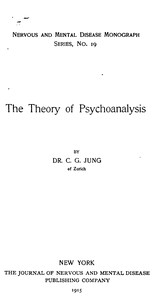
The Theory of Psychoanalysis by C. G. Jung
Let's be clear: this isn't a novel with a plot. The 'story' here is an intellectual adventure. Carl Jung, once Freud's chosen heir, starts giving a series of lectures in 1912. He sets out to explain Freudian psychoanalysis, but as he talks, you can feel him getting restless. He walks us through the basics—dreams, repression, the Oedipus complex—but then he starts adding footnotes, raising eyebrows, and pointing at the cracks. The narrative arc is Jung's own mind diverging from the path Freud laid out. He can't ignore the patterns he sees in ancient art, world religions, and the dreams of his patients that don't fit the purely personal, sexual model. The book chronicles his struggle to honor Freud's groundbreaking work while honestly following where his own observations lead him. It's the story of a theory in crisis, and a thinker on the brink of a revolution.
Why You Should Read It
I found this book incredibly humanizing. Jung isn't presenting a polished, final product. He's thinking out loud, and his passion is contagious. You get to see the raw material of his ideas before they became the well-known '-isms.' His respect for Freud is obvious, but so is his intellectual honesty. When he talks about the 'libido' not just as sexual energy but as a general life force, it feels like a door swinging open. This book helped me understand that psychology isn't just about fixing what's broken; for Jung, it was about understanding the full, mysterious scope of human potential. Reading it feels less like studying and more like eavesdropping on a genius having a major breakthrough.
Final Verdict
This is not for the absolute beginner looking for a simple intro to Jung. It's perfect for the curious reader who has a basic grasp of Freud and wants to see the 'what happened next.' Think of it as essential backstory. If you enjoy biographies of scientists, origin stories of big ideas, or just watching a brilliant mind at a turning point, you'll find this fascinating. It's a challenging but rewarding read for anyone interested in the history of how we think about thinking, and the moment one of psychology's great rebels found his voice.
There are no legal restrictions on this material. Enjoy reading and sharing without restrictions.
Elizabeth Jackson
11 months agoHaving followed this topic for years, I can say that the evidence-based approach makes it a very credible source of information. It cleared up a lot of the confusion I had previously.
Richard Lopez
2 years agoA must-have for graduate-level students in this discipline.
Linda Jones
1 year agoFast paced, good book.
Joseph Nguyen
1 year agoAfter hearing about this author multiple times, the author's voice is distinct and makes complex topics easy to digest. One of the best books I've read this year.
Emily White
9 months agoFinally found a version that is easy on the eyes.