About 331 minutes
Under King Henry's Banners: A story of the days of Agincourt — Story, Setting & Ideas
Historical Psychological Social Fiction
76,088 recorded words. 15 minutes difference from this book's estimate.
View Gutenberg source #55364
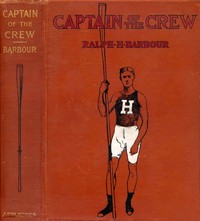
For Captain of the Crew — Edition Insights, the stored edition analysis reports 72,635 words, 5 hr 16 min estimated reading time, and 30 detected text sections.
The text analysis averages about 16.3 words per sentence, while the detected sections provide another way to judge how the source is divided.
Project Gutenberg metadata also associates the work with “Schools -- Juvenile fiction,” connecting these edition facts with the source record’s subject description.
Explore this collection
These alternatives are selected using recorded categories and estimated reading time.
About 331 minutes
Historical Psychological Social Fiction
76,088 recorded words. 15 minutes difference from this book's estimate.
View Gutenberg source #55364About 300 minutes
Historical Psychological Social Fiction
68,820 recorded words. 16 minutes difference from this book's estimate.
View Gutenberg source #46537About 295 minutes
Historical Psychological Social Fiction
67,704 recorded words. 21 minutes difference from this book's estimate.
View Gutenberg source #50914Search stored excerpts and compare books → Choose by your preferences →
Choices use stored catalog measurements. Estimates vary with reading speed. A shared category is a catalog label, not a claim that two books have the same argument or literary quality.
Search reads excerpt text stored with this catalog and links to its associated Gutenberg record. The connection is stored in the site database; this tool does not recheck that every excerpt is word-for-word identical to that external record. Excerpt search does not cover every chapter and does not verify historical publication dates.
Catalog snapshot checked: 2026-09-26. Coverage: 97 public books, 97 available source excerpts.
Calculated from edition completeness, EPUB availability, text structure and catalogue metadata. Not a user rating.
Total of 100 points, scaled to a 2.5-5.0 range. Editions with an empty description or a missing EPUB file are not scored.
Public-domain source text
The source text is kept in the dedicated reader, separate from this catalogue record and its commentary.
Ralph Henry Barbour opens Captain of the Crew with a frontispiece that captures a moment of high tension—a character cries “Your promise!”—but the novel’s real drama lies in its careful calibration of dialogue and physical detail. Barbour’s prose is brisk and functional, yet he invests considerable effort in differentiating his characters through their speech. The English newcomer Trevor, for instance, uses phrases like “the dickens” and “bally machines,” marking him as an outsider to the American Hillton Academy. Meanwhile, Dick Hope’s more measured replies—such as “I gathered as much”—reveal a composed, observant protagonist. These linguistic choices do not merely decorate the text; they establish social dynamics and cultural friction before any rowing race begins.
Barbour uses dialect sparingly but deliberately. Trevor’s British idioms—“right smart,” “the beggar doesn’t show up,” “any old stroke will do me”—set him apart from the American boys, who speak in a more neutral, colloquial register. The author does not overplay this contrast; instead, he lets it emerge naturally in conversation. When Trevor critiques the local rowing style, saying “you haven’t any body-swing; you make a chap’s legs do it all,” his phrasing carries both technical observation and cultural judgment. Dick’s reply—“Well, you must mention that to Kirk next Saturday”—deflects with dry humor, showing how Barbour uses dialogue to advance character relationships without heavy exposition.
Barbour’s descriptions of Malcolm Kirk, the head coach, are notably precise. He is “a man of medium height, approaching forty years of age, with a good but not exaggerated breadth of chest and shoulder, and very serious and steady black eyes.” The qualifier “not exaggerated” is telling: Barbour avoids the stock athletic hero physique, instead grounding Kirk in realistic proportions. His manner is “contained and rather grave,” and he possesses a “widely noted habit of keeping his own mind and every one else’s fixed firmly for the time on” the task at hand. This combination of physical and behavioral detail makes Kirk feel like a known type—the competent, slightly stern coach—without resorting to cliché.
The excerpts show Barbour’s interest in the technical vocabulary of rowing, but he embeds it in natural banter. When Trevor complains about “those bally machines” making his arms longer, Dick responds with a factual question: “How did you get on to-day?” The shift from complaint to report mirrors real locker-room conversation. Barbour also uses the rowing stroke as a metaphor for difference: Trevor notes the American stroke lacks “body-swing,” while Dick counters that they are supposed to row “the English stroke.” This exchange does more than inform; it dramatizes the tension between tradition and adaptation, a theme that likely runs through the novel.
Barbour anchors the story in a specific time and place through small environmental cues. The characters walk “in the teeth of a northwest gale,” and the coach arrives during “a heavy snow-storm that well-nigh blocked the roads.” These details are not merely atmospheric; they affect plot and character. The question of when the crew can get onto the river depends on ice, and Kirk’s supposed arrangement with “the weather man” is a wry nod to the coach’s control—or lack thereof. Barbour’s setting is functional, but his seasonal markers give the narrative a grounded, seasonal rhythm that mirrors the school year’s progression toward the June race.
Readers attentive to Barbour’s craft will notice how he balances multiple registers: the formal diction of the introduction, the colloquial ease of the boys’ talk, and the measured prose of descriptive passages. The novel’s interest in “honesty and simplicity in sports,” as stated in the preface, is enacted through these stylistic choices rather than merely asserted. For those studying early twentieth-century school fiction, Captain of the Crew offers a case study in how dialogue and description can carry thematic weight without sacrificing narrative momentum.
There’s something comforting in how Barbour lets a boy’s voice carry his whole character, the way a drawl or a hurried phrase reveals more than any description. It reminds me of slipping back into Mildred at Roselands, where quiet speech and small gestures do the same work. Old books hold these gentle echoes Mildred at Roselands A Sequel to Mildred Keith — Key Ideas to Explore, and I keep returning to them like familiar rooms.
Answer a few questions and save a private reflection on this device.