About 198 minutes
The Girl Next Door — Key Ideas to Explore
Historical Psychological Social Fiction
45,536 recorded words. 4 minutes difference from this book's estimate.
View Gutenberg source #39896
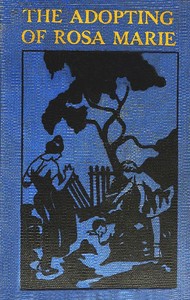
The Adopting of Rosa Marie (A Sequel to Dandelion Cottage) — Inside the Classic can be approached with a clearer sense of reading commitment from its source measurements: 46,404 words, 3 hr 22 min estimated reading time, and 6 detected text sections.
The text analysis averages about 13.2 words per sentence, while the detected sections provide another way to judge how the source is divided.
Project Gutenberg metadata also associates the work with “Humanitarianism -- Juvenile fiction,” connecting these edition facts with the source record’s subject description.
Explore this collection
These alternatives are selected using recorded categories and estimated reading time.
About 198 minutes
Historical Psychological Social Fiction
45,536 recorded words. 4 minutes difference from this book's estimate.
View Gutenberg source #39896About 207 minutes
Historical Psychological Social Fiction
47,426 recorded words. 5 minutes difference from this book's estimate.
View Gutenberg source #45497About 231 minutes
Historical Psychological Social Fiction
52,914 recorded words. 29 minutes difference from this book's estimate.
View Gutenberg source #54737Search stored excerpts and compare books → Choose by your preferences →
Choices use stored catalog measurements. Estimates vary with reading speed. A shared category is a catalog label, not a claim that two books have the same argument or literary quality.
Search reads excerpt text stored with this catalog and links to its associated Gutenberg record. The connection is stored in the site database; this tool does not recheck that every excerpt is word-for-word identical to that external record. Excerpt search does not cover every chapter and does not verify historical publication dates.
Catalog snapshot checked: 2026-09-26. Coverage: 97 public books, 97 available source excerpts.
Calculated from edition completeness, EPUB availability, text structure and catalogue metadata. Not a user rating.
Total of 100 points, scaled to a 2.5-5.0 range. Editions with an empty description or a missing EPUB file are not scored.
Public-domain source text
The source text is kept in the dedicated reader, separate from this catalogue record and its commentary.
The four girls of Dandelion Cottage return, but their new project—adopting a toddler named Rosa Marie—quickly reveals a gap between romanticized caregiving and its messy reality. The narrative voice, brisk and lightly ironic, tracks their efforts through concrete details: Mabel’s lemon-colored gloves that are too small, Jean’s repeated reminders to her brother Wallace about shoe polish, and the careful choreography of a formal call that goes awry. These small frictions accumulate into a portrait of childhood earnestness colliding with adult constraints.
The excerpt from Chapter XVIII dwells on the girls’ preparations for a call on Henrietta Bedford. Mabel’s struggle with gloves becomes a set piece: her mother works one hand, her father the other, while rejected pairs litter the floor. The gloves are “lemon-colored frights,” a gift, and too small—yet Mabel must wear them. Dr. Bennett quips that he would “rather tackle a case of smallpox” than finish the job. The scene underscores how social rituals demand physical discomfort and parental labor. Jean’s repeated pleas for Wallace to black her shoes, met with his growled “nineteen times,” similarly show that even minor preparations require negotiation within households. Once dressed, the girls walk stiffly, Mabel’s conspicuous gloves making her “very much on her mind.” Rankin uses these material details to expose the effort behind polished appearances.
The catalog lists Rosa Marie as “The Unreturnable Baby,” and the chapter titles hint at a trajectory: “Borrowed Babies,” “Returning Rosa Marie,” and “The Dark Secret.” The girls’ initial enthusiasm for mothering an Indian baby is undercut by the practical difficulties of toddler care. The frontispiece caption—“My soul, what are you, anyway?”—suggests a moment of exasperation or wonder. The text does not reveal whether Rosa Marie is successfully returned, but the tension between the girls’ desire to help and the baby’s stubborn presence drives the plot. The contrast between their orderly plans (formal calls, birthday parties) and the chaos of childcare (a baby who merges with the sidewalk, a fire) creates a pattern of thwarted intentions. Rankin’s humor emerges from this mismatch: the girls are “decidedly depressed” in their Sunday best, not triumphant.
The story’s setting—Lakeville, with its network of families—emphasizes that children do not act alone. Aunty Jane prepares clothes, Dr. Bennett wrestles with gloves, Wallace blackens shoes under protest. Even the janitor Simmons is listed as “An Unappreciated Hero.” The girls’ agency is real but constrained by adult schedules, sibling patience, and material limits. Bettie’s father, a clergyman with “more children than money,” must remember to do cards. Mabel’s mother and father both intervene in her dressing. These interactions show that the girls’ adventures depend on a web of reluctant or willing helpers. The formal call on Henrietta Bedford—a “new girl”—introduces another household dynamic, one where French recitation and social standing matter. Rankin’s focus on these domestic negotiations gives the book its texture: not a simple tale of adoption, but a study of how children navigate the adult world through small, concrete transactions.
Readers familiar with Dandelion Cottage will find the same four girls, but the sequel shifts focus from their shared space to their shared responsibility. Pay attention to the recurring motif of hands—gloved, inky, or carrying chocolate cups—as a measure of control and its loss. The humor lies not in grand events but in the friction between intention and outcome, a pattern that rewards close reading of the girls’ interactions with parents, siblings, and each other.
There’s a tenderness in watching those four girls believe earnest planning will tame Rosa Marie’s chaos, until the baby resists return and the gloves strain. It reminded me, quietly, of the plodding earnestness of Bouvard and Pécuchet: A Tragi-comic Novel of Bourgeois Life, part 2 — A Reader’s Guide—both, in their way, tender defeats against the lovely mess of living.
A brief reflection can help important ideas stay with you longer.