About 294 minutes
Leila at Home a continuation of Leila in England — Story, Setting & Ideas
Historical Psychological Social Fiction
67,568 recorded words. 15 minutes difference from this book's estimate.
View Gutenberg source #49220
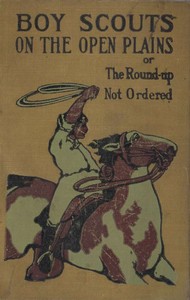
The catalog record for Boy Scouts on the Open Plains; Or, The Round-Up Not Ordered — Context and Discussion provides practical reading context through 64,088 words, 4 hr 39 min estimated reading time, and 22 detected text sections.
The text analysis averages about 21.6 words per sentence, while the detected sections provide another way to judge how the source is divided.
Project Gutenberg metadata also associates the work with “Boy Scouts of America -- Juvenile fiction,” connecting these edition facts with the source record’s subject description.
Explore this collection
These alternatives are selected using recorded categories and estimated reading time.
About 294 minutes
Historical Psychological Social Fiction
67,568 recorded words. 15 minutes difference from this book's estimate.
View Gutenberg source #49220About 295 minutes
Historical Psychological Social Fiction
67,704 recorded words. 16 minutes difference from this book's estimate.
View Gutenberg source #50914About 263 minutes
Historical Psychological Social Fiction
60,378 recorded words. 16 minutes difference from this book's estimate.
View Gutenberg source #53637Search stored excerpts and compare books → Choose by your preferences →
Choices use stored catalog measurements. Estimates vary with reading speed. A shared category is a catalog label, not a claim that two books have the same argument or literary quality.
Search reads excerpt text stored with this catalog and links to its associated Gutenberg record. The connection is stored in the site database; this tool does not recheck that every excerpt is word-for-word identical to that external record. Excerpt search does not cover every chapter and does not verify historical publication dates.
Catalog snapshot checked: 2026-09-26. Coverage: 97 public books, 97 available source excerpts.
Calculated from edition completeness, EPUB availability, text structure and catalogue metadata. Not a user rating.
Total of 100 points, scaled to a 2.5-5.0 range. Editions with an empty description or a missing EPUB file are not scored.
Public-domain source text
The source text is kept in the dedicated reader, separate from this catalogue record and its commentary.
The opening chapter of Boy Scouts on the Open Plains immediately establishes a pattern of movement and transition. The four scouts, leading pack burros, descend from a rocky mountain pass into the Nevada low country, their dialogue marking the shift from arduous climbing to the promise of open plains. This journey from high to low, from constraint to expanse, recurs throughout the excerpts, often signaled by changes in terrain or the characters' physical exertion. The narrative voice, filtered through the scouts' observations, emphasizes the landscape as both obstacle and spectacle.
The book's structure is built around successive movements: from mountain to plain, from ranch to range, from camp to round-up. Each chapter title—"Over the Edge," "The Wolf Pack," "Stampeding the Prize Bunch"—marks a shift in location or action. Within chapters, the scouts frequently ride out in detachments, as when "Harry and Jack were to accompany Skinny's bunch, while Jimmy and Ned meant to be with Chunky." These divisions create parallel threads of movement, allowing the narrative to follow multiple groups across the same landscape. The repeated phrase "heading for" or "making for" a specific place (e.g., Washout Coulie) reinforces the sense of purposeful travel. Even when the scouts pause, as at the campfire in Chapter V, the conversation often turns to the next leg of the journey.
One of the most persistent images in the excerpts is the calico pony ridden by Jimmy. Described as "the most unruly one of the quartette," the pony demands constant attention: Jimmy must "manage the beast so as to keep his seat in the cowboy saddle." The pony's obstreperousness appears at key moments, such as when Jimmy tries to continue a conversation with Ned but is forced to focus on riding. This recurring struggle highlights Jimmy's inexperience and the physical demands of range life. The pony is not merely a mode of transport but a source of tension and comedy, its behavior mirroring the unpredictable nature of the plains themselves. The image of the calico pony also contrasts with the more competent riders, subtly reinforcing the hierarchy among the scouts.
Ralphson uses dialogue to convey character and advance the plot. Jimmy's Irish-inflected speech—"'Tis meself that calls this pretty tough mountain climbin'"—sets him apart from the others and provides a distinct voice. Ned, the scout master, speaks in measured, instructive tones, often explaining geography or strategy: "After we cross this divide it's going to be the kind of travel you mention, all on the level." The exchanges between the boys are laced with colloquialisms and exclamations, creating a sense of camaraderie. In contrast, the villainous Ally Sloper is described as having a "double nature," and Ned's internal monologue—"He'll bear close watching"—reveals the underlying tension. The dialogue also serves to convey information about the setting, as when Ned explains the term "Washout Coulie" to Jimmy, blending education with narrative.
The narrative frequently shifts between wide-angle views of the landscape and close-up focus on individual characters. Early in the excerpt, the scouts gaze at "the whole country spread out like a big map," a panoramic perspective that emphasizes their smallness. Later, the action narrows to the immediate challenges of riding and rounding up cattle. These shifts in scale mirror the scouts' alternating roles as observers and participants. The movement from the high vantage point of the mountain pass to the dust clouds of the plains is echoed in the prose: descriptions of "little clouds of alkali dust" give way to the intimate struggle with the calico pony. This oscillation between the vast and the particular keeps the reader aware of both the epic scope of the setting and the personal stakes of the characters.
Readers attentive to the book's structure will notice how each chapter builds on the previous one through a series of departures and arrivals. The recurring images—the calico pony, the dust clouds, the canyon walls—anchor the narrative in a tangible world. Pay particular attention to the moments when the scouts pause to observe their surroundings; these interludes often foreshadow the action to come. The interplay between dialogue and description offers a window into the characters' relationships and the tensions that drive the plot.
There’s something about those old campground nights, the way a story lingers after the fire dies down—Boy Scouts on the Open Plains left me with that quiet patience, watching a calico pony carry meaning between scenes. This other one holds a similar tenderness, a hush around curiosity, if you ever want that feeling again. It waits like a familiar hammock. The Slipper Point Mystery — Reading Companion feels like that.
Create a short personal record of your experience with this book.