About 60 minutes
Ourika — Context and Discussion
Science Fiction Utopias
13,737 recorded words. 3 minutes difference from this book's estimate.
View Gutenberg source #49315
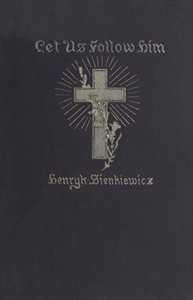
This digital edition of Let us follow Him — Context and Discussion is described by source-level measurements including 14,301 words, 1 hr 3 min estimated reading time, and 2 detected text sections.
The text analysis averages about 19.6 words per sentence, while the detected sections provide another way to judge how the source is divided.
Project Gutenberg metadata also associates the work with “Jesus Christ -- Crucifixion -- Fiction,” connecting these edition facts with the source record’s subject description.
Explore this collection
These alternatives are selected using recorded categories and estimated reading time.
About 60 minutes
Science Fiction Utopias
13,737 recorded words. 3 minutes difference from this book's estimate.
View Gutenberg source #49315About 53 minutes
Science Fiction Utopias
12,123 recorded words. 10 minutes difference from this book's estimate.
View Gutenberg source #39657About 53 minutes
Science Fiction Utopias
11,981 recorded words. 10 minutes difference from this book's estimate.
View Gutenberg source #43730Search stored excerpts and compare books → Choose by your preferences →
Choices use stored catalog measurements. Estimates vary with reading speed. A shared category is a catalog label, not a claim that two books have the same argument or literary quality.
Search reads excerpt text stored with this catalog and links to its associated Gutenberg record. The connection is stored in the site database; this tool does not recheck that every excerpt is word-for-word identical to that external record. Excerpt search does not cover every chapter and does not verify historical publication dates.
Catalog snapshot checked: 2026-09-26. Coverage: 97 public books, 97 available source excerpts.
Calculated from edition completeness, EPUB availability, text structure and catalogue metadata. Not a user rating.
Total of 100 points, scaled to a 2.5-5.0 range. Editions with an empty description or a missing EPUB file are not scored.
Public-domain source text
The source text is kept in the dedicated reader, separate from this catalogue record and its commentary.
The story opens with a catalogue of patrician excess: Cinna, a Roman soldier turned connoisseur, surrounds himself with Grecian wines, Numidian mice, and Etruscan vases. This inventory of luxury—fish from the Red Sea, white ptarmigans from the Dnieper—establishes a world of material saturation that will contrast sharply with the spare landscape of Golgotha. The narrator notes that Cinna 'used and abused' everything Rome offered, a phrase that hints at a moral vacuum beneath the surface.
Yet the opening also introduces a key structural device: Antea's illness. She suffers from 'terrible visions' that drain life from her, and the narrative soon ties these to the approach of midday. This recurring detail—the dread of noon—becomes a marker of her psychological state and a thread that leads directly to the Crucifixion scene.
The first chapter devotes considerable space to Cinna's possessions and habits, but these details are not mere background. The narrator specifies that Cinna 'had instilled into himself, or had perhaps even roused in himself, a love for the beautiful'—a phrasing that suggests artifice rather than genuine passion. His connoisseurship is performed among 'toothless old men' who wear rose wreaths, a grotesque image that undercuts the elegance. This accumulation of objects—Corinthian statues, Arabian perfumes, Attic pitchers—creates a world of surfaces, where even love of beauty is a kind of consumption.
When Antea's illness appears, it disrupts this material plenitude. The contrast is not stated but felt: the same patrician who commands exotic foods cannot protect his wife from her visions. The opening thus sets up a crisis that luxury cannot solve, preparing the reader for the turn toward Jerusalem and the Nazarene's teaching.
Antea's illness is described through a specific temporal marker: the approach of midday brings 'terror of dreadful visions.' This detail recurs in the later excerpt, where she is 'calmer, less frightened than usual at the approach of midday' after hearing about the Nazarene. The repetition ties her psychological state to a daily cycle, making the Crucifixion—which occurs at the sixth hour—a moment of potential release.
The narrator explains that Antea's fear stems from death's meaninglessness: 'to lose Cinna, to lose her father, to lose the world, to lose love, for a cold, empty gloom.' This is not abstract philosophy but a concrete dread of losing specific relationships. The Nazarene's teaching offers an alternative: death as 'light for eyes that are quenching.' The text does not claim Antea is cured, but her attention shifts from her own misery to the condemned man's promise, a movement that guides the reader toward the theological core of the story.
The later excerpt describes the procession moving from Jerusalem to Golgotha. The narrative eye is precise: Antea watches from a height, the crowd 'seemed lost on those stony' expanses. The centurion Rufilus walks beside Cinna, and soldiers clear a path. These details ground the scene in a specific geography—'gray stone expanses'—that echoes the earlier contrast with Rome's luxury.
More striking is the internal shift. Antea's thoughts turn to the Nazarene's teaching: 'he enjoined love as the highest virtue, who blessed people when they were lashing him.' The narrator does not describe the Crucifixion itself in the excerpt, but Antea's meditation on the teacher's consistency—'if he spoke the truth, let death be blessed'—becomes the emotional center. The reader is positioned not as a witness to the event but as a participant in Antea's dawning hope, a choice that shapes the novella's devotional tone.
The narrative voice in these excerpts is measured, almost reportorial, even when describing Antea's interior state. Phrases like 'the mind and heart of the poor sick woman cleaved with all their strength' convey sympathy without sentimentality. The translator, Jeremiah Curtin, maintains a formal register that suits the historical setting but allows moments of directness: 'No one up to that time had blessed death.'
This voice also handles exposition economically. The reader learns of the Nazarene's teaching through Antea's reasoning, not through direct quotation of scripture. The effect is to make belief a process of deduction: 'if he spoke the truth, let death be blessed.' The novella thus guides the first reader not by narrating the Crucifixion in detail but by tracing how one character arrives at faith. The structure—from luxury to illness to hope—mirrors this intellectual and emotional journey.
The excerpts reveal a story that builds its drama through contrast and interior movement rather than action. Readers attentive to the opening's inventory of objects will see those details pay off in the spareness of Golgotha. Antea's midday visions, introduced early, become a lens for understanding the Crucifixion's meaning. The novella does not assume familiarity with the Gospel accounts; instead, it constructs a path from Roman skepticism to the threshold of belief, one that a first reader can follow without prior knowledge of the source material.
Reading about Sienkiewicz’s Roman luxury and Antea’s midday visions, I remembered sitting on a park bench years ago, the sun too bright, lost in Monsieur Bergeret in Paris — A Closer Reading. Both books felt like watching someone hold a mirror to a crowd, then quietly turn it on themselves. That strange intimacy—public spectacle becoming private ache—has never quite left me.
Save your reaction, strongest insight, and memorable passage.