About 322 minutes
Stories from the Iliad — Reading Notes
Science Fiction Utopias
73,946 recorded words. 19 minutes difference from this book's estimate.
View Gutenberg source #43993
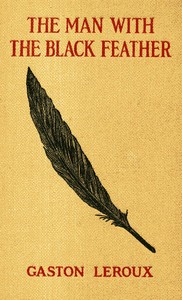
The catalog record for The Man with the Black Feather — Edition Insights provides practical reading context through 69,531 words, 5 hr 3 min estimated reading time, and 29 detected text sections.
The text analysis averages about 16.6 words per sentence, while the detected sections provide another way to judge how the source is divided.
Project Gutenberg metadata also associates the work with “Reincarnation -- Fiction,” connecting these edition facts with the source record’s subject description.
Explore this collection
These alternatives are selected using recorded categories and estimated reading time.
About 322 minutes
Science Fiction Utopias
73,946 recorded words. 19 minutes difference from this book's estimate.
View Gutenberg source #43993About 279 minutes
Science Fiction Utopias
64,107 recorded words. 24 minutes difference from this book's estimate.
View Gutenberg source #49414About 274 minutes
Science Fiction Utopias
62,995 recorded words. 29 minutes difference from this book's estimate.
View Gutenberg source #56215Search stored excerpts and compare books → Choose by your preferences →
Choices use stored catalog measurements. Estimates vary with reading speed. A shared category is a catalog label, not a claim that two books have the same argument or literary quality.
Search reads excerpt text stored with this catalog and links to its associated Gutenberg record. The connection is stored in the site database; this tool does not recheck that every excerpt is word-for-word identical to that external record. Excerpt search does not cover every chapter and does not verify historical publication dates.
Catalog snapshot checked: 2026-09-26. Coverage: 97 public books, 97 available source excerpts.
Calculated from edition completeness, EPUB availability, text structure and catalogue metadata. Not a user rating.
Total of 100 points, scaled to a 2.5-5.0 range. Editions with an empty description or a missing EPUB file are not scored.
Public-domain source text
The source text is kept in the dedicated reader, separate from this catalogue record and its commentary.
The narrative voice of The Man with the Black Feather opens with a journalist’s detached report of a mysterious visitor bearing a sandalwood box. The prose is precise and clinical: the visitor’s eyes are described as “dry, dead” and “like unmoving mirrors.” This initial tone of factual observation soon gives way to a far more erratic register as the story within the manuscripts unfolds. The shift is abrupt: from the measured pacing of a newspaper office to a scene where a character insists on cutting off his own little finger because of a contractual technicality. The language becomes pedantically logical, with characters parsing phrases like “you can cut off my finger” to determine who has the right to act. This oscillation between sober framing and absurdist detail is the book’s central stylistic device.
The opening pages establish a narrator who is a newspaperman, receiving a box from a man who speaks in an “expressionless, far-away voice.” The language is restrained: the visitor “had sat there motionless, silent, awaiting my coming, for three mortal hours.” This measured tempo contrasts sharply with the manuscript’s content. Once the narrator begins reading, the prose accelerates into frantic dialogue and physical comedy. The frame thus functions as a tonal switchboard, allowing Leroux to toggle between credible reportage and the grotesque. The sandalwood box is not merely a plot device; it is a structural hinge that licenses the narrative’s descent into the bizarre. The reader is never allowed to forget that this is a document—a bundle of manuscripts—and the editorial voice occasionally intrudes with remarks like “I had the sandalwood box opened.” This self-conscious framing keeps the fantastic elements tethered to a semblance of reality.
When Theophrastus Longuet insists on cutting off his finger, the dialogue becomes a parody of legal reasoning. He declares, “I had only said to him, ‘You can cut off my finger,’ without stipulating which finger; and I chose the finger the loss of which would inconvenience me the least.” The narrator of the manuscript, M. Lecamus, admires “this exact logic.” The scene is both violent and comic, with the Man of Light intervening to stop the act. The language here is hyper-rational, even as the situation is absurd. Leroux uses this pedantic tone to underscore the theme of possession: Cartouche’s bloodthirsty nature is expressed not through savage action alone but through a twisted adherence to contractual terms. The prose mimics the rigidity of a legal document, then undercuts it with physical farce. This technique recurs in the operation scene, where the narrator worries about “killing along with the reincarnate soul the body in which it is reincarnate.” The clinical vocabulary of psychical surgery is delivered with deadpan seriousness.
The excerpts show a marked variation in narrative speed. The opening frame moves slowly, dwelling on the visitor’s stillness and the box’s description. Once the manuscript begins, the pace quickens into rapid-fire dialogue and physical struggle. Yet even within the manuscript, the rhythm is uneven. The finger-cutting scene builds to a climax, then is abruptly halted by the Man of Light’s intervention. The operation chapter begins with a retrospective summary—“It is to M. Lecamus that we owe the account”—which slows the tempo before the procedure starts. This stop-start pacing mirrors the conflict between Theophrastus and Cartouche: the narrative lurches forward, then is pulled back by explanatory asides. Leroux also uses paragraph length to control pace: short, punchy lines like “I was wrong to put down my tomahawk” contrast with longer, expository passages. The effect is a reading experience that feels unsettled, appropriate for a story about a divided self.
Readers should pay attention to how the narrative voice shifts between the frame and the embedded manuscript, and how characters’ speech patterns reveal their allegiances. The pedantic logic of Theophrastus and the commanding tone of the Man of Light are not just quirks—they are the primary means by which the novel dramatizes the struggle between past and present selves. The excerpts suggest that the book rewards attention to its stylistic inconsistencies rather than its plot mechanics.
There’s something tender about how Leroux lets a sandalwood box hold all those fractured lives. That same quiet ache for justice—half courtroom, half barracks—drifts through A Thousand Francs Reward; and, Military Sketches — Themes and Context. Both feel less like stories, more like old letters, slightly crumpled, still warm from someone’s pocket.
Create a short personal record of your experience with this book.