About 220 minutes
The Young Circus Rider; or, the Mystery of Robert Rudd — Reading Companion
Science Fiction Utopias
50,415 recorded words. 2 minutes difference from this book's estimate.
View Gutenberg source #56056
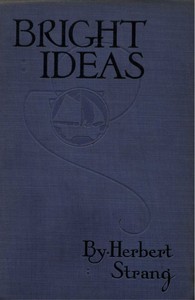
Before opening Bright Ideas: A Record of Invention and Misinvention — Story, Setting & Ideas, the edition data offers a quick orientation: 50,062 words, 3 hr 38 min estimated reading time, and 8 detected text sections.
The text analysis averages about 13.6 words per sentence, while the detected sections provide another way to judge how the source is divided.
Project Gutenberg metadata also associates the work with “Boys -- Juvenile fiction,” connecting these edition facts with the source record’s subject description.
Explore this collection
These alternatives are selected using recorded categories and estimated reading time.
About 220 minutes
Science Fiction Utopias
50,415 recorded words. 2 minutes difference from this book's estimate.
View Gutenberg source #56056About 250 minutes
Science Fiction Utopias
57,362 recorded words. 32 minutes difference from this book's estimate.
View Gutenberg source #55896About 251 minutes
Science Fiction Utopias
57,696 recorded words. 33 minutes difference from this book's estimate.
View Gutenberg source #56259Search stored excerpts and compare books → Choose by your preferences →
Choices use stored catalog measurements. Estimates vary with reading speed. A shared category is a catalog label, not a claim that two books have the same argument or literary quality.
Search reads excerpt text stored with this catalog and links to its associated Gutenberg record. The connection is stored in the site database; this tool does not recheck that every excerpt is word-for-word identical to that external record. Excerpt search does not cover every chapter and does not verify historical publication dates.
Catalog snapshot checked: 2026-09-26. Coverage: 97 public books, 97 available source excerpts.
Calculated from edition completeness, EPUB availability, text structure and catalogue metadata. Not a user rating.
Total of 100 points, scaled to a 2.5-5.0 range. Editions with an empty description or a missing EPUB file are not scored.
Public-domain source text
The source text is kept in the dedicated reader, separate from this catalogue record and its commentary.
The story opens with Bob Templeton counting coins on a bridge—eleven and ninepence—while his friend Tom Eves has seven and fivepence halfpenny. Their financial constraints immediately frame the inventive ambitions that follow: a levitator, a smoke machine, a perpetual pump, and a two-way motor. The dialogue reveals a pattern of unfinished projects and comic setbacks, as when Tom recalls Noakes smothered in soot or sprawling in a stream. The setting shifts from the bridge to a workshop, then to a telephone call where Tom impersonates a garage to deliver a message about a tender cut. These early scenes establish a rhythm of brainstorming, mishap, and improvisation that runs through the book.
The opening bridge scene is not just a meeting place but a symbolic threshold between thought and action. Bob sits on the parapet, coins spread on weather-beaten stone, while Tom leans on the bridge watching roach dart among weeds. The bridge connects their idle talk to the road beyond, where their inventions will later be tested. The parapet recurs as a perch for planning, and the stream below hints at the watery disasters that follow—Noakes being flung into a purling stream, or the cold water cure. The bridge also marks a boundary between the boys' private world of ideas and the public road where they encounter the mayor, constables, and other adults. This liminal space sets the tone for a narrative that constantly moves between interior tinkering and exterior chaos.
Two elements dominate the physical comedy: soot and water. The smoke machine produces half-consumed carbon that smothers Noakes, as shown in the frontispiece where he shakes soot from his clothes. Later, the cold water cure involves immersion, and the clipper of the road likely ends in a hedge or ditch. The illustrations reinforce this: Noakes is half obliterated by a rattling sound, riders are flung into a hedge, and a deluge of liquid mud covers the characters. These recurring images tie the inventions to messy, involuntary outcomes. The soot and water are not just accidents but consequences of the boys' bright ideas colliding with reality. The pattern suggests that each invention, however clever, will produce a physical backlash that targets the nearest authority figure.
The narrative structure alternates between indoor workshop scenes and outdoor road adventures. In the workshop, Bob and Tom discuss patents, specifications, and nozzles—the technical details of invention. But the action quickly moves to the road, where the road yacht is tested, or where they encounter Noakes and other townspeople. This back-and-forth creates a rhythm of preparation and execution, theory and pratfall. The road is where ideas become visible and vulnerable: the road yacht faces hills, bridges, and hedges; the clipper of the road collides with a boom. The telephone call in the workshop is a pivot point, connecting the private space to the public world of mayoral ceremonies and tenders. The movement is not just physical but tonal, shifting from earnest inventing to farcical mishap.
Alderman Noakes appears repeatedly as the victim of the boys' experiments. He is smothered in soot, flung into a stream, and embraced by mother earth. The illustrations show him being hauled up by the collar, tripped over wire, and hit by a boom. The text refers to him as a rascal and a hoary old Methuselah, and the boys deliberately keep him waiting or misdirect messages about his tender. Noakes is not a developed character but a functional one: he embodies adult authority and pomposity, making him the natural target for the inventors' mishaps. His repeated humiliation creates a running gag that ties the episodic chapters together. The pattern suggests that each invention will find its mark in Noakes, whether through soot, water, or collision.
Readers will find that the book's structure rewards attention to recurring details: the bridge, the soot, the water, and the mayor. The chapters are linked less by plot than by a consistent comic logic where every bright idea produces a messy consequence. The illustrations by C. E. Brock capture these moments with precise slapstick. Approach the text as a series of inventive setups and physical payoffs, and note how the boys' enthusiasm for patents and specifications contrasts with the chaotic results.
All those sooty mishaps and roadside collisions in the Templeton boys’ workshop bring back the muddled charm of invention itself. There’s a similar, quieter thrill in Military Sketches, where plans go sideways with a human touch. It’s a good feeling, remembering how even failed schemes leave a warm, lingering glow. A Thousand Francs Reward; and, Military Sketches — Themes and Context holds that same honest, tinkering spirit.
Build a private reading journal entry for this title.