About 246 minutes
Oakdale Boys in Camp — Context and Discussion
Historical Psychological Social Fiction
56,428 recorded words. 1 minutes difference from this book's estimate.
View Gutenberg source #49363
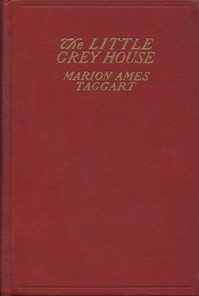
The catalog record for The Little Grey House — Reading Companion provides practical reading context through 56,734 words, 4 hr 7 min estimated reading time, and 6 detected text sections.
The text analysis averages about 17.7 words per sentence, while the detected sections provide another way to judge how the source is divided.
Project Gutenberg metadata also associates the work with “Family -- Juvenile fiction,” connecting these edition facts with the source record’s subject description.
Explore this collection
These alternatives are selected using recorded categories and estimated reading time.
About 246 minutes
Historical Psychological Social Fiction
56,428 recorded words. 1 minutes difference from this book's estimate.
View Gutenberg source #49363About 256 minutes
Historical Psychological Social Fiction
58,726 recorded words. 9 minutes difference from this book's estimate.
View Gutenberg source #38743About 232 minutes
Historical Psychological Social Fiction
53,306 recorded words. 15 minutes difference from this book's estimate.
View Gutenberg source #51686Search stored excerpts and compare books → Choose by your preferences →
Choices use stored catalog measurements. Estimates vary with reading speed. A shared category is a catalog label, not a claim that two books have the same argument or literary quality.
Search reads excerpt text stored with this catalog and links to its associated Gutenberg record. The connection is stored in the site database; this tool does not recheck that every excerpt is word-for-word identical to that external record. Excerpt search does not cover every chapter and does not verify historical publication dates.
Catalog snapshot checked: 2026-09-26. Coverage: 97 public books, 97 available source excerpts.
Calculated from edition completeness, EPUB availability, text structure and catalogue metadata. Not a user rating.
Total of 100 points, scaled to a 2.5-5.0 range. Editions with an empty description or a missing EPUB file are not scored.
Public-domain source text
The source text is kept in the dedicated reader, separate from this catalogue record and its commentary.
The Little Grey House opens with sixteen-year-old Roberta Grey declaring she will cut the overgrown grass, drawing on her father's old gloves with a "do-or-die-in-the-attempt air." This small domestic crisis immediately establishes the family's reduced circumstances and the sisters' active, humorous approach to their troubles. The catalog subjects—family, father's death, financial security—are present from the first page, but the excerpts reveal a story more concerned with the texture of daily life and the sisters' voices than with plot mechanics. The house itself, "set in the midst of a place so wholly disproportioned to its size," becomes a character, its unkempt grounds mirroring the family's precarious state.
The three Grey sisters—Roberta, Oswyth (called Wythie), and Prue—are introduced through their contrasting attitudes toward labor. Roberta is impulsive and dramatic, borrowing a lawn-mower she suspects is useless; Oswyth is reluctant but compliant, laying down her sewing with a sigh; Prue, at fourteen, jumps up eagerly. Their dialogue is quick and affectionate, with Oswyth teasing Roberta about her metaphors: "Help walk northward through the prairie, help find the house, or help cut the grass, Rob?" The narrator notes that Oswyth finds the tall grass pretty and almost regrets cutting it, while Roberta feels no such qualms. This small disagreement hints at deeper differences in temperament that may shape their responses to later hardships.
When the Grey sisters return from a river outing with the Rutherford brothers and their friend Frances, they find the house being mortgaged. The scene shifts from a peaceful natural setting—"wealth of nuts and the beautiful, peaceful spot, with its gorgeous colors, and damp, delicious odors"—to the tense interior where Prue reports the news in tears. The Rutherfords offer support, and Roberta responds with characteristic bravado: "We're going to regard you as crutches—a trifle long, perhaps, but by no means to be cut off." She compares their situation to a storybook, saying they "know when the lovely heroines are in mortal danger there's certain rescue on the next page." This self-conscious literary reference, combined with the handshake "like a fresh treaty of allegiance before going into battle," shows the characters framing their crisis through familiar narratives.
The excerpts include a pivotal moment: Prue overhears her father agreeing to mortgage the house. She reports this to her sisters in a stage whisper, her "golden head, much dishevelled" and voice husky. Oswyth asks "Already?" suggesting the decision was expected but still shocking. The catalog subject "Financial security" is thus dramatized not as abstract worry but as a concrete, hurried transaction. The father's impatience—"he seemed to lose all patience, and to want to have it over with"—contrasts with the daughters' anxious listening. The house itself, repeatedly called "the little grey house," becomes the tangible symbol of what is at stake. The excerpts do not reveal the outcome, but the emotional weight is clear: the family's home is being leveraged against an uncertain future.
Readers should attend to the way Taggart uses the house and its grounds as a barometer of the family's fortunes. The opening grass-cutting, the mortgage scene, and the river interlude all connect physical spaces to emotional states. The sisters' voices—Roberta's theatricality, Oswyth's quietness, Prue's vulnerability—are distinct and consistent. The excerpts suggest a novel that balances domestic detail with economic realism, though the full arc of the story remains unknown from these passages alone.
I think of the Grey sisters, making do with a scant lamp and a lighter teapot, yet their wit never dimming. That same steady spirit breathes through Clara's quiet turn in Mildred at Roselands A Sequel to Mildred Keith — Key Ideas to Explore, where girlhood meets courtesy under the same grave, patient sky. Both books ask how a kind heart shelters a house that is gently losing its roof.
Save your reaction, strongest insight, and memorable passage.