About 232 minutes
Marjorie Dean, Post-Graduate — Background and Themes
Historical Psychological Social Fiction
53,306 recorded words. 1 minutes difference from this book's estimate.
View Gutenberg source #51686
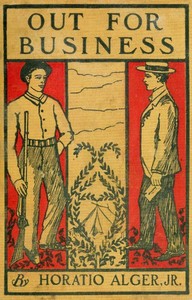
For Out for Business; or, Robert Frost's Strange Career — A Reader’s Guide, the stored edition analysis reports 52,914 words, 3 hr 51 min estimated reading time, and 6 detected text sections.
The text analysis averages about 10.8 words per sentence, while the detected sections provide another way to judge how the source is divided.
Project Gutenberg metadata also associates the work with “Self-reliance -- Juvenile fiction,” connecting these edition facts with the source record’s subject description.
Explore this collection
These alternatives are selected using recorded categories and estimated reading time.
About 232 minutes
Historical Psychological Social Fiction
53,306 recorded words. 1 minutes difference from this book's estimate.
View Gutenberg source #51686About 246 minutes
Historical Psychological Social Fiction
56,428 recorded words. 15 minutes difference from this book's estimate.
View Gutenberg source #49363About 247 minutes
Historical Psychological Social Fiction
56,734 recorded words. 16 minutes difference from this book's estimate.
View Gutenberg source #48363Search stored excerpts and compare books → Choose by your preferences →
Choices use stored catalog measurements. Estimates vary with reading speed. A shared category is a catalog label, not a claim that two books have the same argument or literary quality.
Search reads excerpt text stored with this catalog and links to its associated Gutenberg record. The connection is stored in the site database; this tool does not recheck that every excerpt is word-for-word identical to that external record. Excerpt search does not cover every chapter and does not verify historical publication dates.
Catalog snapshot checked: 2026-09-26. Coverage: 97 public books, 97 available source excerpts.
Calculated from edition completeness, EPUB availability, text structure and catalogue metadata. Not a user rating.
Total of 100 points, scaled to a 2.5-5.0 range. Editions with an empty description or a missing EPUB file are not scored.
Public-domain source text
The source text is kept in the dedicated reader, separate from this catalogue record and its commentary.
From its opening pages, Out for Business; or, Robert Frost's Strange Career presents a narrative voice shaped by two authors. The preface by Arthur M. Winfield explains that Horatio Alger Jr. began the story but, due to illness, left an outline that Winfield completed. This dual authorship is traceable in the text: Alger's characteristic moralizing and emphasis on 'hard, common sense' appear alongside Winfield's more action-oriented prose, particularly in chase scenes. The novel's language shifts between deliberate, instructive passages and brisk, dialogue-driven confrontations, creating an uneven but engaging rhythm.
The protagonist, Robert Frost, speaks with a formal, almost stilted politeness that reflects Alger's didactic style. When he assists Charles Shotmore, Robert says, 'I'll help you hold him, sir,' and later insists, 'I don't wish it' when offered payment. His language is consistently deferential and principled, reinforcing the 'high moral aim' mentioned in the preface. This voice contrasts sharply with the sharper Andy Cross, whose dialogue is marked by stammering and excuses: 'This is—er—a—a great mistake.' The contrast between Robert's steady, upright speech and Cross's evasiveness underscores the novel's moral framework, where virtue is signaled through linguistic clarity.
The excerpted chase scene demonstrates a marked shift in pace. Early passages move slowly, with Robert obtaining an address from a directory and setting off. But when Cross flees, the prose accelerates: 'Hi! stop him!' cried Shotmore. 'Police! Police!' Short, exclamatory sentences and rapid actions—'dashed into the street,' 'took up the chase'—create urgency. The pursuit ends abruptly with Cross's escape, and the pace immediately slackens into reflective dialogue. This alternation between deliberate exposition and sudden bursts of action is a recurring structural feature, likely influenced by Winfield's completion, as his other works (e.g., The Rover Boys series) favor adventure sequences.
The excerpt revolves around mistaken identity and the verification of names. Robert identifies Cross by the name 'Charles Shotmore,' and the real Shotmore confirms, 'Why, that is my name.' This motif of naming and recognition recurs throughout the passage: Robert gives his name, they shake hands, and Shotmore expresses hope of meeting again. The text lingers on the act of identification—Robert's cautious question, 'Do you know this fellow, sir?'—and the physical retrieval of the letter. These details suggest a world where trust is fragile and must be repeatedly established through verbal and documentary proof, a theme likely central to Robert's 'strange career.'
Readers attentive to shifts in tone will notice where Alger's measured instruction gives way to Winfield's faster pacing. The novel rewards those who track how Robert's steady voice navigates a world of deceptive appearances. The incomplete nature of the excerpts leaves the full arc of his career unknown, but the early chapters establish a pattern of moral testing through language and action.
Rereading the editorial notes on Out for Business, with its careful attention to Robert Frost’s quiet, measured voice, reminded me of another story where a child’s steadiness shapes the world around her. That same unhurried patience seems to live inside The Adopting of Rosa Marie (A Sequel to Dandelion Cottage) — Inside the Classic, like a familiar porch where both narratives wait to be noticed.
Your answers remain private and are stored only in this browser.