About 218 minutes
Bright Ideas: A Record of Invention and Misinvention — Story, Setting & Ideas
Science Fiction Utopias
50,062 recorded words. 59 minutes difference from this book's estimate.
View Gutenberg source #43234
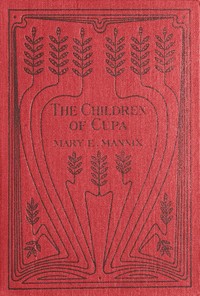
For The Children of Cupa — A Closer Reading, the stored edition analysis reports 36,404 words, 2 hr 39 min estimated reading time, and 15 detected text sections.
The text analysis averages about 12.6 words per sentence, while the detected sections provide another way to judge how the source is divided.
Project Gutenberg metadata also associates the work with “Cupeño Indians -- Juvenile fiction,” connecting these edition facts with the source record’s subject description.
Explore this collection
These alternatives are selected using recorded categories and estimated reading time.
About 218 minutes
Science Fiction Utopias
50,062 recorded words. 59 minutes difference from this book's estimate.
View Gutenberg source #43234About 220 minutes
Science Fiction Utopias
50,415 recorded words. 61 minutes difference from this book's estimate.
View Gutenberg source #56056About 95 minutes
Science Fiction Utopias
21,743 recorded words. 64 minutes difference from this book's estimate.
View Gutenberg source #49594Search stored excerpts and compare books → Choose by your preferences →
Choices use stored catalog measurements. Estimates vary with reading speed. A shared category is a catalog label, not a claim that two books have the same argument or literary quality.
Search reads excerpt text stored with this catalog and links to its associated Gutenberg record. The connection is stored in the site database; this tool does not recheck that every excerpt is word-for-word identical to that external record. Excerpt search does not cover every chapter and does not verify historical publication dates.
Catalog snapshot checked: 2026-09-26. Coverage: 97 public books, 97 available source excerpts.
Calculated from edition completeness, EPUB availability, text structure and catalogue metadata. Not a user rating.
Total of 100 points, scaled to a 2.5-5.0 range. Editions with an empty description or a missing EPUB file are not scored.
Public-domain source text
The source text is kept in the dedicated reader, separate from this catalogue record and its commentary.
The opening chapter of The Children of Cupa immediately establishes a domestic, conversational tone. The Pages debate where to take their convalescent mother, with the doctor dismissing seaside cottages as flimsy and draughty. The dialogue is brisk and opinionated, full of practical objections and solutions—camping, a cook named Charlie Dorner, the ideal mountain location. This voice, rooted in middle-class family life, sets up a contrast with the Cupeño characters introduced later.
But the narrative does not stay placid. By the later excerpts, the pace quickens sharply. A boy named William appears, whirling a dead rattlesnake on a stick. Nellie runs up in distress, her braids undone, unable to find Margarita. The language becomes urgent, with short sentences and repeated cries. Francisco, the Cupeño boy, listens for a horse's whinny that the others cannot hear—a detail that signals his attunement to the landscape. The shift from measured planning to breathless search is abrupt and effective.
The early chapters rely heavily on dialogue to advance the plot and reveal character. The Pages speak in a colloquial, slightly formal turn-of-the-century American English: “The very thing,” “I wish I could go along,” “Well, we'll see about that.” Their exchanges are polite but decisive, with the doctor’s warnings and Mr. Page’s reassurances creating a rhythm of problem and solution. This voice is comfortable, even leisurely, reflecting a family with the means to debate vacation spots.
In contrast, the Cupeño characters speak more sparingly. Francisco’s lines are often short and observant: “It is time,” “I have a thought.” When he listens for the horse, he does not argue—he simply states what he hears. The narrative does not translate his interior thoughts; instead, it shows his actions. This asymmetry in dialogue length and directness creates a cultural distance that the story does not bridge with explanation. The reader must infer Francisco’s knowledge from his deeds, not his words.
The pacing in the later excerpt undergoes a marked change. The scene begins with a mocking voice—“Ay! ay!”—and the appearance of William with a dead rattlesnake. The prose tightens: “There was a crashing through the bushes,” “Much to their surprise, he neither paused nor sought to molest them.” Then Nellie’s arrival: hat off, braids loose, panting. The sentences become shorter, more fragmented: “I can not find 'Rita,” “She did not answer,” “And I can't find her at all.”
This acceleration is not just in action but in sensory detail. The boys “traverse the broad, grassy plateau” and note its bareness—a detail that makes Margarita’s disappearance more puzzling. Francisco’s decision to go alone “quietly through the bushes” introduces a moment of suspense. The narrative slows again when he returns, elated, but the tension does not fully dissipate. The reader is left with the question of Hernando’s intentions, unresolved in the excerpt.
Two motifs recur across the excerpts: snakes and listening. The rattlesnake appears first as a weapon—William whirls it on a stick—and later as a threat in the bushes, where Francisco takes “a stick for the snakes” before entering the thicket. The snake is both real and symbolic, a sign of danger that the children must navigate.
Listening is equally important. Francisco hears the horse’s whinny three times while Walter and Nellie hear nothing. This detail underscores his connection to the environment, a skill the other children lack. Later, he “inclined his head on one side and listened” before acting. The narrative does not explain how he knows; it simply shows him listening. These small, repeated actions build a portrait of a character who perceives the world differently, without the author ever stating that difference outright.
Readers should pay attention to the rhythm of the prose—how Mannix shifts from extended dialogue to terse action, and how she uses sensory details (a horse’s whinny, a dead snake, a bare plateau) to signal changes in mood. The Cupeño characters are often observed from the outside; their inner lives remain implied. This restraint is a deliberate narrative choice, one that rewards close attention to what is shown rather than told. The story’s tension lies in what the children do not say as much as in what they do.
I finished The Children of Cupa last week, and that quiet moment where Francisco simply watches the family, not quite belonging to either world, stayed with me. It reminded me of how some stories don’t resolve, just linger. This one feels like that—a gentle, unhurried pause on what truth really asks of us. Truth [Vérité] — Reading Notes left a similar ache, soft and unspoken.
Answer a few questions and save a private reflection on this device.