About 375 minutes
Amadis of Gaul, Vol. 2 — Context and Discussion
Wandering Heroes Classic Adventures
86,241 recorded words. 88 minutes difference from this book's estimate.
View Gutenberg source #51099
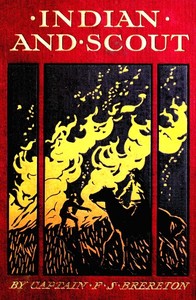
Before opening Indian and Scout: A Tale of the Gold Rush to California — Themes and Context, the edition data offers a quick orientation: 106,436 words, 7 hr 43 min estimated reading time, and 9 detected text sections.
The text analysis averages about 16.3 words per sentence, while the detected sections provide another way to judge how the source is divided.
Project Gutenberg metadata also associates the work with “California -- Gold discoveries -- Juvenile fiction,” connecting these edition facts with the source record’s subject description.
Explore this collection
These alternatives are selected using recorded categories and estimated reading time.
About 375 minutes
Wandering Heroes Classic Adventures
86,241 recorded words. 88 minutes difference from this book's estimate.
View Gutenberg source #51099About 355 minutes
Wandering Heroes Classic Adventures
81,615 recorded words. 108 minutes difference from this book's estimate.
View Gutenberg source #45026About 320 minutes
Wandering Heroes Classic Adventures
73,564 recorded words. 143 minutes difference from this book's estimate.
View Gutenberg source #55005Search stored excerpts and compare books → Choose by your preferences →
Choices use stored catalog measurements. Estimates vary with reading speed. A shared category is a catalog label, not a claim that two books have the same argument or literary quality.
Search reads excerpt text stored with this catalog and links to its associated Gutenberg record. The connection is stored in the site database; this tool does not recheck that every excerpt is word-for-word identical to that external record. Excerpt search does not cover every chapter and does not verify historical publication dates.
Catalog snapshot checked: 2026-09-26. Coverage: 97 public books, 97 available source excerpts.
Calculated from edition completeness, EPUB availability, text structure and catalogue metadata. Not a user rating.
Total of 100 points, scaled to a 2.5-5.0 range. Editions with an empty description or a missing EPUB file are not scored.
Public-domain source text
The source text is kept in the dedicated reader, separate from this catalogue record and its commentary.
The opening chapter introduces Tusker Joe, a man with a smoking revolver and a guilty conscience, who demands vindication from a saloon crowd after a deadly quarrel. The narrative voice is immediate and colloquial, with dialogue rendered in heavy dialect: “Ef there was a man here as was a man, guess it'd be some use waitin' and talkin'.” This is not a story that begins with a wagon train or a gold pan; it begins with a tense, morally ambiguous standoff in a cramped room.
The catalog subjects list “Gold discoveries,” “Overland journeys,” and “Frontier and pioneer life,” but the excerpts reveal a work more concerned with chase sequences and interpersonal conflict than with the mechanics of mining or the logistics of westward travel. The gold rush functions as a backdrop rather than a driver of the plot, at least in the sampled chapters.
The excerpts are saturated with nonstandard speech. Tusker Joe’s lines are peppered with “ef,” “thar,” “ain’t,” and “yer,” while the scout Steve uses similar forms: “It aer as clear as daylight,” “Yer kin put it like that.” This dialect is not merely decorative; it distinguishes characters by origin and attitude. Jack Kingsley, by contrast, speaks in more conventional English: “I suppose they found those two men and then had a palaver, as you call it?” The contrast between Jack’s educated speech and Steve’s frontier vernacular creates a dynamic of class and experience.
The narrator also adopts a formal, slightly archaic tone in descriptive passages—“the man who spoke swept his eyes round the narrow, ugly room”—which sits oddly alongside the rough dialogue. This stylistic split suggests a tension between the author’s own voice and his attempt to render authentic frontier speech. Readers may note how the dialect slows the pace and demands careful parsing, especially in action scenes.
A significant portion of the excerpts describes a nighttime flight from Native American pursuers. The scout Steve analyzes the enemy’s methods: “Even on a dark night an Injun'll follow a trail.” He predicts they will “strip the bark off some of them pines and make torches” to light the way. The pursuit is presented as a tactical problem—how to escape when the horse is overloaded and the trackers are skilled.
Jack and Steve’s dialogue focuses on practical decisions: the horse’s stamina, the concealment offered by a rise, the timing of the enemy’s cries. The scene is less about gold or settlement than about survival in open country. The catalog subject “Overland journeys to the Pacific” implies a planned migration, but here the movement is reactive and desperate. The excerpts do not show any destination or goal beyond immediate safety.
Native Americans appear in the excerpts almost exclusively as an offstage threat. They are referred to as “Injuns,” “varmint,” and “critters,” and their actions are inferred from sounds—cries, shouts, the cessation of noise. The scout Steve interprets their behavior: “That aer when they began ter shriek. That ain't much like Injuns, and jest shows that their dander's been properly up.” The characterization is external and stereotyped, fitting the period’s adventure fiction conventions.
The catalog subject “Frontier and pioneer life” might suggest a nuanced portrayal of cross-cultural contact, but the excerpts offer no dialogue or perspective from Native characters. They function as obstacles, not agents. This gap between catalog promise and textual reality is worth noting: readers expecting a balanced depiction will find instead a monochrome adversary. The title’s promise of an “Indian” protagonist is not fulfilled in the sampled material.
The excerpts from Indian and Scout reveal a work that is more about chase and character than about its ostensible historical subject. Readers interested in the Gold Rush as a social or economic phenomenon will find little of it here; those seeking a fast-paced frontier adventure with distinctive dialogue may be better served. The catalog subjects should be read as broad genre markers rather than accurate descriptions of content. Approach the text as a period piece of adventure fiction, with all the stylistic and ideological assumptions that entails.
There was something about the long conversations between Jack and Steve, the way they filled silence with shared worry, that stayed with me. It made me think of another story’s quieter moments, the ones between the action. Cynthia Steps Out — Edition Insights carries that same sense of two people finding their footing, though its landscape is gentler. I suppose every journey, out West or elsewhere, is really about who walks beside you.
Save your reaction, strongest insight, and memorable passage.