About 178 minutes
Young Stowaways in Space — Context and Discussion
Wandering Heroes Classic Adventures
40,769 recorded words. 15 minutes difference from this book's estimate.
View Gutenberg source #54547
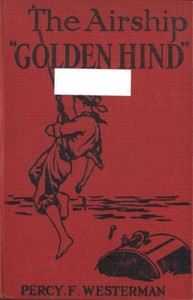
For The Airship "Golden Hind" — Inside the Classic, the stored edition analysis reports 44,252 words, 3 hr 13 min estimated reading time, and 29 detected text sections.
The text analysis averages about 15.6 words per sentence, while the detected sections provide another way to judge how the source is divided.
Project Gutenberg metadata also associates the work with “Adventure stories,” connecting these edition facts with the source record’s subject description.
Explore this collection
These alternatives are selected using recorded categories and estimated reading time.
About 178 minutes
Wandering Heroes Classic Adventures
40,769 recorded words. 15 minutes difference from this book's estimate.
View Gutenberg source #54547About 208 minutes
Wandering Heroes Classic Adventures
47,747 recorded words. 15 minutes difference from this book's estimate.
View Gutenberg source #54915About 218 minutes
Wandering Heroes Classic Adventures
49,973 recorded words. 25 minutes difference from this book's estimate.
View Gutenberg source #53197Search stored excerpts and compare books → Choose by your preferences →
Choices use stored catalog measurements. Estimates vary with reading speed. A shared category is a catalog label, not a claim that two books have the same argument or literary quality.
Search reads excerpt text stored with this catalog and links to its associated Gutenberg record. The connection is stored in the site database; this tool does not recheck that every excerpt is word-for-word identical to that external record. Excerpt search does not cover every chapter and does not verify historical publication dates.
Catalog snapshot checked: 2026-09-26. Coverage: 97 public books, 97 available source excerpts.
Calculated from edition completeness, EPUB availability, text structure and catalogue metadata. Not a user rating.
Total of 100 points, scaled to a 2.5-5.0 range. Editions with an empty description or a missing EPUB file are not scored.
Public-domain source text
The source text is kept in the dedicated reader, separate from this catalogue record and its commentary.
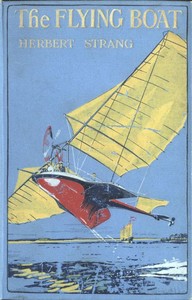
The Airship "Golden Hind" opens with a telegraph summoning two ex-RAF officers, Kenneth Kenyon and Peter Bramsdean, to Air Grange near Blandford. Their friend Fosterdyke, described as "a cautious old stick," has a startling proposition. The novel wastes no time in establishing its central vehicle: the airship itself, a hybrid of rigid frame and gas-filled ballonets, powered by aerial propellers and lifted by a substance called brodium. The story's structure alternates between technical problem-solving—such as hoisting a damaged cutter using wire hawsers and motor winches—and human drama, like the rescue of seven starving sailors from the American barque Hilda P. Murchison. Westerman's prose moves briskly from dialogue to action, often within the same paragraph, mirroring the airship's own swift transitions between calm observation and sudden emergency.
The Golden Hind is not a mere backdrop but a character in its own right, described through its components: nacelle, ballonets, brodium, and wire hawsers. Westerman grounds the adventure in plausible mechanics. When the crew rescues the Hilda P. Murchison's survivors, the narrative lingers on the hoisting process: wire hawsers lowered from bow-hawser pipes, shackles engaged, additional brodium introduced to lift the boat. The risk of the cutter breaking its back is weighed against the need to save lives. Later, the airship's descent to fifty feet to assess the sea's condition shows a captain who calculates before acting. These technical passages are not dry; they create tension by making the reader aware of the vessel's limits. The rescue sequence also reveals the crew's discipline: the rescued men are given food "in strictly moderate quantities" and put to sleep, a detail that reflects Fosterdyke's knowledge of starvation's effects. The airship's design—with a navigation room, cabins, and a hatchway for boarding—provides a stage for both crisis and routine.
The rescue of the Hilda P. Murchison's crew is the most extended set piece in the excerpts, and it showcases Westerman's method of building suspense through sequential steps. First, the airship's propellers attract attention; then, the crew waves canvas strips. The cutter is assessed as "hardly seaworthy," with a stove-in topstrake and a makeshift rudder. The men are "ragged, gaunt, and famished," their faces burnt brick-red. Three collapse upon seeing help. The rescue itself is a chain of decisions: should the airship descend to the surface? The risk of damage to the fuselage is weighed against the impossibility of climbing a rope ladder. The solution—using the cutter's slinging gear—is executed with precision. The boat is hoisted, the men taken aboard via the hatchway, and then the cutter is dropped to splinter on the sea. This sequence is typical of the novel's structure: a problem, a technical solution, and a decisive action. The aftermath—the rescued men's hunger, their delayed questioning—adds a human dimension to the mechanical process.
The opening dialogue between Kenyon and Bramsdean establishes a tone of clipped, informal banter: "What's the move?" / "Ask me another, old son." They address each other as "old bean" and refer to Fosterdyke as "a cautious old stick." This voice—breezy, understated, and slightly ironic—is characteristic of the ex-RAF officer in interwar fiction. The narrator notes that their wartime achievements were "deprecated" and that they received the same gratuity as officers who never left the Hotel Cecil. This wry observation about postwar life grounds the adventure in a specific historical moment. The dialogue is sparse but functional; it conveys information and character without lengthy exposition. When Fosterdyke speaks, his tone is more formal and decisive, as when he orders the rescue: "Inform Sir Reginald, Frampton; tell him I propose coming down within hailing distance." The contrast between the young officers' slang and the captain's authority creates a clear hierarchy aboard the Golden Hind.
The novel's structure relies on rapid shifts in setting, often signaled by a single paragraph break. The first chapter moves from a telegraph office in an unnamed town to Air Grange, then to the airship itself. The rescue scene jumps from the Golden Hind's navigation room to a height of fifty feet above the ocean, then to the boat's deck, and finally to the airship's interior. Westerman uses visual details to anchor each scene: the cutter's patched sails, the "long undulations" of the sea, the "brick-red" skin of the survivors. The narrative also compresses time: the rescue takes place over a few hours, but the next morning the survivors are well enough to appear in Fosterdyke's cabin. This pacing keeps the story moving, but it can also feel abrupt. The excerpts do not reveal how the airship travels from Blandford to the Indian Ocean, but the chapter titles suggest a global itinerary: "First Away," "The Tail of a Cyclone," "Within Sight of Success." The movement is always forward, both geographically and narratively.
Readers should pay attention to how Westerman balances technical description with character interaction. The Golden Hind is a machine that demands constant attention, and the crew's competence is tested in every chapter. The novel rewards those who enjoy procedural details—how to hoist a boat, how to manage ballonets—but it also offers moments of human vulnerability, like the collapsed survivors or the officers' postwar disillusionment. The story moves quickly, so note how each chapter introduces a new challenge that builds on the last. The airship's journey is both a physical circumnavigation and a series of escalating tests for its crew.
Reading about the Golden Hind’s crew, I remembered my grandfather’s old atlas, its oceans marked with pencil crossings. His quiet certainty that maps were possibilities, not limits, feels close to how the airship’s voyage treats the globe as a backyard. Amadis of Gaul, Vol. 4 — Text and Context once gave me that same spacious ache, a sense that chivalry and engineering both simply move forward, trusting the next horizon.
Capture what you thought, learned, and would like to remember.