About 256 minutes
The Motor Boys in the Army; or, Ned, Bob and Jerry as Volunteers — Background and Themes
Wandering Heroes Classic Adventures
58,863 recorded words. 7 minutes difference from this book's estimate.
View Gutenberg source #53320
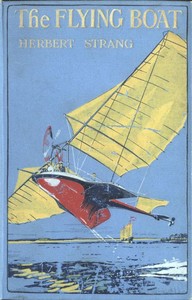
For The Flying Boat: A Story of Adventure and Misadventure — A Closer Reading, the stored edition analysis reports 60,410 words, 4 hr 23 min estimated reading time, and 8 detected text sections.
The text analysis averages about 18.1 words per sentence, while the detected sections provide another way to judge how the source is divided.
Project Gutenberg metadata also associates the work with “Adventure stories,” connecting these edition facts with the source record’s subject description.
Explore this collection
These alternatives are selected using recorded categories and estimated reading time.
About 256 minutes
Wandering Heroes Classic Adventures
58,863 recorded words. 7 minutes difference from this book's estimate.
View Gutenberg source #53320About 275 minutes
Wandering Heroes Classic Adventures
63,222 recorded words. 12 minutes difference from this book's estimate.
View Gutenberg source #40574About 245 minutes
Wandering Heroes Classic Adventures
56,347 recorded words. 18 minutes difference from this book's estimate.
View Gutenberg source #45492Search stored excerpts and compare books → Choose by your preferences →
Choices use stored catalog measurements. Estimates vary with reading speed. A shared category is a catalog label, not a claim that two books have the same argument or literary quality.
Search reads excerpt text stored with this catalog and links to its associated Gutenberg record. The connection is stored in the site database; this tool does not recheck that every excerpt is word-for-word identical to that external record. Excerpt search does not cover every chapter and does not verify historical publication dates.
Catalog snapshot checked: 2026-09-26. Coverage: 97 public books, 97 available source excerpts.
Calculated from edition completeness, EPUB availability, text structure and catalogue metadata. Not a user rating.
Total of 100 points, scaled to a 2.5-5.0 range. Editions with an empty description or a missing EPUB file are not scored.
Public-domain source text
The source text is kept in the dedicated reader, separate from this catalogue record and its commentary.
The Flying Boat opens not in the air but on a school playing field, where the author introduces Pierce Errington and Ted Burroughs through a contrast of temperaments: Errington is “easy-going, mercurial” and prone to rashness, while Burroughs is “downright” and deliberate. This pairing, established in the first chapter, drives the narrative’s alternating perspectives. The story quickly shifts from Cheltonia to the rivers of China, where the hydroplane—a flying boat—becomes both a vehicle and a source of tension. The excerpts show a pattern of movement between quiet planning and sudden action, often at night or in the early dawn, with the river serving as a constant, shifting backdrop.
The first chapter grounds the adventure in a familiar English setting, but the language already hints at the risks to come. Errington is described as having “a streak of the gambler in his composition,” while Burroughs “always thought before he spoke.” This moral framing is not merely character introduction; it sets up a dynamic that recurs throughout the excerpts. When Burroughs later navigates the hydroplane past Chia-ling Fu, he acts with the same deliberation, “pondered deeply on the knotty problem” and conscious of “many qualms.” The schoolyard rivalry with Reginald Hattersley-Carr, a “strapping young giant” given to “swank,” introduces a social hierarchy that mirrors later power struggles with figures like Reinhardt and the rebel chief Su Fing. The transition from the playing field to the Yang-tse-kiang is abrupt, but the author uses the school chapters to establish a baseline of order that the river adventures will test.
Throughout the excerpts, the river is not just a setting but an active element in the plot. The hydroplane moves “up the river at the rate of twenty-five knots against the current,” and characters constantly assess the risks of being seen or heard. When Burroughs approaches Meichow, he notes that “the river was thronged with junks and other vessels moored for the night,” and he decides to tow the hydroplane to avoid detection. The river’s physical properties—current, darkness, congestion—dictate the characters’ choices. The author also uses the river to create suspense through sound: the engine’s “throb” must be silenced to avoid “awkward inquiries.” The river gunboat, “employed by the Chinese Government” but now fallen to rebels, adds a layer of political instability. This is not a generic waterway; it is a contested space where every movement carries risk.
When Burroughs arrives at Meichow, he must impersonate Reinhardt, assuming “a mien as like Reinhardt’s as he could muster.” The scene at the landing-stage is a study in bluff: the servant Chin Tai demands a guide with “self-importance natural to the servant of an august personage,” and the sleepy dockhand is hurried by a “torrent of abuse.” The author builds tension through small details—the absence of “morning bustle,” the sight of the captured gunboat—that signal danger. Burroughs’s internal calculation is laid bare: “His only safety lay in boldness.” The excerpts do not reveal whether the ruse succeeds, but they establish a pattern of risk-taking that echoes Errington’s earlier impulsiveness. The contrast between Burroughs’s careful planning and the need for quick improvisation is a recurring structural device.
The narrative rhythm in the excerpts alternates between moments of stillness and bursts of action. Burroughs “moored the hydroplane for a time” to wait for morning, and in the silence he “pondered deeply.” The description of “the dark water swirling by” creates a meditative pause before the next crisis. Similarly, earlier in the text, the school sports practice is a scene of organized activity that contrasts with the chaotic river encounters. The author uses these shifts to control pacing: a quiet passage allows the reader to absorb the stakes before a sudden event—like the hail of a rope or the discovery that Su Fing is absent—changes the situation. This structure, evident even in the excerpts, suggests a novel built around a series of escalating challenges, each introduced by a moment of reflection or preparation.
Readers approaching The Flying Boat will find that the excerpts offer only a partial view of the plot’s twists. The novel’s structure rewards attention to how each scene builds on the last, with the river and the hydroplane acting as both literal and symbolic links. The contrast between the two main characters—one impulsive, one deliberate—provides a lens for interpreting their choices, but the full arc of their friendship and its trials remains to be discovered.
There’s something about how the old river keeps pulling the boys back in The Flying Boat—each bend feels like a small, unfinished thought. It reminded me of another quiet guide I kept nearby, The Boy Hunters of Kentucky — A Reader’s Guide, where the woods hold that same patient, waiting quality. Both stayed with me long after I set them down.
Your answers remain private and are stored only in this browser.