About 463 minutes
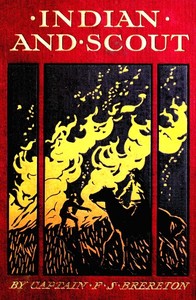
Indian and Scout: A Tale of the Gold Rush to California — Themes and Context
Wandering Heroes Classic Adventures
106,436 recorded words. 160 minutes difference from this book's estimate.
View Gutenberg source #40467
This digital edition of One of Clive's Heroes: A Story of the Fight for India — A Reader’s Guide is described by source-level measurements including 143,279 words, 10 hr 23 min estimated reading time, and 18 detected text sections.
The text analysis averages about 16.8 words per sentence, while the detected sections provide another way to judge how the source is divided.
Project Gutenberg metadata also associates the work with “Adventure stories,” connecting these edition facts with the source record’s subject description.
Explore this collection
These alternatives are selected using recorded categories and estimated reading time.
About 463 minutes
Wandering Heroes Classic Adventures
106,436 recorded words. 160 minutes difference from this book's estimate.
View Gutenberg source #40467About 375 minutes
Wandering Heroes Classic Adventures
86,241 recorded words. 248 minutes difference from this book's estimate.
View Gutenberg source #51099About 355 minutes
Wandering Heroes Classic Adventures
81,615 recorded words. 268 minutes difference from this book's estimate.
View Gutenberg source #45026Search stored excerpts and compare books → Choose by your preferences →
Choices use stored catalog measurements. Estimates vary with reading speed. A shared category is a catalog label, not a claim that two books have the same argument or literary quality.
Search reads excerpt text stored with this catalog and links to its associated Gutenberg record. The connection is stored in the site database; this tool does not recheck that every excerpt is word-for-word identical to that external record. Excerpt search does not cover every chapter and does not verify historical publication dates.
Catalog snapshot checked: 2026-09-26. Coverage: 97 public books, 97 available source excerpts.
Calculated from edition completeness, EPUB availability, text structure and catalogue metadata. Not a user rating.
Total of 100 points, scaled to a 2.5-5.0 range. Editions with an empty description or a missing EPUB file are not scored.
Public-domain source text
The source text is kept in the dedicated reader, separate from this catalogue record and its commentary.
Herbert Strang opens his preface by distinguishing this work from a full biography of Robert Clive, noting that G.A. Henty's With Clive in India already covers that ground. Instead, Strang selects two events—the capture of Gheria and the Battle of Plassey—as the pivot for a personal adventure story set between 1754 and 1757. The excerpts show the narrative following Desmond Burke, a young man who meets the mysterious Diggle at a banquet in Market Drayton and later finds himself a captive of the pirate Angria. Strang draws on standard authorities like Orme and Ives, and his own experience living near the Black Hole site, to create what he calls an accurate picture of Indian life a century and a half ago.
The catalog subjects label this as an adventure story and juvenile fiction about British India in the 18th century. The excerpts confirm the adventure elements: Desmond is tricked into a false supercargo berth, captured by Angria, and later questioned by Clive himself. However, the preface explicitly states the book is “rather a romance with a background of history than an historical biography with an admixture of fiction.” Strang compresses Clive’s career into two events, using them as a framework for a personal story. Readers expecting a comprehensive account of Clive’s life will find a narrower focus, while those seeking a fast-paced tale with historical color will get exactly that.
Diggle, introduced as a stranger at Market Drayton, is central to the plot. He claims to have been a Cambridge fellow, but Clive remembers no one of that name. Diggle later sells Desmond to the pirate Angria and tries to recruit him as a spy. The excerpts show Desmond refusing, saying “he might do it himself.” This spy subplot is not hinted at in the catalog subjects, which list only broad themes of British-Indian conflict. The excerpts also reveal that Diggle may have been connected to the disreputable Grinsell and that Clive and Merriman share a secret about him (“Shall I tell the boy?” “Not now”). This suggests a deeper intrigue that the catalog does not capture.
The excerpts rely heavily on dialogue to convey backstory and character. Clive’s questioning of Desmond is a long, conversational exchange that reveals Desmond’s past, Diggle’s machinations, and the Gheria plot. The narrative voice is third-person but often steps aside for extended speech, as when Merriman interrupts to defend Desmond. Strang also uses dialogue for humor, as when Desmond’s reply about spying is called “a palpable hit.” The structure is episodic: each chapter heading (e.g., “In which the Court Leet of Market Drayton entertains Colonel Robert Clive”) promises a set piece. This method suits the adventure genre but may feel digressive to readers expecting tighter plotting.
Strang’s preface and the excerpts together show a work that balances historical research with fictional invention. The catalog subjects emphasize adventure and British-Indian history, but the excerpts reveal a more intricate plot involving deception, captivity, and a mysterious antagonist. Readers interested in the mechanics of 18th-century empire-building will find the historical details credible, while those drawn to the spy element will note that the excerpts leave Diggle’s full role unclear. The book rewards attention to its dialogue and its careful framing of historical events within a personal story.
There’s something tender about old adventure books, how they trust a young man’s nerve to carry history forward. Strang’s romance feels that way, all dust and courage. It makes me think of my worn copy of Amadis of Gaul, Vol. 4 — Text and Context, where chivalry lingers like a half-remembered song. Different centuries, same wistful pulse.
Build a private reading journal entry for this title.