About 250 minutes
Greenacre Girls — Story, Setting & Ideas
Fantasy Juvenile Worlds
57,421 recorded words. 1 minutes difference from this book's estimate.
View Gutenberg source #47854
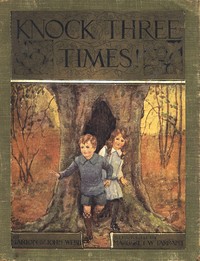
Knock Three Times! — Themes and Context can be approached with a clearer sense of reading commitment from its source measurements: 57,262 words, 4 hr 9 min estimated reading time, and 6 detected text sections.
The text analysis averages about 16.7 words per sentence, while the detected sections provide another way to judge how the source is divided.
Project Gutenberg metadata also associates the work with “Fantasy fiction,” connecting these edition facts with the source record’s subject description.
Explore this collection
These alternatives are selected using recorded categories and estimated reading time.
About 250 minutes
Fantasy Juvenile Worlds
57,421 recorded words. 1 minutes difference from this book's estimate.
View Gutenberg source #47854About 250 minutes
Fantasy Juvenile Worlds
57,325 recorded words. 1 minutes difference from this book's estimate.
View Gutenberg source #53727About 247 minutes
Fantasy Juvenile Worlds
56,723 recorded words. 2 minutes difference from this book's estimate.
View Gutenberg source #39489Search stored excerpts and compare books → Choose by your preferences →
Choices use stored catalog measurements. Estimates vary with reading speed. A shared category is a catalog label, not a claim that two books have the same argument or literary quality.
Search reads excerpt text stored with this catalog and links to its associated Gutenberg record. The connection is stored in the site database; this tool does not recheck that every excerpt is word-for-word identical to that external record. Excerpt search does not cover every chapter and does not verify historical publication dates.
Catalog snapshot checked: 2026-09-26. Coverage: 97 public books, 97 available source excerpts.
Calculated from edition completeness, EPUB availability, text structure and catalogue metadata. Not a user rating.
Total of 100 points, scaled to a 2.5-5.0 range. Editions with an empty description or a missing EPUB file are not scored.
Public-domain source text
The source text is kept in the dedicated reader, separate from this catalogue record and its commentary.
The story opens not with a magical event but with a brown paper parcel and a birthday wish for a silver bangle. Marion St. John Webb grounds her fantasy in the ordinary desires of nine-year-old twins: Molly wants a bangle that “jingles,” Jack a box of paints. The narrative voice is confiding and slightly old-fashioned, addressing the reader directly (“so that you will understand why Molly sat down to supper wishing earnestly that silver bangles were considered useful”). This intimate tone quickly gives way to a more urgent pace once the adventure begins, marked by short, action-driven sentences and a shift from domestic detail to the eerie landscape of the Goblin’s Heath.
Webb’s narrative voice is remarkably flexible. In the opening chapter, the prose is leisurely, filled with the minutiae of birthday presents and Aunt Phœbe’s fixed ideas about “useless and useful presents.” The sentences are long, and the tone is confiding, as if the narrator is settling in for a fireside tale. Once Jack and Molly cross into the fantasy world, the pace accelerates. Sentences become shorter, and the narrator’s direct address nearly disappears, replaced by a more immediate, sensory style: “They waited a while until the day came, then they climbed down from their hiding-place, stretched themselves, and at once set about their search.” The contrast is deliberate: the mundane world is described with affectionate detail, while the goblin realm is rendered in brisk, almost breathless prose that mirrors the children’s growing urgency.
Webb uses small, repeated details to create a sense of mounting danger. The Black Leaf, the object of the twins’ search, is never described at length, but its absence drives the plot. The goblins’ warning system—a promise to “find some means of warning you throughout the day, if the Pumpkin is near”—creates a pattern of expectation and relief. The shoe of the old woman with “horrible eyes,” glimpsed in a pond, becomes a tangible reminder of past peril. These recurring elements, from the “little brown sweets” that refresh the children to the constant scanning of the landscape, give the narrative a rhythmic, almost folkloric structure. The reader learns to watch for these signals, sharing the twins’ vigilance as they “plodded on, searching eagerly and carefully.”
The Goblin’s Heath is not a static backdrop but a shifting, watchful presence. By moonlight, it teems with goblins and spies; by daylight, it is “not the slightest trace of goblins.” This transformation unsettles both the characters and the reader. Webb emphasizes the heath’s scale and complexity: “countless thick bushes, trees, hillocks, and winding paths.” The twins must navigate this terrain methodically, studying a map and retracing their steps. The disappearance of a house from the Third Green Lane adds a surreal note, reinforcing that the rules of this world are fluid. The setting is never merely decorative; it dictates the pace of the search, forces the children to climb trees for safety, and shapes their emotional state—relief when a house vanishes, dread when a familiar shoe appears.
Readers should pay close attention to the rhythm of Webb’s sentences. The story’s tension rises and falls with the length of her paragraphs: long, descriptive passages signal safety; short, clipped ones mark danger. The twins’ perspective remains central, but the narrator’s occasional asides—such as the explanation of Aunt Phœbe’s views on presents—offer a wry, adult counterpoint. This dual register gives the book a distinctive texture, blending the cosy with the uncanny.
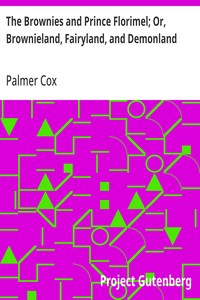
I have often thought, shelving them side by side, how both Webb’s twins and Palmer Cox’s brownies share that same unblinking acceptance of peril—a child’s logic that woodland folk, whether goblins or sprites, simply require walking into. One finds a The Brownies and Prince Florimel; Or, Brownieland, Fairyland, and Demonland — Edition Insights on the shelf, and the other whispers back, quiet as a turning page, that all such journeys begin with a tree, a thrice-knock, and a steady heart.
A brief reflection can help important ideas stay with you longer.