About 247 minutes
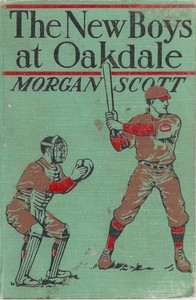
The New Boys at Oakdale — Reading Companion
Fantasy Juvenile Worlds
56,780 recorded words. 0 minutes difference from this book's estimate.
View Gutenberg source #41513
The catalog record for With Beatty off Jutland: A Romance of the Great Sea Fight — Text and Context provides practical reading context through 56,723 words, 4 hr 7 min estimated reading time, and 26 detected text sections.
The text analysis averages about 17.7 words per sentence, while the detected sections provide another way to judge how the source is divided.
Project Gutenberg metadata also associates the work with “Great Britain. Royal Navy -- Juvenile fiction,” connecting these edition facts with the source record’s subject description.
Explore this collection
These alternatives are selected using recorded categories and estimated reading time.
About 247 minutes
Fantasy Juvenile Worlds
56,780 recorded words. 0 minutes difference from this book's estimate.
View Gutenberg source #41513About 249 minutes
Fantasy Juvenile Worlds
57,262 recorded words. 2 minutes difference from this book's estimate.
View Gutenberg source #45802About 245 minutes
Fantasy Juvenile Worlds
56,331 recorded words. 2 minutes difference from this book's estimate.
View Gutenberg source #49098Search stored excerpts and compare books → Choose by your preferences →
Choices use stored catalog measurements. Estimates vary with reading speed. A shared category is a catalog label, not a claim that two books have the same argument or literary quality.
Search reads excerpt text stored with this catalog and links to its associated Gutenberg record. The connection is stored in the site database; this tool does not recheck that every excerpt is word-for-word identical to that external record. Excerpt search does not cover every chapter and does not verify historical publication dates.
Catalog snapshot checked: 2026-09-26. Coverage: 97 public books, 97 available source excerpts.
Calculated from edition completeness, EPUB availability, text structure and catalogue metadata. Not a user rating.
Total of 100 points, scaled to a 2.5-5.0 range. Editions with an empty description or a missing EPUB file are not scored.
Public-domain source text
The source text is kept in the dedicated reader, separate from this catalogue record and its commentary.
The narrative opens with a precise bearing—'18 miles N. 75° W. of the Haisborough Lightship'—anchoring the reader in a specific North Sea location. From the fore-bridge of HMS Calder, the outlook is deceptively calm: 'the same short steep seas, the same lowering sky.' This deliberate flatness sets up the sudden violence that follows, as the destroyer encounters a crippled German battleship, then a gauntlet of searchlights and shellfire. The prose moves between technical observation and sensory overload, with searchlights that 'blindingly' envelop the bridge and a helmsman who collapses from a shell fragment.
Westerman repeatedly specifies bearings, distances, and courses—'18 miles N. 75° W.,' 'two cables' distance,' 'athwart the Calder's course.' These details are not mere decoration; they create a sense of real naval operations. The destroyer's movements are plotted against enemy positions, fog, and starlight. Even in chaos, the narrative tracks position relative to 'the double lines of hostile light cruisers.' This geographic grounding makes the action feel both tactical and urgent, as if the reader is conning the ship alongside the officers.
Three images recur throughout the excerpt: searchlights that 'blindingly' trap the Calder, torpedoes 'launched home' into tubes, and the physical ruin of vessels—'long gashes in her armoured plates,' a collapsed derrick, a funnel shot away. The German battleship's death is described in stages: a 'violent lurch,' 'the rush of water into her hull,' then only 'keel-plates and the tips of the four propellers' visible. These repeated motifs build a vocabulary of naval destruction that the reader learns to recognize.
The viewpoint moves between the commander Crosthwaite, who is 'not out for personal kudos,' and the sub-lieutenant Sefton, who takes the helm when the helmsman is killed. Sefton's actions—shielding his eyes, dashing for the steering gear—are shown in quick, physical detail. The narrative often observes the crew's collective blindness or shock: 'temporarily blinded as effectually as if their eyes had been bandaged.' This technique emphasizes that command decisions are made under extreme sensory limitation.
The excerpt follows a pattern: a quiet observation, a sudden encounter (the battleship), a brief reprieve (the sinking), then a new crisis (searchlights and shellfire). Each phase is compressed into a few paragraphs. The destroyer's 'devoted dash' is repeatedly interrupted by damage and casualties. Westerman uses short, declarative sentences for action—'Pushing the body aside, Sefton put the helm hard over'—and longer, descriptive ones for aftermath. This rhythm mirrors the stop-start nature of naval combat.
Readers should attend to how Westerman balances technical jargon with moments of human reaction—the helmsman's collapse, the crew's blindness. The novel's structure rewards attention to bearings and ship types, but the emotional weight comes from the repeated image of a vessel reduced to wreckage while still fighting. The excerpts suggest a work that values both tactical realism and the strain of command under fire.
That rainy afternoon, I kept returning to the searchlight sweeps and torpedo runs in With Beatty off Jutland, the crew’s quiet waiting before each burst of chaos. Later, idly turning pages, I found myself in The New Boys at Oakdale — Reading Companion, where the tension was younger, softer—but the same careful watching for what comes next lingered between the lines.
Use these questions to collect your thoughts before moving on.