About 383 minutes
The Little School-Mothers — Inside the Classic
Fantasy Juvenile Worlds
88,066 recorded words. 25 minutes difference from this book's estimate.
View Gutenberg source #43140
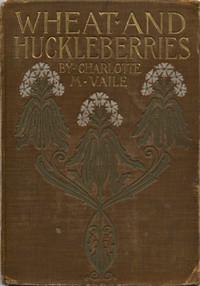
Before opening Wheat and Huckleberries; Or, Dr. Northmore's Daughters — Key Ideas to Explore, the edition data offers a quick orientation: 82,311 words, 5 hr 58 min estimated reading time, and 7 detected text sections.
The text analysis averages about 20.2 words per sentence, while the detected sections provide another way to judge how the source is divided.
Project Gutenberg metadata also associates the work with “Family -- Juvenile fiction,” connecting these edition facts with the source record’s subject description.
Explore this collection
These alternatives are selected using recorded categories and estimated reading time.
About 383 minutes
Fantasy Juvenile Worlds
88,066 recorded words. 25 minutes difference from this book's estimate.
View Gutenberg source #43140About 333 minutes
Fantasy Juvenile Worlds
76,378 recorded words. 25 minutes difference from this book's estimate.
View Gutenberg source #45432About 331 minutes
Fantasy Juvenile Worlds
75,970 recorded words. 27 minutes difference from this book's estimate.
View Gutenberg source #47739Search stored excerpts and compare books → Choose by your preferences →
Choices use stored catalog measurements. Estimates vary with reading speed. A shared category is a catalog label, not a claim that two books have the same argument or literary quality.
Search reads excerpt text stored with this catalog and links to its associated Gutenberg record. The connection is stored in the site database; this tool does not recheck that every excerpt is word-for-word identical to that external record. Excerpt search does not cover every chapter and does not verify historical publication dates.
Catalog snapshot checked: 2026-09-26. Coverage: 97 public books, 97 available source excerpts.
Calculated from edition completeness, EPUB availability, text structure and catalogue metadata. Not a user rating.
Total of 100 points, scaled to a 2.5-5.0 range. Editions with an empty description or a missing EPUB file are not scored.
Public-domain source text
The source text is kept in the dedicated reader, separate from this catalogue record and its commentary.
The opening chapter of Wheat and Huckleberries establishes a deliberate, almost leisurely narrative pace. The third-person voice moves from the town's collective curiosity about Dr. Northmore's farm purchase to the doctor's own sentimental attachment, using a simile comparing his pride to a child's affection for a demanding parent. This unhurried exposition, rich in qualifying clauses and reflective asides, sets a tone of gentle irony and patient observation.
Later excerpts reveal a marked shift in tempo. In Aunt Katharine's kitchen, the prose becomes more clipped and dialogue-driven. The exchange about buying berries from a girl instead of a boy compresses social commentary into a few lines, while Esther's dream narrative introduces a symbolic layer that the narrator leaves deliberately unresolved. The voice remains consistent—wry, sympathetic, and attentive to small gestures—but the pacing accelerates as the scene focuses on immediate actions and spoken words.
The narrator of Wheat and Huckleberries adopts a tone of amused detachment, especially when describing Dr. Northmore's financial naivety. Phrases like “the doctor, as everybody knew, had no genius for making money” create a collective, almost gossipy intimacy with the reader. This voice is not uniformly ironic; it softens when depicting the sisters' domestic world. In the kitchen scene with Aunt Katharine, the narrator steps back, letting dialogue and action carry meaning. The contrast between the opening's elaborate sentences and the later, simpler constructions mirrors a broader narrative strategy: the novel moves between broad social observation and close, quiet character study.
The excerpts show two distinct paces. The harvest chapter moves slowly, with long paragraphs describing the farm's acquisition and the family's anticipation. In contrast, the visit to Aunt Katharine accelerates through short exchanges and physical details—the stove, the tea, the darning. The berry-buying incident compresses a feminist principle into a single decision: “I thought some girl would be along, and so I waited.” This quick, telling moment contrasts with the earlier, more discursive treatment of the doctor's farm. The pacing thus varies not by chapter but by scene, with domestic interiors often faster than expository openings.
Certain details recur with a rhythmic effect. The title's “wheat and huckleberries” appears literally in the harvest and berry-picking scenes, but also symbolically: wheat as cultivated labor, huckleberries as wild, spontaneous choice. The dream under the oak tree introduces a motif of female leadership that Aunt Katharine's actions echo. The narrator's habit of noting what characters do not say—Esther's silence on Aunt Katharine's “wrongs of her sex”—creates a rhythm of restraint and release. These repeated elements, neither heavy-handed nor random, give the prose a patterned, deliberate quality that rewards close attention.
Readers attentive to narrative craft will find in Wheat and Huckleberries a novel that modulates its voice and tempo with care. The excerpts suggest a work that balances social comedy with intimate realism, using pace as a tool for emphasis. Pay particular attention to how Vaile shifts from summary to scene, and how she uses small objects—a pincushion, a pail of berries—to anchor larger themes.
There’s a particular comfort in how Vaile lets her sisters think aloud, unhurried, the way we do when no one’s listening. It reminded me of quieter afternoons with The New Boys at Oakdale — Reading Companion, where the same patient voice seems to linger. Sometimes old books just feel like company, don’t they?
Your answers remain private and are stored only in this browser.