About 257 minutes
Jack Hardy: A Story of English Smugglers in the Days of Napoleon — Background and Themes
Fantasy Juvenile Worlds
58,975 recorded words. 1 minutes difference from this book's estimate.
View Gutenberg source #43334
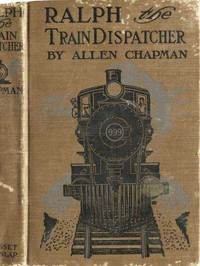
The source record for Ralph, the Train Dispatcher; Or, The Mystery of the Pay Car — Reading Companion measures this digital text at 58,674 words, 4 hr 16 min estimated reading time, and 6 detected text sections.
The text analysis averages about 14.0 words per sentence, while the detected sections provide another way to judge how the source is divided.
Project Gutenberg metadata also associates the work with “Mystery and detective stories,” connecting these edition facts with the source record’s subject description.
Explore this collection
These alternatives are selected using recorded categories and estimated reading time.
About 257 minutes
Fantasy Juvenile Worlds
58,975 recorded words. 1 minutes difference from this book's estimate.
View Gutenberg source #43334About 255 minutes
Fantasy Juvenile Worlds
58,607 recorded words. 1 minutes difference from this book's estimate.
View Gutenberg source #50590About 258 minutes
Fantasy Juvenile Worlds
59,269 recorded words. 2 minutes difference from this book's estimate.
View Gutenberg source #54813Search stored excerpts and compare books → Choose by your preferences →
Choices use stored catalog measurements. Estimates vary with reading speed. A shared category is a catalog label, not a claim that two books have the same argument or literary quality.
Search reads excerpt text stored with this catalog and links to its associated Gutenberg record. The connection is stored in the site database; this tool does not recheck that every excerpt is word-for-word identical to that external record. Excerpt search does not cover every chapter and does not verify historical publication dates.
Catalog snapshot checked: 2026-09-26. Coverage: 97 public books, 97 available source excerpts.
Calculated from edition completeness, EPUB availability, text structure and catalogue metadata. Not a user rating.
Total of 100 points, scaled to a 2.5-5.0 range. Editions with an empty description or a missing EPUB file are not scored.
Public-domain source text
The source text is kept in the dedicated reader, separate from this catalogue record and its commentary.
The opening chapter introduces Ralph Fairbanks at the throttle of the Overland Express, with veteran fireman Lemuel Fogg voicing suspicion about three men on the platform. Fogg’s line, “Those men will bear watching—they are up to some mischief,” immediately establishes a tone of vigilance and sets up a mystery. Ralph’s response, “I have been watching them for some time,” shows his observant nature, a trait that will be central to the plot. The excerpt also reveals Ralph’s career progression from roundhouse wiper to engineer, grounding the story in the railroad world. The dialogue between the two characters efficiently conveys their partnership and the impending trouble, making the opening a strong hook for readers.
The opening excerpt establishes Ralph Fairbanks as a character who notices details others miss. When Fogg points out the suspicious men, Ralph reveals he has already been watching them. This trait is reinforced later when Ralph, while investigating, picks up a piece of wood used to mend a fire and makes a discovery about its “smooth si” (likely “smooth side” or similar). The text emphasizes Ralph’s alertness through Fogg’s praise: “I thought you would notice them—you generally do notice things.” This pattern of observation is a key element for readers to track, as it drives Ralph’s actions and the unraveling of the mystery.
The middle excerpt highlights the role of telegraphy in the story. Ralph sends a “crude message” from atop a telegraph pole, which becomes the basis for advising headquarters. Later, at a station, he uses the telegraph to wire Preston and Glidden. The operator mentions a tramp who “knew something about telegraphing himself” and scented trouble, linking telegraphy to the mystery. The shattered window and the operator’s bandaged eye, caused by a board thrown from a freight train, add a layer of physical danger. Telegraphy is not just a tool but a plot point, and readers should note how messages and communication failures drive the narrative.
The excerpts contain multiple references to wrecks and wreckers. The chapter titles include “THE WRECK” (Chapters II and XVI), and the middle excerpt describes Ralph encountering a “wrecker and his escort” at a stretch of single rails. Ralph follows a character named Zeph, who is accepted as a new recruit by the wreckers. The narrative also mentions “train wreckers, smash ups, or what not” and a “wild locomotive” on the north cut off. These elements suggest that sabotage and physical danger are central to the plot. Readers should pay attention to how Ralph navigates these threats and how the wreckers’ activities connect to the larger mystery of the pay car.
The excerpts show a narrative that alternates between action and investigation. The opening is tense and dialogue-driven, while the middle excerpt shifts to a slower, more descriptive passage as Ralph travels through snow and gathers information. The later excerpt includes a detailed scene at a station, where Ralph pieces together clues. The chapter titles, such as “THE WIRE TAPPERS,” “THE OLD SWITCH SHANTY,” and “HOLDING THE FORT,” hint at a serialized structure with cliffhangers. The pacing varies, with moments of urgency (sending messages, chasing leads) and quieter moments of deduction. This rhythm is typical of juvenile adventure series and helps maintain suspense.
Readers approaching this book for the first time will benefit from tracking Ralph’s observations and the telegraphic communications, as these are the primary means by which the mystery unfolds. The excerpts suggest a story that rewards attention to small details—like a piece of wood or a bandaged eye—that later prove significant. The railroad setting is not just backdrop but integral to the plot, with tracks, signals, and schedules playing key roles. Enjoy the ride.
That rainy afternoon, Ralph, the Train Dispatcher kept me company, its telegraphic mystery humming beneath the patter on the windows. Ralph’s steadying resolve amid uncertainty reminded me how quiet duty shapes character. Later, idly tracing that thread of service abroad, I found myself lingering over Grace Harlowe with the American Army on the Rhine — Background and Themes, another story of steadiness in unfamiliar places.
Create a short personal record of your experience with this book.