About 268 minutes
The Flying Reporter — Text and Context
Fantasy Juvenile Worlds
61,442 recorded words. 1 minutes difference from this book's estimate.
View Gutenberg source #44227

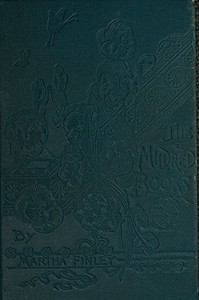
For Jill: A Flower Girl — Edition Insights, the stored edition analysis reports 61,278 words, 4 hr 27 min estimated reading time, and 6 detected text sections.
The text analysis averages about 16.4 words per sentence, while the detected sections provide another way to judge how the source is divided.
Project Gutenberg metadata also associates the work with “Young women -- Juvenile fiction,” connecting these edition facts with the source record’s subject description.
Explore this collection
These alternatives are selected using recorded categories and estimated reading time.
About 268 minutes
Fantasy Juvenile Worlds
61,442 recorded words. 1 minutes difference from this book's estimate.
View Gutenberg source #44227About 264 minutes
Fantasy Juvenile Worlds
60,619 recorded words. 3 minutes difference from this book's estimate.
View Gutenberg source #54621About 261 minutes
Fantasy Juvenile Worlds
59,870 recorded words. 6 minutes difference from this book's estimate.
View Gutenberg source #47966Search stored excerpts and compare books → Choose by your preferences →
Choices use stored catalog measurements. Estimates vary with reading speed. A shared category is a catalog label, not a claim that two books have the same argument or literary quality.
Search reads excerpt text stored with this catalog and links to its associated Gutenberg record. The connection is stored in the site database; this tool does not recheck that every excerpt is word-for-word identical to that external record. Excerpt search does not cover every chapter and does not verify historical publication dates.
Catalog snapshot checked: 2026-09-26. Coverage: 97 public books, 97 available source excerpts.
Calculated from edition completeness, EPUB availability, text structure and catalogue metadata. Not a user rating.
Total of 100 points, scaled to a 2.5-5.0 range. Editions with an empty description or a missing EPUB file are not scored.
Public-domain source text
The source text is kept in the dedicated reader, separate from this catalogue record and its commentary.
The novel opens with a tableau of London's West End during the season: carriages, grand houses, and a crowd of onlookers. Among them stands Jill, a flower girl of sixteen, described as 'very upright, quite clean in her person, and not only neat, but picturesque.' Her 'many-coloured cotton scarf' and flat basket of flowers mark her as both foreign and striking. The narrator notes that 'one or two ladies and some of the men who were going into the mansion were attracted by her appearance.' This initial scene establishes a world of sharp contrasts—wealth and poverty, spectacle and survival—that the story will explore through Jill's perspective.
The opening chapter immerses readers in the sensory details of a summer night in Grosvenor Square. The shops are 'gay with beautiful dresses,' the crowd 'rough-looking boys, eager, pinched women.' Jill is positioned 'so much in front that the brilliant gaslight fell full upon' her face. The narrator emphasizes the crowd's lack of envy: 'they enjoyed themselves quite as well as the people who went into the house.' This framing suggests that the novel will examine how characters navigate their positions within a rigid social hierarchy, without resorting to simple resentment. The language is precise about class markers—'princes of mien,' 'ragged girls'—and the flower girl's own 'stately' carriage hints at an inner dignity that may be tested.
Later excerpts shift to Covent Garden and the speech patterns of working-class London. Jill's lover Nat Carter is addressed with terms like 'my little love,' and Jill's own dialect appears in phrases such as 'kiss yer werry, werry hard.' The market-gardener Silas Lynn, reflecting on his impulsive proposal, uses a thick rural dialect: 'Oncommon like the flowers all the same; painted up by the Almighty hisself.' His internal monologue reveals a man who sees himself as 'a grim, sour, gnarled old bachelor' yet is captivated by Jill's 'dainty bit of a thing' appearance. The contrast between Silas's gruff self-assessment and his poetic descriptions of Jill—'roses in her cheeks, fire in her eyes'—creates a layered portrait of a character caught between self-protection and longing.
Chapter Eleven offers an extended look at Silas after he returns to his country cottage. The narrator describes him as 'a very prosperous market-gardener' with 'a certain knack with flowers and vegetables,' yet also 'morose and churlish.' His routine—watering horses, banking savings—is detailed with a specificity that grounds his character in physical labor. The passage notes that 'he never invited his neighbours to partake of his hospitality,' suggesting a deliberate isolation. His dismissal of Jill as 'a bit o' a girl like that 'un' is undercut by the lingering sensory memory of her coffee tasting 'like new honey.' This interior conflict, rendered through concrete actions and dialect, gives Silas a complexity that the opening crowd scene did not prepare for.
Throughout the excerpts, the narrator adopts a tone of detached but sympathetic observation. Descriptions of the crowd's 'excellent humour' and the 'fairy one' spectacle are laced with irony—the onlookers are 'not jealous or envious in the least,' a claim that feels both sincere and pointed. When Silas reflects on his proposal, the narrator reports his thoughts in free indirect style: 'It’s a good thing as she wouldn’t have me.' This technique allows readers to inhabit his perspective without endorsing his judgments. The novel's interest in how characters perceive themselves versus how they are perceived by others is evident from the first paragraph, where Jill is 'remarked' by ladies entering the mansion, to Silas's self-description as a 'woman-hater' now in love.
Readers approaching Jill: A Flower Girl will find a narrative that moves between public spectacle and private reflection. The opening's broad social canvas narrows to individual voices—Jill's, Nat's, Silas's—each rendered with distinctive speech and interiority. Pay attention to how the narrator shifts between omniscient commentary and close focalization, especially in Silas's chapters. The flower girl herself remains somewhat opaque in these excerpts; her actions are observed, but her inner life is largely inferred. This asymmetry invites readers to watch for moments when Jill's own perspective breaks through the descriptive surface.
That grey afternoon, Jill’s fierce, tender grip on her flowers stayed with me long after I closed the book. Her world felt so solid—damp pavement, thick dialect. Somehow, my hand wandered to another shelf, and I found The Little School-Mothers — Inside the Classic. It had the same quiet, unvarnished warmth, like recognizing a familiar voice in an unexpected room.
Build a private reading journal entry for this title.