About 358 minutes
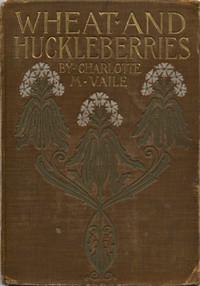
Wheat and Huckleberries; Or, Dr. Northmore's Daughters — Key Ideas to Explore
Fantasy Juvenile Worlds
82,311 recorded words. 25 minutes difference from this book's estimate.
View Gutenberg source #41515
Before opening The Little School-Mothers — Inside the Classic, the edition data offers a quick orientation: 88,066 words, 6 hr 23 min estimated reading time, and 9 detected text sections.
The text analysis averages about 14.9 words per sentence, while the detected sections provide another way to judge how the source is divided.
Project Gutenberg metadata also associates the work with “Boarding schools -- Juvenile fiction,” connecting these edition facts with the source record’s subject description.
Explore this collection
These alternatives are selected using recorded categories and estimated reading time.
About 358 minutes
Fantasy Juvenile Worlds
82,311 recorded words. 25 minutes difference from this book's estimate.
View Gutenberg source #41515About 413 minutes
Fantasy Juvenile Worlds
94,911 recorded words. 30 minutes difference from this book's estimate.
View Gutenberg source #41526About 333 minutes
Fantasy Juvenile Worlds
76,378 recorded words. 50 minutes difference from this book's estimate.
View Gutenberg source #45432Search stored excerpts and compare books → Choose by your preferences →
Choices use stored catalog measurements. Estimates vary with reading speed. A shared category is a catalog label, not a claim that two books have the same argument or literary quality.
Search reads excerpt text stored with this catalog and links to its associated Gutenberg record. The connection is stored in the site database; this tool does not recheck that every excerpt is word-for-word identical to that external record. Excerpt search does not cover every chapter and does not verify historical publication dates.
Catalog snapshot checked: 2026-09-26. Coverage: 97 public books, 97 available source excerpts.
Calculated from edition completeness, EPUB availability, text structure and catalogue metadata. Not a user rating.
Total of 100 points, scaled to a 2.5-5.0 range. Editions with an empty description or a missing EPUB file are not scored.
Public-domain source text
The source text is kept in the dedicated reader, separate from this catalogue record and its commentary.
The novel opens with Mrs Burton, the headmistress, assigning the third-form girls the task of looking after new arrival Robina Starling, a twelve-year-old who has never been to school before. The school, Abbeyfield, is set near the New Forest, and the initial chapters establish a harmonious atmosphere with clear hierarchies among forms. The third form includes the Chetwold sisters, the Amberleys, and the less-liked Harriet Lane and Jane Bush. Meade quickly signals that the story will revolve around the girls' social dynamics and their response to responsibility.
The opening excerpt establishes the school's structure and the central task: the third-form girls are to be 'school-mothers' to Robina. Mrs Burton's speech names each girl individually, suggesting that their conduct will be closely observed. The setting—midsummer, near Bournemouth—and the mention of a picnic hint at leisure, but the headmistress's emphasis on 'tact and consideration' signals that the story will test the girls' maturity. Notably, Harriet and Jane are singled out as needing improvement, setting up a potential source of conflict.
The later excerpts shift to a holiday at Sunshine Lodge, where eight girls are now called 'little mothers' by Mr Durrant. The setting expands to gardens, a pond with water-lilies, and orchids in glass-houses. Mr Durrant's playful demand to be 'mothered' inverts the earlier dynamic: the girls now care for an adult. The description of their activities—riding, bathing, a picnic tea, and a magic lantern show—creates a rhythm of structured pleasure. Harriet's jealousy is mentioned but quickly subsumed into general laughter, suggesting that tensions are temporary.
Mr Durrant emerges as a key figure in the holiday chapters. He is both a provider of treats and a performer: he promises to show 'adventures in South Africa' via magic lantern. His son Ralph confides that his father rarely discusses his adventures, implying that the girls' presence has prompted a special occasion. Mr Durrant's jovial commands—'you have got to mother me a bit'—frame the girls' caregiving as playful rather than burdensome. This adult endorsement of their 'little mother' role may reinforce the book's moral about cheerful service.
Meade's prose moves between direct instruction and descriptive set-pieces. The opening chapter uses Mrs Burton's dialogue to convey expectations; later chapters rely on action and dialogue among the girls. The narrative often summarizes collective mood—'eight very happy little girls'—rather than delving into individual psychology. The excerpts show a preference for group scenes over private moments. The repeated phrase 'little mothers' functions as a thematic anchor, linking the school's initial charge to the holiday's playful extension. Readers should watch how this label evolves as the story progresses.
The excerpts present a world where adult authority is benevolent and children's mischief is mild. Meade's focus on the 'little mothers' concept suggests that the novel will explore how girls learn responsibility through structured play and adult guidance. Readers may find interest in the contrast between the formal school setting and the freer holiday environment, and in how the less-liked characters, Harriet and Jane, are integrated into the group. The incomplete excerpts leave open whether deeper conflicts arise, but the tone remains consistently optimistic.
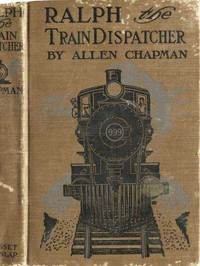
Reading about the eight little mothers on their seaside holiday, I found myself recalling another journey—the quiet vigilance needed on a railway line in Ralph, the Train Dispatcher; Or, The Mystery of the Pay Car — Reading Companion. Both worlds feel governed by the same gentle watchfulness, where responsibility arrives not as a burden but as a shape for the day.
Your answers remain private and are stored only in this browser.