About 193 minutes
The Airship "Golden Hind" — Inside the Classic
Wandering Heroes Classic Adventures
44,252 recorded words. 15 minutes difference from this book's estimate.
View Gutenberg source #39488
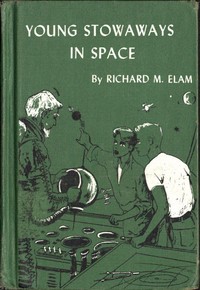
This digital edition of Young Stowaways in Space — Context and Discussion is described by source-level measurements including 40,769 words, 2 hr 58 min estimated reading time, and 6 detected text sections.
The text analysis averages about 13.5 words per sentence, while the detected sections provide another way to judge how the source is divided.
Project Gutenberg metadata also associates the work with “Adventure stories,” connecting these edition facts with the source record’s subject description.
Explore this collection
These alternatives are selected using recorded categories and estimated reading time.
About 193 minutes
Wandering Heroes Classic Adventures
44,252 recorded words. 15 minutes difference from this book's estimate.
View Gutenberg source #39488About 208 minutes
Wandering Heroes Classic Adventures
47,747 recorded words. 30 minutes difference from this book's estimate.
View Gutenberg source #54915About 140 minutes
Wandering Heroes Classic Adventures
32,083 recorded words. 38 minutes difference from this book's estimate.
View Gutenberg source #49143Search stored excerpts and compare books → Choose by your preferences →
Choices use stored catalog measurements. Estimates vary with reading speed. A shared category is a catalog label, not a claim that two books have the same argument or literary quality.
Search reads excerpt text stored with this catalog and links to its associated Gutenberg record. The connection is stored in the site database; this tool does not recheck that every excerpt is word-for-word identical to that external record. Excerpt search does not cover every chapter and does not verify historical publication dates.
Catalog snapshot checked: 2026-09-26. Coverage: 97 public books, 97 available source excerpts.
Calculated from edition completeness, EPUB availability, text structure and catalogue metadata. Not a user rating.
Total of 100 points, scaled to a 2.5-5.0 range. Editions with an empty description or a missing EPUB file are not scored.
Public-domain source text
The source text is kept in the dedicated reader, separate from this catalogue record and its commentary.
The novel opens not with a rocket launch but with a moonlit escape from an orphanage dormitory. Garry Coleman, dark-haired and anxious, dresses quietly while his friend Patch, towheaded and game, joins him on impulse. Their destination: the spaceport, to watch the Orion blast off. The scene establishes a pattern of rule-breaking driven by longing—Garry’s dream of space life is voiced in language that mixes wonder with practicality: “I’d give anything to be out there in the deeps among the planets,” he says, while Patch notes the need for study in science and navigation. The orphanage setting, with its twenty cots and a charge-of-quarters to avoid, grounds the story in a world of constraints from which the boys repeatedly slip away.
The decision to stow away is presented not as reckless but as a calculated risk. Patch calculates the penalty—two weeks restricted to grounds—and weighs it against time in the science lab. This practical reasoning recurs: the boys evaluate consequences without dismissing them. Their friendship is built on shared risk and mutual support. When Garry yanks Patch from sleep during an emergency, the text notes he did so “without mercy,” yet Patch responds without complaint. The bond is tested by uncertainty: Patch wonders if Captain Eaton dislikes them enough to avoid adoption, and Garry admits he has no explanation. Their conversations often end in unresolved questions, leaving the reader to gauge the strength of their partnership against unknown adult motives.
The farewell sequence on the Carefree is layered with emotional weight. Mr. Klecker regrets not discussing circus days; Gino bakes special pies as going-away presents. Ben offers a softer parting: “I’ll just say ‘so long’ for awhile.” The boys feel a “melancholy” that Garry resolves to face bravely. But the chapter titled “A Friend Is Lost” pivots abruptly. Garry wakes to “confusion and alarm,” bright lights, and Gino’s urgent warning: “We’re in great danger.” The cold floor shocks Garry fully awake. The shift from sentimental farewell to crisis is swift, emphasizing how quickly safety can dissolve in space. The phrase “the air was charged with confusion and alarm” signals a tonal break from the earlier reflective mood.
The narrative voice blends juvenile adventure dialogue with mid-century technical jargon. Characters speak in earnest, slightly formal phrases: “The life of a spaceman must be the most exciting thing in the world.” The spaceship is called a “wonderland space ship,” and the void is referred to as “the deeps.” This vocabulary—blast-off, satellite zone, Ped-A-Rides—creates a specific 1960s future. The orphanage itself is described with concrete details: twenty cots, a full moon, newly sprouting lawn. The prose favors action over introspection, but moments like Garry’s “pang to his heart” show an attempt to render interior feeling. The result is a story that moves between earnest sentiment and brisk plot mechanics, held together by the boys’ persistent, questioning voices.
Readers should attend to the way Elam uses the orphanage as both a literal starting point and a thematic anchor. The boys’ repeated departures—from the dormitory, from Earth, from the Carefree—are never final; each return or near-return carries emotional consequences. The stowaway premise is not merely a plot device but a lens for examining belonging, risk, and the cost of adventure. Pay attention to how the adults’ motives remain partially hidden, and how the boys’ friendship is tested not by conflict between them but by external pressures that force them to rely on each other.
Reading about Garry and Patch trusting each other in the dark felt like remembering a quiet secret. That same ache of friendship, tested by distance and change, lingers in The four Corners abroad — A Closer Reading, where familiar bonds stretch thin yet somehow hold. I finished it and just sat still for a while, thinking of home.
Your answers remain private and are stored only in this browser.