About 739 minutes
The Ladies' Paradise — A Reader’s Guide
Science Fiction Utopias
169,764 recorded words. 7 minutes difference from this book's estimate.
View Gutenberg source #54726
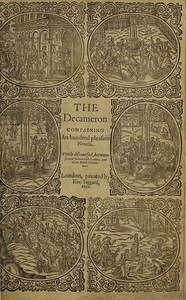
Before opening The Decameron (Day 6 to Day 10) Containing an hundred pleasant Novels — Reading Notes, the edition data offers a quick orientation: 168,146 words, 12 hr 12 min estimated reading time, and 15 detected text sections.
The text analysis averages about 36.6 words per sentence, while the detected sections provide another way to judge how the source is divided.
Project Gutenberg metadata also associates the work with “Plague -- Europe -- History -- Fiction,” connecting these edition facts with the source record’s subject description.
Explore this collection
These alternatives are selected using recorded categories and estimated reading time.
About 739 minutes
Science Fiction Utopias
169,764 recorded words. 7 minutes difference from this book's estimate.
View Gutenberg source #54726About 716 minutes
Science Fiction Utopias
164,645 recorded words. 16 minutes difference from this book's estimate.
View Gutenberg source #54687About 540 minutes
Science Fiction Utopias
124,059 recorded words. 192 minutes difference from this book's estimate.
View Gutenberg source #40913Search stored excerpts and compare books → Choose by your preferences →
Choices use stored catalog measurements. Estimates vary with reading speed. A shared category is a catalog label, not a claim that two books have the same argument or literary quality.
Search reads excerpt text stored with this catalog and links to its associated Gutenberg record. The connection is stored in the site database; this tool does not recheck that every excerpt is word-for-word identical to that external record. Excerpt search does not cover every chapter and does not verify historical publication dates.
Catalog snapshot checked: 2026-09-26. Coverage: 97 public books, 97 available source excerpts.
Calculated from edition completeness, EPUB availability, text structure and catalogue metadata. Not a user rating.
Total of 100 points, scaled to a 2.5-5.0 range. Editions with an empty description or a missing EPUB file are not scored.
Public-domain source text
The source text is kept in the dedicated reader, separate from this catalogue record and its commentary.
The volume opens not with a story but with a translator's preface and a table of contents that immediately signal the work's layered structure. John Florio's address "To the Reader" compares books to gardens, acknowledging that even the best efforts may yield errors—a metaphor that primes readers for the mix of wit and moral instruction to come. The table then lists each day's governing theme and the argument of every novella, effectively mapping the collection before a single tale begins.
The excerpts preserve the frame narrative's scaffolding: seven ladies and three gentlemen flee plague-ridden Florence and tell stories over ten days. Days 6 through 10 are governed by different queens and kings, each setting a thematic rule. For instance, Day 6 concerns those who "by some witty words" have revenged themselves with a sudden, discreet answer. This explicit framing tells the reader what to expect from each day's tales, turning the collection into a curated anthology where the governing theme becomes a lens for interpretation.
Readers encountering the work for the first time can use these headings as signposts. The argument of each novella, summarized before the tale, further orients attention. In the excerpt for Day 6, Novell 1, the argument states that a knight promises to tell an excellent tale but delivers poorly, prompting the lady to dismount. This summary primes the reader to watch for the gap between intention and execution—a recurring concern in the frame.
John Florio's dedication and address to the reader are not mere formalities; they actively shape how the text should be approached. He writes that books may be compared to gardens, where weeds spring up despite the gardener's care. This metaphor acknowledges imperfections in the translation and invites the reader to exercise "courtesie" in pardoning errors. Florio also notes that his translation uses "home-borne language" rather than elegant phrase, signaling a deliberate plainness.
For a first-time reader, this preface establishes a collaborative relationship: the translator admits fallibility, and the reader is asked to correct mistakes with a pen. This transparency contrasts with the polished tales that follow, reminding us that the text we hold is a crafted artifact. The preface thus functions as a gentle warning not to expect flawless prose, but to engage critically and charitably.
The excerpt from Day 9 (or later) presents a novella about Zeppa, his wife, and their neighbor Spinelloccio. Zeppa discovers Spinelloccio's adultery with his wife and devises a symmetrical revenge: he locks Spinelloccio in a chest, then seduces Spinelloccio's wife while the husband listens. The wife's consent is negotiated through a logic of equal retaliation: "Our injuries are alike… let then their punishment and ours be alike also."
This tale exemplifies the collection's interest in wit, justice, and social negotiation. The revenge is not violent but theatrical, and the dialogue reveals a careful balancing of wrongs. The wife's eventual agreement, conditional on preserving friendship between the women, shows how the story uses conversation to resolve conflict. For a first reader, this novella demonstrates how Boccaccio blends humor with moral reasoning, often leaving the audience to judge the characters' actions.
Across the excerpts, several structural features recur. Each novella is introduced by a brief argument, then told in a narrative voice that often includes direct speech and moral commentary. The frame characters occasionally interrupt or respond, but the excerpts here focus on the tales themselves. The language is ornate yet direct, with frequent use of rhetorical questions and exclamations.
Notably, the excerpts include both the opening of the volume (preface, table) and a later tale, allowing the reader to see how the collection's architecture holds. The table of contents lists all ten days, but only Days 6–10 are present in this volume, meaning the reader enters mid-cycle. The governing themes for these days—witty retorts, tricks played on husbands, and generous deeds—suggest a progression from verbal cleverness to more elaborate plots. First-time readers may benefit from noting these thematic shifts as they move through the days.
For a first reading, pay attention to how each day's theme shapes the tales that follow. The arguments before each novella are not spoilers but tools for focus. Florio's preface reminds us that this is a translation, and the text's imperfections are part of its history. Approach the stories as performances within a frame, where the tellers' identities and the day's rule color every narrative. The excerpts offer a reliable guide to the whole: expect wit, moral ambiguity, and a structure that rewards careful attention.
There is something gently consoling about the way Boccaccio lets his storytellers share the weight of plague by turning to laughter, and I found myself thinking of that quiet resilience while reading Ourika, where the ache is so much more solitary. The later days of the Decameron feel like a remembered conversation, and Ourika — Context and Discussion lingers in the same way, a private echo of a voice that asks for nothing but a moment's patience.
Your answers remain private and are stored only in this browser.