About 295 minutes
First at the North Pole; Or, Two Boys in the Arctic Circle — Themes and Context
Wandering Heroes Classic Adventures
67,641 recorded words. 4 minutes difference from this book's estimate.
View Gutenberg source #38968
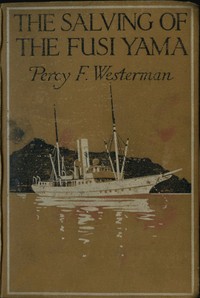
This digital edition of The Salving of the "Fusi Yama": A Post-War Story of the Sea — Reading Notes is described by source-level measurements including 66,707 words, 4 hr 51 min estimated reading time, and 9 detected text sections.
The text analysis averages about 15.1 words per sentence, while the detected sections provide another way to judge how the source is divided.
Project Gutenberg metadata also associates the work with “Sea stories,” connecting these edition facts with the source record’s subject description.
Explore this collection
These alternatives are selected using recorded categories and estimated reading time.
About 295 minutes
Wandering Heroes Classic Adventures
67,641 recorded words. 4 minutes difference from this book's estimate.
View Gutenberg source #38968About 275 minutes
Wandering Heroes Classic Adventures
63,222 recorded words. 16 minutes difference from this book's estimate.
View Gutenberg source #40574About 263 minutes
Wandering Heroes Classic Adventures
60,410 recorded words. 28 minutes difference from this book's estimate.
View Gutenberg source #41366Search stored excerpts and compare books → Choose by your preferences →
Choices use stored catalog measurements. Estimates vary with reading speed. A shared category is a catalog label, not a claim that two books have the same argument or literary quality.
Search reads excerpt text stored with this catalog and links to its associated Gutenberg record. The connection is stored in the site database; this tool does not recheck that every excerpt is word-for-word identical to that external record. Excerpt search does not cover every chapter and does not verify historical publication dates.
Catalog snapshot checked: 2026-09-26. Coverage: 97 public books, 97 available source excerpts.
Calculated from edition completeness, EPUB availability, text structure and catalogue metadata. Not a user rating.
Total of 100 points, scaled to a 2.5-5.0 range. Editions with an empty description or a missing EPUB file are not scored.
Public-domain source text
The source text is kept in the dedicated reader, separate from this catalogue record and its commentary.
The opening chapter introduces Jack Villiers and Bobby Beverley, late of the Motor Boat Reserve, who are restless after the war. Their banter—"a fish out of water isn't in it"—establishes a tone of lighthearted camaraderie. The narrative quickly shifts to practical concerns: anchoring the yacht Titania in a lagoon, assessing the bottom ("mud and pieces of coral rock"), and planning a shore station. The catalog subjects list "sea stories" and "warships — salvaging," which align with the wreck of the Fusi Yama, but the excerpts focus more on the crew's interactions and island exploration than on the salvage operation itself.
The dialogue between Villiers and Beverley is marked by period slang: "old top," "dear old thing," and "a fish out of water." This voice suggests a class-bound, informal hierarchy among the characters. The crew of the Titania acts "like a pack of schoolboys on a holiday," playing rounders with a coco-nut and climbing palms. The excerpts show no conflict or tension; instead, the mood is uniformly genial. This contrasts with the catalog subject of "treasure troves," which might imply greed or rivalry, but the text offers no evidence of such motives.
The island Nua Leha is described with specific features: a reef, a lagoon, a sandy beach, and a headland. The water depth is given as nine fathoms, and the anchor is laid out "about two hundred and fifty yards from the sandy shore." The narrator notes that the tide ranges only four feet six inches. These details ground the story in a plausible geography. The island appears uninhabited—"no human native gave sight or sound"—and the crew finds only wild pigs and penguins. The catalog subject "sea stories" is supported, but the salvage operation itself remains in the background.
Westerman uses precise nautical terms: "good holding ground," "fluke of an anchor," "ship-keeper." The characters discuss anchor types and bottom composition ("mud and pieces of coral rock"). This technical vocabulary suggests an audience familiar with seamanship. The catalog subject "warships — salvaging" is implicit in the wreck of the Fusi Yama, but the excerpts do not describe any salvage work. Instead, the focus is on the yacht's anchorage and the crew's leisure activities. The technical language serves more to establish authenticity than to advance a plot about treasure or salvage.
Readers should note that the excerpts cover only the early chapters and a middle section. The catalog subjects of treasure troves and juvenile fiction may become more prominent later, but the provided text emphasizes character interaction and setting. The book's post-war context is evident in the characters' restlessness, but the story's direction remains unclear from these passages alone.
There’s something comforting about watching men work together against the sea, even when the sea has already won once. That quiet competence reminds me of winter nights spent with The Bears of Blue River — Reading Companion, where survival isn’t about heroics, just patient, honest effort. The tropics and the frontier feel far apart, yet both hold that same gentle, steadfast rhythm.
Save your reaction, strongest insight, and memorable passage.