About 234 minutes
The Missouri Outlaws — Key Ideas to Explore
Wandering Heroes Classic Adventures
53,642 recorded words. 8 minutes difference from this book's estimate.
View Gutenberg source #44574
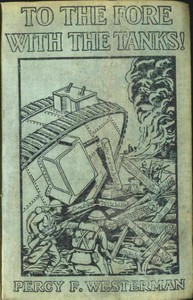
To the Fore with the Tanks! — Themes and Context can be approached with a clearer sense of reading commitment from its source measurements: 51,790 words, 3 hr 46 min estimated reading time, and 7 detected text sections.
The text analysis averages about 15.5 words per sentence, while the detected sections provide another way to judge how the source is divided.
Project Gutenberg metadata also associates the work with “War stories,” connecting these edition facts with the source record’s subject description.
Explore this collection
These alternatives are selected using recorded categories and estimated reading time.
About 234 minutes
Wandering Heroes Classic Adventures
53,642 recorded words. 8 minutes difference from this book's estimate.
View Gutenberg source #44574About 218 minutes
Wandering Heroes Classic Adventures
49,973 recorded words. 8 minutes difference from this book's estimate.
View Gutenberg source #53197About 208 minutes
Wandering Heroes Classic Adventures
47,747 recorded words. 18 minutes difference from this book's estimate.
View Gutenberg source #54915Search stored excerpts and compare books → Choose by your preferences →
Choices use stored catalog measurements. Estimates vary with reading speed. A shared category is a catalog label, not a claim that two books have the same argument or literary quality.
Search reads excerpt text stored with this catalog and links to its associated Gutenberg record. The connection is stored in the site database; this tool does not recheck that every excerpt is word-for-word identical to that external record. Excerpt search does not cover every chapter and does not verify historical publication dates.
Catalog snapshot checked: 2026-09-26. Coverage: 97 public books, 97 available source excerpts.
Calculated from edition completeness, EPUB availability, text structure and catalogue metadata. Not a user rating.
Total of 100 points, scaled to a 2.5-5.0 range. Editions with an empty description or a missing EPUB file are not scored.
Public-domain source text
The source text is kept in the dedicated reader, separate from this catalogue record and its commentary.
The novel opens with a jolting cattle-truck journey that sets the tone: the Second Wheatshires arrive at the Somme front in miserable March rain, stepping into "deep mud of the consistency of treacle." Westerman immediately establishes a documentary-like attention to material details—the painted legend "40 hommes ou 8 chevaux," the issue of steel trench helmets, and the distant rumble of artillery. The men are tired but elated, their banter contrasting with the ruined landscape of roofless houses silhouetted against a constant glare. This opening grounds the reader in the physical discomfort and grim reality of the Western Front, while hinting at the technical innovations (like the tanks) that will later dominate the narrative.
The early chapters immerse readers in the infantryman's experience: communication trenches, night attacks, and the peculiar routines of "Grub." Westerman's prose is lean and factual, avoiding melodrama. The mud is a constant presence—squelching, treacle-like, churned by boots and shells. When the narrative shifts to the tanks, the description becomes even more technical. The tank is described as a "mammoth charger" with a "tail" of wheels for steering, capable of making a half turn by reversing one tractor band. The author takes care to explain how the tank flattens barbed wire and crushes machine-gun emplacements, often with a clinical precision that suggests firsthand or researched knowledge of early armored warfare.
Westerman personifies the tank without anthropomorphizing it. It is "grimly and remorselessly" set to squash a "viper's nest." The machine's weight—"200 tons dead weight"—is a recurring detail, as is its ability to pivot in its own length. The tank's actions are described in mechanical terms: "climbing the rising ground with consummate ease" or "toppling" a cupola. Yet the crew inside, particularly Ralph Setley, remain the focus. The tank is a tool, not a hero; the heroism lies in the men who operate it. This balance between technical exposition and human action gives the novel a distinctive texture, part war manual, part adventure story.
The excerpts show a nuanced portrayal of German soldiers. Some fight to the last, believing "no quarter is accorded to machine-gunners." Others bolt and surrender, shouting "Kamerad." The final excerpt features a lone Hun who refuses to yield, standing with bayonet at the ready. Westerman avoids caricature: the Germans are capable of both dogged resistance and desperate surrender. The British soldiers, like the Cockney bomber Ginger, are equally varied—efficient, sometimes merciful, but always alert. The dialogue is sparse but effective, as when Ginger tells a prisoner, "Course you'll save your hide, Fritz."
The setting is relentlessly physical: roofless houses, crater-pitted earth, caved-in dug-outs, and barbed wire reduced to "scorched posts and short fragments of twisted wire." Westerman uses these details to create a landscape of destruction that is both specific and symbolic. The tank moves through this environment with a kind of brutal purpose, but the infantry remain vulnerable, slogging through mud and dodging shells. The contrast between the tank's armored invulnerability and the exposed infantryman is a quiet theme. Even the tank can be bogged or mined, as Setley suspects when he notes an "invitingly open" path that might conceal a pit.
Readers should attend to Westerman's technical vocabulary—terms like "tractor band," "cupola," and "Mills bomb"—which ground the fiction in contemporary military reality. The narrative moves briskly from set piece to set piece, but the most memorable passages are those where the author slows down to describe a machine's operation or a soldier's weary gesture. This is a book that rewards attention to its physical world: the weight of a pack, the wobble of a tin hat, the consistency of mud. Approach it as a period artifact that values accuracy over sentiment.
When I finished To the Fore with the Tanks!, I kept thinking about how machines become strangely personal in wartime—that quiet, odd intimacy with metal and noise. Since then, I found myself lingering on Cynthia Steps Out — Edition Insights with a similar warmth, though gentler. It’s less about mud, more about small, hesitant steps toward one’s own light. Both left me holding something tender that wasn’t there before.
Answer a few questions and save a private reflection on this device.