About 256 minutes
Ralph, the Train Dispatcher; Or, The Mystery of the Pay Car — Reading Companion
Fantasy Juvenile Worlds
58,674 recorded words. 1 minutes difference from this book's estimate.
View Gutenberg source #38969
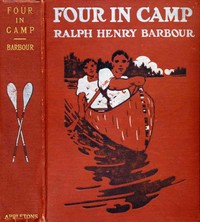
Four in Camp: A Story of Summer Adventures in the New Hampshire Woods — Reading Companion can be approached with a clearer sense of reading commitment from its source measurements: 58,607 words, 4 hr 15 min estimated reading time, and 24 detected text sections.
The text analysis averages about 14.9 words per sentence, while the detected sections provide another way to judge how the source is divided.
Project Gutenberg metadata also associates the work with “Friendship -- Juvenile fiction,” connecting these edition facts with the source record’s subject description.
Explore this collection
These alternatives are selected using recorded categories and estimated reading time.
About 256 minutes
Fantasy Juvenile Worlds
58,674 recorded words. 1 minutes difference from this book's estimate.
View Gutenberg source #38969About 257 minutes
Fantasy Juvenile Worlds
58,975 recorded words. 2 minutes difference from this book's estimate.
View Gutenberg source #43334About 252 minutes
Fantasy Juvenile Worlds
57,805 recorded words. 3 minutes difference from this book's estimate.
View Gutenberg source #51697Search stored excerpts and compare books → Choose by your preferences →
Choices use stored catalog measurements. Estimates vary with reading speed. A shared category is a catalog label, not a claim that two books have the same argument or literary quality.
Search reads excerpt text stored with this catalog and links to its associated Gutenberg record. The connection is stored in the site database; this tool does not recheck that every excerpt is word-for-word identical to that external record. Excerpt search does not cover every chapter and does not verify historical publication dates.
Catalog snapshot checked: 2026-09-26. Coverage: 97 public books, 97 available source excerpts.
Calculated from edition completeness, EPUB availability, text structure and catalogue metadata. Not a user rating.
Total of 100 points, scaled to a 2.5-5.0 range. Editions with an empty description or a missing EPUB file are not scored.
Public-domain source text
The source text is kept in the dedicated reader, separate from this catalogue record and its commentary.
Ralph Henry Barbour's Four in Camp (1905) builds its summer adventure around a clear structural pattern: the story alternates between the settled routines of Camp Chicora and the unpredictable challenges of the surrounding New Hampshire woods. The chapter titles themselves signal this rhythm, with phrases like "Tells of a Talk by the Camp-Fire" and "Describes an Afternoon on the Lake" giving way to "Has to Do with a Storm and Lightning" and "Begins a Midnight Adventure." The narrative moves steadily from the dormitory and baseball field to canoe trips and forest discoveries, then back again, creating a cycle of safety and risk.
The camp setting functions as both a physical stage for group activities and a symbolic sanctuary. Barbour devotes early chapters to establishing Camp Chicora's geography: the lake, the apple trees, the dormitory where boys talk by firelight. The baseball game against Chicora Inn, described in detail, shows how the camp's boundaries become contested space—the Inn's team includes an older ringer, "Monty" Williams, and the Camp boys must decide whether to play their own councilors in response. This tension between fair play and winning echoes through the book, with the camp serving as a moral anchor. The recurring image of the campfire, mentioned in chapter titles and scenes, provides a visual and emotional center: it is where plans are made, stories told, and bonds reinforced before the boys venture into the darker woods.
Water imagery appears repeatedly as a boundary between the known and the unknown. The lake is first seen from a distance in the opening line—"That's Chicora over there"—and becomes the setting for a motor-dory episode, an afternoon sail, and a canoe trip that ends in shipwreck. Barbour uses the lake to test his characters: Dan and Nelson play "hares" on the water, making a discovery and having a fright; later, a storm with lightning threatens the boys mid-lake. The lake is never merely scenic; it is a place where competence is proven and fear confronted. The motor-dory's ability to "go as well as stop" (chapter III) hints at the mechanical reliability that contrasts with the lake's unpredictable moods. Each crossing or voyage marks a shift in the story's tension, pushing the four friends toward greater self-reliance.
The baseball sequences, especially the extended game against Chicora Inn, serve as more than athletic set-pieces. They provide a structured, rule-bound counterpoint to the wilderness adventures. The game is described with precise play-by-play: strikes, balls, base hits, substitutions. When Bob protests the Inn's use of an older player, the dispute becomes a moral lesson about fairness and ingenuity. The arrival of Billy Carter, a Yale freshman pitcher, shifts the game's momentum and introduces a new character through action rather than description. Barbour uses the baseball diamond to display leadership, quick thinking, and the value of knowing one's teammates' hidden talents. The game's outcome—a tied score at 8–8 before the excerpt ends—leaves the resolution pending, mirroring how the book's structure often withholds closure until the next chapter.
The narrative's most distinctive structural feature is its deliberate oscillation between secure camp scenes and dangerous excursions. Chapter titles like "Tells How the Four Planned an Excursion" are immediately followed by "Has to Do with a Storm and Lightning, Discovers Tom in Tears." This pattern creates a rhythm of anticipation and consequence. The boys rarely remain in one mode for long: a midnight adventure threatens disaster, then concludes with Tom "sleeping the sleep of the just." Barbour reinforces this movement through recurring images of light and dark—campfire versus storm, daylight baseball versus nighttime frights. The woods themselves are described as both inviting and menacing, with discoveries (a derelict boat, a beetle) balanced by penalties and frights. This alternating structure keeps the reader oriented between comfort and challenge, never allowing either to dominate for too many pages.
Readers attentive to the book's structure will notice how Barbour uses chapter breaks to heighten suspense: nearly every chapter ends with a decision pending or a danger looming. The illustrations by C. M. Relyea, including the frontispiece showing boys in a rowboat, reinforce the visual contrast between calm water and impending action. Approaching Four in Camp as a series of carefully balanced episodes—camp life, lake journeys, baseball contests, forest adventures—reveals the craft beneath its straightforward adventure surface.
Reading about those New Hampshire boys, I remembered my own summer of tents and lake evenings—how a place itself seemed to hold the days’ quiet weight. The Little School-Mothers — Inside the Classic gave me that same sensation once: not the action, but the hush between adventures, where the real story lives. Both felt like remembering something I’d never quite lived.
Answer a few questions and save a private reflection on this device.