About 256 minutes
Ralph, the Train Dispatcher; Or, The Mystery of the Pay Car — Reading Companion
Fantasy Juvenile Worlds
58,674 recorded words. 1 minutes difference from this book's estimate.
View Gutenberg source #38969
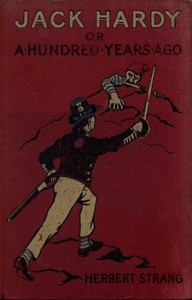
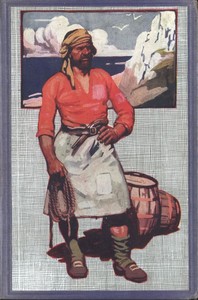
The source record for Jack Hardy: A Story of English Smugglers in the Days of Napoleon — Background and Themes measures this digital text at 58,975 words, 4 hr 17 min estimated reading time, and 8 detected text sections.
The text analysis averages about 14.6 words per sentence, while the detected sections provide another way to judge how the source is divided.
Project Gutenberg metadata also associates the work with “Sailors -- Juvenile fiction,” connecting these edition facts with the source record’s subject description.
Explore this collection
These alternatives are selected using recorded categories and estimated reading time.
About 256 minutes
Fantasy Juvenile Worlds
58,674 recorded words. 1 minutes difference from this book's estimate.
View Gutenberg source #38969About 258 minutes
Fantasy Juvenile Worlds
59,269 recorded words. 1 minutes difference from this book's estimate.
View Gutenberg source #54813About 255 minutes
Fantasy Juvenile Worlds
58,607 recorded words. 2 minutes difference from this book's estimate.
View Gutenberg source #50590Search stored excerpts and compare books → Choose by your preferences →
Choices use stored catalog measurements. Estimates vary with reading speed. A shared category is a catalog label, not a claim that two books have the same argument or literary quality.
Search reads excerpt text stored with this catalog and links to its associated Gutenberg record. The connection is stored in the site database; this tool does not recheck that every excerpt is word-for-word identical to that external record. Excerpt search does not cover every chapter and does not verify historical publication dates.
Catalog snapshot checked: 2026-09-26. Coverage: 97 public books, 97 available source excerpts.
Calculated from edition completeness, EPUB availability, text structure and catalogue metadata. Not a user rating.
Total of 100 points, scaled to a 2.5-5.0 range. Editions with an empty description or a missing EPUB file are not scored.
Public-domain source text
The source text is kept in the dedicated reader, separate from this catalogue record and its commentary.
The story opens with Jack Hardy clambering onto a coach at the White Hart in Southwark, his father’s parting words about Cousin Bastable already fading as he negotiates a turn at the reins. This early detail—Jack’s eagerness to drive—establishes a restless, hands-on character who will later climb roofs, loosen chimney bars, and plot escapes. The narrative moves briskly from the coach road to Wynport, then to Luscombe, shifting between open roads, cramped prison rooms, and moonlit coves. Recurring images of ropes, knots, and makeshift ladders tie these scenes together, while signals—lanterns, flags, or coded calls—become a structural device for advancing the plot.
The journey to Luscombe is not merely a backdrop; it sets a pattern of movement that defines the novel. Jack’s first ride on the coach roof, the argument with the coachman, and the five miles he takes “the ribbons” all emphasize speed and control. Later, travel by foot, cart, and ship repeats this motif. The road itself becomes a stage for encounters: the meeting with Mr. Nathaniel Gudgeon, the fight in Luscombe Market, and the clandestine trips to Congleton’s Hollow. Each journey is punctuated by a change of vehicle or terrain, marking shifts in Jack’s fortunes. The narrative rarely lingers; it presses forward like a coach on a turnpike, with brief stops for dialogue or description before moving on.
From the chimney bars in the French prison to the bedclothes knotted into a rope, the novel returns again and again to the problem of physical confinement and the tools used to overcome it. Jack and the sailor Babbage discuss every possible exit: windows, doors, roofs, chimneys. The chimney, in particular, is examined with care—the sergeant pokes his head up daily to check the bars, but Jack sees it as a potential route. The phrase “nary a way in but a way out” (attributed to Babbage’s absent brother Sol) becomes a quiet motto. These details are not mere adventure props; they reflect a structural interest in barriers and breaches, both literal and metaphorical.
Signals recur as a plot mechanism and a source of tension. The chapter titled “Signals” hints at coded messages between smugglers or between Jack and his allies. In the prison, a small light kept burning all night prevents the prisoners from working unseen at the window—a signal that works against them. Later, the capture of the Glorieuse and the battle at Binsey Cove likely hinge on visual or auditory cues. The novel treats signals as fragile: a missed lantern, a misunderstood shout, or a change in wind can alter the course of events. This attention to communication—and its failure—gives the story a tactical texture beyond simple chase-and-fight sequences.
The action oscillates between the coast and inland settings: the Fury’s cutter off Luscombe, the market square, the French prison at Verdun, and the coves where smugglers land their goods. Each location has distinct sensory details—the salt air of Sandy Cove, the cramped quarters of the cutter, the stone walls of the prison. Jack’s identity as a sailor is tested on land, where he must navigate social codes (visiting Cousin Bastable) and criminal networks (the smugglers). The sea is never far away, even when the characters are imprisoned miles inland; the hope of escape is always tied to reaching a boat. This constant shuttling between elements reinforces the novel’s central conflict: the tension between duty (serving on the Fury) and the lure of illicit freedom.
Readers will find that the novel rewards attention to small details: the way a coachman winks, the feel of a rope, the position of a chimney. The story’s structure—built on journeys, barriers, and signals—mirrors Jack’s own restlessness. Rather than a straightforward adventure, it offers a series of tactical problems to be solved, with the landscape itself as both obstacle and ally.
I found myself thinking of Jack Hardy late last night, how its moonlit shore felt so full of unspoken warnings, and then my mind drifted to Whispers at Dawn; Or, The Eye — Edition Insights. Both carry that ache of waiting, of watching windows for a signal you hope never comes. A quiet sort of dread, really, the kind that lingers after the page turns.
A brief reflection can help important ideas stay with you longer.