About 183 minutes
The Brownies and Prince Florimel; Or, Brownieland, Fairyland, and Demonland — Edition Insights
Fantasy Juvenile Worlds
42,062 recorded words. 3 minutes difference from this book's estimate.
View Gutenberg source #40502
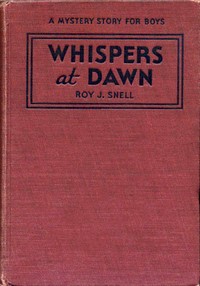
This digital edition of Whispers at Dawn; Or, The Eye — Edition Insights is described by source-level measurements including 42,574 words, 3 hr 6 min estimated reading time, and 6 detected text sections.
The text analysis averages about 10.9 words per sentence, while the detected sections provide another way to judge how the source is divided.
Project Gutenberg metadata also associates the work with “Mystery and detective stories,” connecting these edition facts with the source record’s subject description.
Explore this collection
These alternatives are selected using recorded categories and estimated reading time.
About 183 minutes
Fantasy Juvenile Worlds
42,062 recorded words. 3 minutes difference from this book's estimate.
View Gutenberg source #40502About 182 minutes
Fantasy Juvenile Worlds
41,702 recorded words. 4 minutes difference from this book's estimate.
View Gutenberg source #46020About 178 minutes
Fantasy Juvenile Worlds
40,904 recorded words. 8 minutes difference from this book's estimate.
View Gutenberg source #55806Search stored excerpts and compare books → Choose by your preferences →
Choices use stored catalog measurements. Estimates vary with reading speed. A shared category is a catalog label, not a claim that two books have the same argument or literary quality.
Search reads excerpt text stored with this catalog and links to its associated Gutenberg record. The connection is stored in the site database; this tool does not recheck that every excerpt is word-for-word identical to that external record. Excerpt search does not cover every chapter and does not verify historical publication dates.
Catalog snapshot checked: 2026-09-26. Coverage: 97 public books, 97 available source excerpts.
Calculated from edition completeness, EPUB availability, text structure and catalogue metadata. Not a user rating.
Total of 100 points, scaled to a 2.5-5.0 range. Editions with an empty description or a missing EPUB file are not scored.
Public-domain source text
The source text is kept in the dedicated reader, separate from this catalogue record and its commentary.
From its first paragraph, Whispers at Dawn signals that it will treat the fantastic as plausible. Johnny Thompson steps into a brownstone near Chicago's Century of Progress, and the door closes silently behind him. A blue glow, a pencil of light, an eye in the wall that appears to wink, and a skeleton that moves its hands—all within a few pages. The author's note insists these feats are "a fairly exact recording" of real electrical magic, grounding the eerie in contemporary science.
The opening chapter, "Three Black Boxes," establishes a pattern: Johnny encounters a locked room, a disembodied voice, and a mechanical eye before terror gives way to action. Snell wastes no time in introducing the central mystery—the Eye—and the boy's role as an investigator thrust into a world where walls have eyes and skeletons tremble.
The first chapter's most striking device is the absence of a visible speaker. When the door opens, a voice says "Step inside, please," but "there was no face. The space before him was empty." This disorientation recurs: the door locks immovably, the light appears from nowhere, and the eye seems to watch. Snell builds suspense through sensory limitation—darkness, silence, a single beam of light. Johnny's reactions are physical: his heart "went wild," his breath comes "short and quick," and he feels like "a bird charmed by a snake." The skeleton's movement pushes him toward collapse, but the chapter ends before we learn what happens next. This technique of withholding the source of threat while amplifying the protagonist's vulnerability is used throughout the excerpts.
Later excerpts introduce Gunderson Shotts, a "huge youth with a thick crop of hair" who climbs buildings like a gorilla and calls himself Spider. His first appearance is comic—he clings to a corner near the top of an apartment building, roaring with laughter while a crowd of "flashily dressed youths" dares him. But Captain Burns, a police officer, sees potential: "You're a fighter, an eater, and a climber. That's all it takes to make a first class cop." Spider's backstory includes helping Johnny during a runaway balloon adventure, which the Captain recalls. Snell uses Spider to inject physical humor and a rough-hewn loyalty into the story. The character's name, his wild mane, and his habit of minding "everybody's business" mark him as a distinctive sidekick, though the excerpts do not reveal his full role in the plot.
Midway through the excerpts, the focus shifts to Grace Krowl, who "with a guilty feeling" begins examining personal letters and papers taken from a "thin trunk with orange stripes." The line "It is as if someone were looking over" breaks off, leaving her motives and the trunk's origin unclear. This fragment suggests a parallel investigation—perhaps a second protagonist or a rival. Snell's decision to introduce a female character who handles stolen documents adds a layer of moral ambiguity: Grace feels guilt, yet she delves anyway. The trunk's striped appearance is a concrete detail that contrasts with the earlier abstract horrors. Whether Grace is an ally, a suspect, or a victim is not established in the excerpts, but her presence broadens the story beyond Johnny's lone perspective.
Snell's author's note promises that the book's fantastic events are grounded in real electrical wizardry. The opening chapter delivers: a door that locks without a key, a light that appears from the wall, and an eye that seems to wink are all presented as mechanical tricks rather than supernatural phenomena. The skeleton's movement, too, is likely a contraption. This scientific veneer allows Snell to indulge in eerie set pieces while maintaining a rational explanation. The Chicago setting—near the Century of Progress exposition, a world's fair showcasing technology—reinforces the theme. Readers in 1934 would recognize the fair's electrical exhibits, making the story's marvels feel contemporary. The excerpts do not reveal how these devices work, but they establish that the mystery revolves around hidden technology as much as human villains.
Whispers at Dawn rewards a reader who pays attention to mechanical details and character introductions. The opening chapter's locked room and moving skeleton are not just scares—they are clues to the kind of world Snell builds. Johnny's fear is real, but the story quickly pivots to action, introducing allies like Spider and Captain Burns. The incomplete excerpt about Grace Krowl suggests a subplot that may intersect with the main mystery. Approach the book as a puzzle where every strange sight—an eye in the wall, a skeleton that moves, a trunk with orange stripes—has a logical, if sensational, explanation.
Reading about Johnny and that winking eye, I remembered sitting in my uncle’s lamplit study, a borrowed copy of Ralph, the Train Dispatcher; Or, The Mystery of the Pay Car — Reading Companion open on my lap. Both books share that same creaky, expectant hush before something mechanical whirs to life—not fear, exactly, but a held breath. The skeleton moved, and I was seven again, believing every shadow hid a signal.
Create a short personal record of your experience with this book.