1

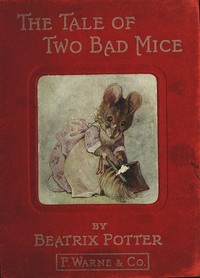
The Tale of Two Bad Mice — A Reader’s Guide
(0 User reviews)
27
Project Gutenberg
2014
Not confirmed
Conduct of life -- Juvenile fiction; Mice -- Juvenile fiction; Theft -- Juvenile fiction; Dollhouses -- Juvenile fiction
Readers of public-domain and historical texts
Project Gutenberg digital edition
en
Edition facts
Words
4,090
Reading time
18 min
Text sections
1
This digital edition of The Tale of Two Bad Mice — A Reader’s Guide is described by source-level measurements including 4,090 words, 18 min estimated reading time, and 1 detected text section.
The text analysis averages about 22.4 words per sentence, while the detected sections provide another way to judge how the source is divided.
Project Gutenberg metadata also associates the work with “Conduct of life -- Juvenile fiction,” connecting these edition facts with the source record’s subject description.
Source:
Project Gutenberg record #45264
Beatrix Potter's 1904 tale follows Tom Thumb and Hunca Munca, two mice who break into a doll's house, only to find the feast is plaster and paint. The story shifts from quiet domesticity to comic destruction, then to an unexpectedly tender resolution.
Editorial Edition Score
4.4/5
★★★★★
★★★★★
Calculated from edition completeness, EPUB availability, text structure and catalogue metadata. Not a user rating.
How this score is calculated
- Description quality20 pts
- Title & short description10 pts
- Source metadata20 pts
- Text length15 pts
- Chapters / structure15 pts
- EPUB file integrity20 pts
Total of 100 points, scaled to a 2.5-5.0 range. Editions with an empty description or a missing EPUB file are not scored.
Edition quality
Read the Text
Jane was the Cook; but she never did any cooking, because the dinner had been bought ready-made, in a box full of shavings.
THERE were two red lobsters and a ham, a fish, a pudding, and some pears and oranges.
They would not come off the plates, but they were extremely beautiful.
ONE morning Lucinda and Jane had gone out for a drive in the doll's perambulator. There was no one in the nursery, and it was very quiet. Presently there was a little scuffling, scratching noise in a corner near the fire-place, where there was a hole under the skirting-board.
Tom Thumb put out his head for a moment, and then popped it in again.
Tom Thumb was a mouse.
A MINUTE afterwards, Hunca Munca, his wife, put her head out, too; and when she saw that there was no one in the nursery, she ventured out on the oilcloth under the coal-box.
THE doll's-house stood at the other side of the fire-place. Tom Thumb and Hunca Munca went cautiously across the hearthrug. They pushed the front door--it was not fast.
TOM THUMB and Hunca Munca went upstairs and peeped into the dining-room. Then they squeaked with joy!
Such a lovely dinner was laid out upon the table! There were tin spoons, and lead knives and forks, and two dolly-chairs--all _so_ convenient!
TOM THUMB set to work at once to carve the ham. It was a beautiful shiny yellow, streaked with red.
The knife crumpled up and hurt him; he put his finger in his mouth.
"It is not boiled enough; it is hard. You have a try, Hunca Munca."
HUNCA MUNCA stood up in her chair, and chopped at the ham with another lead knife.
"It's as hard as the hams at the cheesemonger's," said Hunca Munca.
THE ham broke off the plate with a jerk, and rolled under the table.
"Let it alone," said Tom Thumb; "give me some fish, Hunca Munca!"
HUNCA MUNCA tried every tin spoon in turn; the fish was glued to the dish.
Then Tom Thumb lost his temper. He put the ham in the middle of the floor, and hit it with the tongs and with the shovel--bang, bang, smash, smash!
The ham flew all into pieces, for underneath the shiny paint it was made of nothing but plaster!
THEN there was no end to the rage and disappointment of Tom Thumb and Hunca Munca. They broke up the pudding, the lobsters, the pears and the oranges.
As the fish would not come off the plate, they put it into the red-hot crinkly paper fire in the kitchen; but it would not burn either.
TOM THUMB went up the kitchen chimney and looked out at the top--there was no soot.
WHILE Tom Thumb was up the chimney, Hunca Munca had another disappointment. She found some tiny canisters upon the dresser, labelled--Rice--Coffee--Sago--but when she turned them upside down, there was nothing inside except red and blue beads.
THEN those mice set to work to do all the mischief they could--especially Tom Thumb! He took Jane's clothes out of the chest of drawers in her bedroom, and he threw them out of the top floor window.
But Hunca Munca had a frugal mind. After pulling half the feathers out of Lucinda's bolster, she remembered that she herself was in want of a feather bed.
WITH Tom Thumb's assistance she carried the bolster downstairs, and across the hearth-rug. It was difficult to squeeze the bolster into the mouse-hole; but they managed it somehow.
THEN Hunca Munca went back and fetched a chair, a book-case, a bird-cage, and several small odds and ends. The book-case and the bird-cage refused to go into the mouse-hole.
HUNCA MUNCA left them behind the coal-box, and went to fetch a cradle.
HUNCA MUNCA was just returning with another chair, when suddenly there was a noise of talking outside upon the landing. The mice rushed back to their hole, and the dolls came into the nursery.
WHAT a sight met the eyes of Jane and Lucinda!
Lucinda sat upon the upset kitchen stove and stared; and Jane leant against the kitchen dresser and smiled--but neither of them made any remark.
THE book-case and the bird-cage were rescued from under the coal-box--but Hunca Munca has got the cradle, and some of Lucinda's clothes.
SHE also has some useful pots and pans, and several other things.
THE little girl that the doll's-house belonged to, said,--"I will get a doll dressed like a policeman!"
BUT the nurse said,--"I will set a mouse-trap!"
SO that is the story of the two Bad Mice,--but they were not so very very naughty after all, because Tom Thumb paid for everything he broke.
Beatrix Potter's The Tale of Two Bad Mice opens with a doll's house described in precise, almost architectural detail: red brick, white windows, real muslin curtains. The narrator's tone is matter-of-fact, yet the accumulation of specifics—the house belongs to Lucinda, but she never orders meals; Jane is the cook, but never cooks—creates a quiet, ironic comedy. The dinner, bought ready-made in a box of shavings, is 'extremely beautiful' but inedible. This tension between appearance and reality sets the stage for the mice's entrance.
From Quiet to Chaos: The Shift in Pace
The narrative pace accelerates sharply once Tom Thumb and Hunca Munca enter. Early sentences are short and measured: 'Tom Thumb put out his head for a moment, and then popped it in again.' The mice move 'cautiously across the hearthrug.' But when they discover the dining-room, the tempo changes. They 'squeaked with joy.' The ham is carved, the knife crumples, and frustration mounts. The breaking point comes when Tom Thumb loses his temper: 'He put the ham in the middle of the floor, and hit it with the tongs and with the shovel—bang, bang, smash, smash!' The repetition of 'bang' and 'smash' mimics the physical violence, and the sentence structure itself becomes percussive. The destruction is described in a rapid, almost breathless sequence: 'They broke up the pudding, the lobsters, the pears and the oranges.' The pace then slows again as the mice, their rage spent, begin to carry useful items home.
Voice and the Gap Between Expectation and Reality
Potter's narrative voice maintains a cool, reportorial tone even as the mice wreak havoc. The ham is 'a beautiful shiny yellow, streaked with red'—but 'underneath the shiny paint it was made of nothing but plaster.' The narrator never moralizes directly; the comedy arises from the gap between the mice's expectations and the truth. Hunca Munca's remark, 'It's as hard as the hams at the cheesemonger's,' is a rare moment of character speech that reveals her prior experience. The mice are not merely destructive; they are disappointed. Their rage is a response to being tricked by appearances. The narrator records their actions without judgment: 'Then there was no end to the rage and disappointment.' The phrase 'no end' is telling—it suggests an emotion that cannot be contained, yet the narrative itself remains contained, even prim.
Recurring Details: Plaster, Paint, and the Real
Throughout the excerpts, the motif of false surfaces recurs. The ham is 'shiny yellow' but plaster; the fish is 'glued to the dish'; the pudding, lobsters, pears, and oranges are all inedible. Even the fire is 'red-hot crinkly paper.' The doll's house is a world of imitation: real curtains, but fake food. The mice's initial awe—'Such a lovely dinner'—gives way to a systematic testing of each item. Hunca Munca 'tried every tin spoon in turn.' The physical details are precise: the knife 'crumpled up,' the ham 'broke off the plate with a jerk.' These small, concrete observations ground the fantasy in a tactile reality. The mice's response is to treat the fake food as real, hitting it with tongs and shovel. The narrator's focus on these material details—the 'shiny paint,' the 'plaster'—underscores the theme of deception, but does so through sensory description rather than explicit commentary.
Readers familiar with Potter's other tales will recognize the blend of precise observation and understated humor. The story's brevity—around 4,000 words—belies its careful construction. Pay attention to the way Potter uses sentence length to control mood, and to the small, telling details that reveal character: Hunca Munca's practicality, Tom Thumb's impulsiveness. The ending, not included here, is said to offer a surprising turn that reframes the earlier destruction.
I first read The Tale of Two Bad Mice on a rainy afternoon, and I still think about how that little house felt so breakable—and how the repair, with the penny under the ham, came quietly, without fuss. There’s a similar softness in The Wyndham Girls — Reading Notes, where small cracks and mended things seem to matter most. It reminds me of that feeling, all these years later.
There are no reviews for this eBook.
There are no comments for this eBook.
Reader reflection
Take a moment to reflect on this book
Create a short personal record of your experience with this book.
Your progress
0
/
10
2
How much did you enjoy the reading experience?
3
How likely are you to recommend this book?
4
Did the language feel accessible?
5
Which element worked best for you?
6
Is this a title worth rereading?
7
What did you think about the pace?
8
Did any part of the book stay with you emotionally?
9
What changed or sharpened your thinking?
10