About 333 minutes
Monica's choice — Story, Setting & Ideas
Fantasy Juvenile Worlds
76,378 recorded words. 2 minutes difference from this book's estimate.
View Gutenberg source #45432
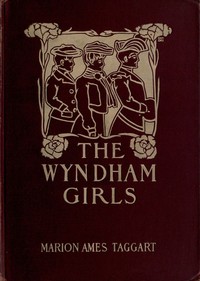
The Wyndham Girls — Reading Notes can be approached with a clearer sense of reading commitment from its source measurements: 75,970 words, 5 hr 31 min estimated reading time, and 22 detected text sections.
The text analysis averages about 18.9 words per sentence, while the detected sections provide another way to judge how the source is divided.
Project Gutenberg metadata also associates the work with “New York (N.Y.) -- Juvenile fiction,” connecting these edition facts with the source record’s subject description.
Explore this collection
These alternatives are selected using recorded categories and estimated reading time.
About 333 minutes
Fantasy Juvenile Worlds
76,378 recorded words. 2 minutes difference from this book's estimate.
View Gutenberg source #45432About 358 minutes
Fantasy Juvenile Worlds
82,311 recorded words. 27 minutes difference from this book's estimate.
View Gutenberg source #41515About 298 minutes
Fantasy Juvenile Worlds
68,455 recorded words. 33 minutes difference from this book's estimate.
View Gutenberg source #42870Search stored excerpts and compare books → Choose by your preferences →
Choices use stored catalog measurements. Estimates vary with reading speed. A shared category is a catalog label, not a claim that two books have the same argument or literary quality.
Search reads excerpt text stored with this catalog and links to its associated Gutenberg record. The connection is stored in the site database; this tool does not recheck that every excerpt is word-for-word identical to that external record. Excerpt search does not cover every chapter and does not verify historical publication dates.
Catalog snapshot checked: 2026-09-26. Coverage: 97 public books, 97 available source excerpts.
Calculated from edition completeness, EPUB availability, text structure and catalogue metadata. Not a user rating.
Total of 100 points, scaled to a 2.5-5.0 range. Editions with an empty description or a missing EPUB file are not scored.
Public-domain source text
The source text is kept in the dedicated reader, separate from this catalogue record and its commentary.
The novel begins not with a crisis but with a leisurely debate over dress fabrics: Barbara wants a “shimmering green” over white silk, Jessamy prefers white mousseline de soie, and Phyllis hesitates between pearl and violet. The May wind lifts lace curtains and fabric samples, establishing a comfortable domestic setting that will soon be disrupted. The sisters’ contrasting personalities emerge immediately—Barbara impulsive and poetic, Jessamy stately and refined, Phyllis thoughtful and demure. This opening scene, focused on trivial choices, becomes a baseline against which the family’s later financial strain is measured.
The excerpts reveal the Wyndhams’ changed circumstances not through narration but through conversation. Barbara’s remark, “Wouldn’t it be nice if we could get some of our money back?” signals that the family has lost its wealth. Phyllis reflects that they “can never forget” the “seamy side” of life, suggesting a recent fall from comfort. The legal subplot arrives obliquely: Mrs. Van Alyn mentions a young lawyer, Mr. Robert Lane, who needs to meet Jessamy regarding a disputed inheritance. The sisters’ responses—Jessamy’s willingness to help, Barbara’s sharp curiosity, Phyllis’s moralizing—show how each copes with uncertainty. The reader learns of the family’s past prosperity and present anxiety through these layered exchanges, not through exposition.
Marion Ames Taggart distinguishes the three sisters through small verbal and physical details. Barbara speaks in exclamations and metaphors (“a poetical metaphor—figure—what do you call it?”), while Jessamy’s speech is measured and gracious. Phyllis, the middle sister, tends toward earnest reflection. Their interactions with Mrs. Van Alyn, a neighbor who lost her own children, add emotional depth: her “sweet face clouded” when she contrasts the lively room with her empty house. The cat Truce, the kitten Nixie, and a young man named Tom appear as minor figures who hint at romantic or friendly subplots. The excerpts do not develop these threads fully, but they establish a world where character is revealed through domestic routines and quiet conversations.
Mrs. Van Alyn functions as a confidante and catalyst. She arranges Jessamy’s meeting with the lawyer, shielding the mother from possible disappointment. Her offer to “carry Jessamy off to lunch” while the lawyer calls at half-past two moves the plot forward without melodrama. The excerpts show her kindness but also her own grief: her three daughters died of diphtheria years ago. This backstory is delivered in a single sentence, yet it colors her interactions with the Wyndham girls. She calls them “Phyllida and Babette,” using affectionate variants of their names, and praises their needlework. Her presence suggests that the novel’s support network extends beyond the immediate family, and that the girls’ resourcefulness is observed and aided by a sympathetic elder.
The excerpts break off before the lawyer’s visit and before any resolution of the inheritance question. The reader knows only that the family has lost money, that a legal challenge may restore some of it, and that the sisters are learning to adapt. Phyllis’s comment that they have “gained a kitten” and the friendship of “Nixie’s master” hints at developing relationships, but the excerpts do not reveal outcomes. Ruth’s teasing reference to “making croquettes” suggests inside jokes and shared experiences not yet explained. This fragmentary view places the reader in the position of an eavesdropper, picking up clues about the family’s past and future from casual talk. The story’s full arc—whether the Wyndhams recover their fortune, how the sisters’ characters evolve, and which romantic or domestic threads resolve—remains unknown from these passages alone.
The excerpts are rich with sensory specifics: the “soft May wind,” the “squares of delicate fabrics,” the “blush roses” in Jessamy’s hat, the cat Truce’s tail. These details ground the dialogue in a tangible world. The sisters’ concern with dress and appearance is not frivolous; it reflects their social position and the importance of presentation in their community. When Barbara tickles Truce’s nose with his tail, the gesture is both playful and revealing of her restless energy. The novel’s setting—New York City, implied by the distant river and references to lawyers and social calls—provides a backdrop of urban gentility. These concrete elements help the reader imagine the Wyndhams’ life even as the plot remains partially obscured.
The excerpts from The Wyndham Girls offer a series of vignettes rather than a continuous narrative. Readers should pay attention to how each sister’s speech patterns and reactions to stress differ, as these contrasts likely drive the story’s conflicts and resolutions. The legal subplot, introduced through Mrs. Van Alyn, may prove central, but the domestic scenes and character interactions are equally important. The novel rewards close reading of its dialogue and descriptive details, which together build a portrait of a family navigating change.
I finished The Wyndham Girls feeling like I’d sat too long in a warm kitchen, listening. Their quiet stubbornness, how they held each other up when the money slipped away—it stayed with me for days. Something similar lingers in The Border Boys with the Texas Rangers — Context and Discussion, that same odd tenderness between people who just keep going.
Build a private reading journal entry for this title.