About 298 minutes
Mildred Keith — A Reader’s Guide
Fantasy Juvenile Worlds
68,455 recorded words. 3 minutes difference from this book's estimate.
View Gutenberg source #42870
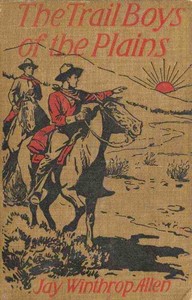
For The Trail Boys of the Plains; Or, The Hunt for the Big Buffalo — A Reader’s Guide, the stored edition analysis reports 67,827 words, 4 hr 55 min estimated reading time, and 8 detected text sections.
The text analysis averages about 12.5 words per sentence, while the detected sections provide another way to judge how the source is divided.
Project Gutenberg metadata also associates the work with “West (U.S.) -- Juvenile fiction,” connecting these edition facts with the source record’s subject description.
Explore this collection
These alternatives are selected using recorded categories and estimated reading time.
About 298 minutes
Fantasy Juvenile Worlds
68,455 recorded words. 3 minutes difference from this book's estimate.
View Gutenberg source #42870About 289 minutes
Fantasy Juvenile Worlds
66,255 recorded words. 6 minutes difference from this book's estimate.
View Gutenberg source #45974About 277 minutes
Fantasy Juvenile Worlds
63,705 recorded words. 18 minutes difference from this book's estimate.
View Gutenberg source #45398Search stored excerpts and compare books → Choose by your preferences →
Choices use stored catalog measurements. Estimates vary with reading speed. A shared category is a catalog label, not a claim that two books have the same argument or literary quality.
Search reads excerpt text stored with this catalog and links to its associated Gutenberg record. The connection is stored in the site database; this tool does not recheck that every excerpt is word-for-word identical to that external record. Excerpt search does not cover every chapter and does not verify historical publication dates.
Catalog snapshot checked: 2026-09-26. Coverage: 97 public books, 97 available source excerpts.
Calculated from edition completeness, EPUB availability, text structure and catalogue metadata. Not a user rating.
Total of 100 points, scaled to a 2.5-5.0 range. Editions with an empty description or a missing EPUB file are not scored.
Public-domain source text
The source text is kept in the dedicated reader, separate from this catalogue record and its commentary.
The novel opens with a debate between Chet Havens and Dig Fordham about the existence of a giant buffalo bull. Chet braids a whiplash while Dig carves his initials into a horse-block, their casual actions contrasting with the grand adventure they discuss. The dialogue reveals their distinct personalities: Chet is cautious and analytical, Dig impulsive and enthusiastic. The excerpt establishes the central quest—hunting the “king of them all”—and introduces the unreliable informant Tony Traddles, whose exaggerations are dismissed by Dig. This opening primes readers for a story that balances humor with peril.
The opening chapter quickly establishes the friendship between Chet and Dig through their banter. Chet is described as “nice-looking, fair-haired” with “long, dextrous, capable hands,” while Dig is “sturdily built” with a “broad, good-humoured face.” Their speech patterns differ: Chet uses measured phrases like “it would be some contract to capture such a bull,” while Dig bursts out with exclamations like “By the last hoptoad that was chased out of Ireland!” This contrast creates a natural rhythm. Readers can observe how their camaraderie is tested later, as when Dig falls asleep on watch and Chet throws an empty milk-can at him, shouting “What d’ye mean—sleeping like this?” The text relies on dialogue to advance the plot and reveal character, a technique typical of juvenile adventure fiction.
A middle excerpt depicts a wolf attack on the boys’ camp. Chet shoots a wolf that is about to kill their maverick calf, Stone Fence. The scene mixes tension with comedy: Dig, waking confused, begs “Don’t kill him! don’t kill him, Chet! The poor thing hasn’t bucked you into the brook.” Chet’s reply—“You bet I killed him”—and Dig’s subsequent complaint about being woken up lighten the danger. The narrative then shifts to the wolves’ perspective, describing how they “skulked along the watercourse” and “fought over their comrade.” This omniscient viewpoint adds depth, showing the wolves’ behavior while the boys sleep. The episode ends with Chet discovering Dig failed to keep watch, leading to a comedic scolding. The blend of peril and humor is a hallmark of the book’s tone.
The excerpts offer vivid but economical descriptions of the plains environment. The camp is set near a “watercourse” and “thicket,” with a fire that “burned down to mere embers.” Sensory details include the “smell of their brother’s blood” attracting wolves, the “snapping of slavering jaws,” and the horses moving “uneasily.” The text also notes the time of year indirectly: wolves are less bold in warmer months, as Chet observes, “They’re not hungry enough to be brave yet. In the dead of winter, however, they’d have come right in to the fire.” Such details ground the adventure in a specific landscape and season. Readers attentive to these cues will better appreciate the characters’ resourcefulness and the risks they face.
The title and opening chapter promise a hunt for a legendary buffalo, but the excerpts show the boys engaged in other activities—braiding whips, dealing with wolves, and managing a maverick. The buffalo hunt appears to be a long-term goal rather than an immediate plot. The table of contents lists chapters like “The First Buffalo” and “The King of Them All,” suggesting the hunt builds gradually. Readers should not expect a single, continuous chase; instead, the narrative likely weaves multiple adventures together. The opening dialogue establishes the buffalo as a mythic figure, with Chet noting it “must be as strong as an elephant.” This sets up a payoff that may come late in the story. The excerpts do not reveal whether the boys succeed, leaving the outcome open.
Readers approaching this novel for the first time will benefit from paying attention to the dialogue, which carries much of the characterization and humor. The excerpts show that the book balances action with lighthearted moments, and the setting is rendered through specific, sensory details rather than lengthy descriptions. The hunt for the big buffalo is a framing device, but the real appeal lies in the day-to-day adventures and the friendship between Chet and Dig. Enjoy the journey.
Remember reading it under the porch light—those boys’ rough laughter carrying past the wolf growls. The hunt mattered, sure, but what lingered was how friendship held the fear at bay. That same warmth surfaced years later with The Little School-Mothers — Inside the Classic, where the quiet care felt familiar, like finding an old blanket folded in a drawer.
Use these questions to collect your thoughts before moving on.