About 267 minutes
Jill: A Flower Girl — Edition Insights
Fantasy Juvenile Worlds
61,278 recorded words. 3 minutes difference from this book's estimate.
View Gutenberg source #43141
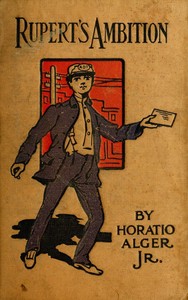
Before opening Rupert's Ambition — Reading Companion, the edition data offers a quick orientation: 60,619 words, 4 hr 24 min estimated reading time, and 8 detected text sections.
The text analysis averages about 10.7 words per sentence, while the detected sections provide another way to judge how the source is divided.
Project Gutenberg metadata also associates the work with “Conduct of life -- Juvenile fiction,” connecting these edition facts with the source record’s subject description.
Explore this collection
These alternatives are selected using recorded categories and estimated reading time.
About 267 minutes
Fantasy Juvenile Worlds
61,278 recorded words. 3 minutes difference from this book's estimate.
View Gutenberg source #43141About 261 minutes
Fantasy Juvenile Worlds
59,870 recorded words. 3 minutes difference from this book's estimate.
View Gutenberg source #47966About 268 minutes
Fantasy Juvenile Worlds
61,442 recorded words. 4 minutes difference from this book's estimate.
View Gutenberg source #44227Search stored excerpts and compare books → Choose by your preferences →
Choices use stored catalog measurements. Estimates vary with reading speed. A shared category is a catalog label, not a claim that two books have the same argument or literary quality.
Search reads excerpt text stored with this catalog and links to its associated Gutenberg record. The connection is stored in the site database; this tool does not recheck that every excerpt is word-for-word identical to that external record. Excerpt search does not cover every chapter and does not verify historical publication dates.
Catalog snapshot checked: 2026-09-26. Coverage: 97 public books, 97 available source excerpts.
Calculated from edition completeness, EPUB availability, text structure and catalogue metadata. Not a user rating.
Total of 100 points, scaled to a 2.5-5.0 range. Editions with an empty description or a missing EPUB file are not scored.
Public-domain source text
The source text is kept in the dedicated reader, separate from this catalogue record and its commentary.
Rupert Rollins, a sixteen-year-old clerk in a New York dry-goods house, is summoned by the superintendent in the first chapter. The scene establishes a pattern of economic vulnerability: Rupert has been employed only six months, and the superintendent speaks in “quick tones” that signal bad news. The novel quickly moves from this loss to a series of precarious situations—out of work, tight places, false reports—before Rupert lands a job as a bell-boy at a hotel. There he encounters a Colorado cattleman named Giles Packard, who becomes a benefactor. The excerpts show Alger’s method of building tension through small, concrete details: the folding of cloth, the three dollars a week for board, the fifty dollars a year for clothing. These numbers anchor the story in a world where every dollar matters.
The opening chapter, “Rupert Loses His Place,” establishes a rhythm of abrupt change that runs through the excerpts. Rupert is told to see the superintendent; he finishes folding pieces of cloth before going. The superintendent asks how long he has worked—“nearly six months”—and Rupert is one of the last clerks taken on. The dialogue is clipped, with no explanation given in the excerpt. This pattern recurs: Rupert later loses his bell-boy position (chapter 28) and encounters a “false report” (chapter 4). The novel’s structure depends on these sudden shifts, each one forcing Rupert to adapt. The language of employment is precise: “situation,” “place,” “employ.” Rupert’s ambition is not abstract; it is the drive to keep a job and improve his circumstances.
When Rupert adopts the orphan Fred, the narrative immediately turns to financial arrangements. Mrs. Benton at first refuses payment, but Rupert insists, citing the father’s left money. They settle on three dollars a week for board, and Mrs. Benton estimates clothing at “not over fifty dollars a year.” Rupert tells Mr. Packard that the money left by Fred’s father will cover expenses until he earns more. These figures are not incidental; they are the novel’s way of measuring responsibility. Rupert’s decision to be Fred’s “sole guardian” is framed as a financial choice as much as an emotional one. The cattleman offers to share expenses, but Rupert declines, wanting Fred to “learn to love me.” The negotiation over board reveals how Alger uses money to define character and commitment.
Giles Packard, the man from Colorado, functions as a catalyst for change. He first appears in chapter 17 (“Mr. Packard of Colorado”) and later gives Rupert a gift that the excerpts do not fully describe—only that it is a “large-si” (likely a check or banknote). Packard’s wealth is contrasted with Rupert’s careful budgeting. When Packard offers to help with Fred’s expenses, Rupert refuses, so Packard decides to “get even” by making a present. The gift is a plot device, but it also highlights a theme of trust: Packard trusts Rupert with money, just as Rupert trusts Mrs. Benton with Fred. The Colorado setting (Red Gulch, the St. James Hotel in Denver) introduces a Western element that shifts the story’s geography. The excerpts suggest that Packard’s gift may enable Rupert’s later adventures, including an Indian guide and a rogue to manage.
Readers should pay attention to the recurring motif of money—how much things cost, who pays, and what is refused. Alger’s world is one where every transaction carries moral weight. The excerpts offer only fragments of the plot, but they reveal a consistent method: a hero who loses a job, gains a responsibility, and receives help from a wealthy stranger. The novel’s title, Rupert’s Ambition, is best understood not as a grand dream but as a series of practical decisions about work, family, and trust.
There's something tender about Rupert, a boy scrambling through Alger’s reversals yet pausing to care for an orphan. That unexpected softness lingered with me, much like the quiet ache I felt finishing Larkspur. Both books hold that same odd warmth—ambition braided with a strange, unspoken loneliness. I kept thinking about it long after. Larkspur — A Closer Reading feels like a gentle echo of that feeling, somehow.
Answer a few questions and save a private reflection on this device.