About 267 minutes
Jill: A Flower Girl — Edition Insights
Fantasy Juvenile Worlds
61,278 recorded words. 1 minutes difference from this book's estimate.
View Gutenberg source #43141
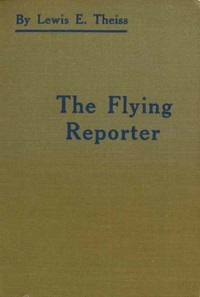
This digital edition of The Flying Reporter — Text and Context is described by source-level measurements including 61,442 words, 4 hr 28 min estimated reading time, and 5 detected text sections.
The text analysis averages about 13.4 words per sentence, while the detected sections provide another way to judge how the source is divided.
Project Gutenberg metadata also associates the work with “Mystery and detective stories,” connecting these edition facts with the source record’s subject description.
Explore this collection
These alternatives are selected using recorded categories and estimated reading time.
About 267 minutes
Fantasy Juvenile Worlds
61,278 recorded words. 1 minutes difference from this book's estimate.
View Gutenberg source #43141About 264 minutes
Fantasy Juvenile Worlds
60,619 recorded words. 4 minutes difference from this book's estimate.
View Gutenberg source #54621About 261 minutes
Fantasy Juvenile Worlds
59,870 recorded words. 7 minutes difference from this book's estimate.
View Gutenberg source #47966Search stored excerpts and compare books → Choose by your preferences →
Choices use stored catalog measurements. Estimates vary with reading speed. A shared category is a catalog label, not a claim that two books have the same argument or literary quality.
Search reads excerpt text stored with this catalog and links to its associated Gutenberg record. The connection is stored in the site database; this tool does not recheck that every excerpt is word-for-word identical to that external record. Excerpt search does not cover every chapter and does not verify historical publication dates.
Catalog snapshot checked: 2026-09-26. Coverage: 97 public books, 97 available source excerpts.
Calculated from edition completeness, EPUB availability, text structure and catalogue metadata. Not a user rating.
Total of 100 points, scaled to a 2.5-5.0 range. Editions with an empty description or a missing EPUB file are not scored.
Public-domain source text
The source text is kept in the dedicated reader, separate from this catalogue record and its commentary.
The foreword to The Flying Reporter establishes a documentary tone, grounding the story in the real-world use of airplanes by American newspapers in the late 1920s. The author cites specific equipment—desks, typewriters, darkrooms—and a precise example: eight Hearst planes covering the Graf Zeppelin's arrival. This factual framing sets expectations for a narrative that values authenticity over invention.
The excerpts reveal a shift in pace from measured exposition to urgent action. Early passages describe radio beacons and aircraft specifications in calm, informative prose. Later, during the flood sequence, sentences shorten, dialogue becomes clipped, and physical details—a leaking boat, an old pail, a farmer's warning—create immediacy. The voice remains steady, but the rhythm accelerates, mirroring the protagonist's transition from observer to participant.
The foreword insists that “practically all the material in this book is based upon actual occurrences.” This claim shapes the narrative voice, which often reads like a report. The author describes a plane “equipped like a real news room” carrying a reporter, photographer, announcer, and radio operator. Such details are not merely decorative; they anchor the fiction in verifiable practice. The mention of a parachute fragment from pilot Thomas Nelson, given to the author by Dr. Leigh Breisch, further blurs the line between story and record. The language here is deliberate, almost instructional, as if the book aims to educate as much as entertain. This technical precision extends to the depiction of radio beacons, which the author asserts are “as accurate as the writer can make them.” The result is a voice that trusts concrete information to build credibility, even before the plot begins.
The flood sequence demonstrates a marked change in narrative pace. Early in the excerpt, the prose moves steadily: Jimmy lands his plane, “throttled down his engine,” and walks toward a group of workers. Sentences are compound, observations measured. Then, as the dam’s collapse is described, the rhythm tightens. The wall of water is “thirty feet high,” sweeping through the town, “thundering and destroying, smashing and devastating.” The repetition of present participles and the short, punchy clauses create a sense of relentless motion. When Jimmy negotiates for the leaky boat, dialogue accelerates: “Who owns this boat?” “I do.” “I’ll give you five dollars for it for one hour.” The exchange is swift, transactional, urgent. The physical action—bailing, rowing, poling—is rendered in quick, sequential steps. This shift from descriptive exposition to terse, action-driven prose mirrors the protagonist’s immersion in the disaster, pulling the reader from observation into experience.
The narrative voice in The Flying Reporter is consistent but not flat. It adapts to context: authoritative in technical passages, empathetic in human moments. The flood scene relies heavily on dialogue to convey character and tension. The farmer’s warning—“it ain’t much of a boat” and “the thing almost sunk with us”—uses colloquial speech to ground the exchange in regional authenticity. Jimmy’s response, “We’ll try it,” is terse, determined. The author avoids melodrama; even the description of the flood’s aftermath is restrained: “Scores had been killed or were missing.” The voice trusts the facts to carry emotional weight. Recurring details—the “rickety, sorry-looking craft,” the “old pail,” the “two strong poles from a pile of wood”—build a tactile world. These objects are not symbolic; they are functional, chosen for their utility in the scene. The narrative voice thus operates as a kind of reporter itself, observing, recording, and letting the reader infer the stakes.
Readers approaching The Flying Reporter should attend to how the author balances documentary precision with narrative momentum. The foreword’s claim of factual basis invites scrutiny: which details are drawn from real events, and which are invented for dramatic effect? The flood sequence, with its rapid pacing and sensory detail, offers a contrast to the more measured technical passages. Observing how the voice shifts—from instructor to eyewitness to participant—can deepen appreciation of Theiss’s craft. The book rewards attention to its construction as much as its adventure.
Reading about Theiss’s taut flood-rescue pacing, I remembered a July dusk in my grandfather’s porch swing, wind heavy with rain. He read Rupert’s Ambition aloud, and just like here, the language felt older, steadier. That book’s quiet, deliberate voice gave me the same strange comfort. It’s a feeling of being safely inside a story’s momentum. Rupert's Ambition — Reading Companion holds that still, earnest air.
Capture what you thought, learned, and would like to remember.