About 183 minutes
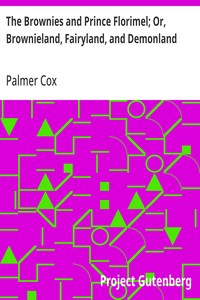
The Brownies and Prince Florimel; Or, Brownieland, Fairyland, and Demonland — Edition Insights
Fantasy Juvenile Worlds
42,062 recorded words. 1 minutes difference from this book's estimate.
View Gutenberg source #40502

The catalog record for The Gayton Scholarship: A School Story — Themes and Context provides practical reading context through 41,702 words, 3 hr 2 min estimated reading time, and 7 detected text sections.
The text analysis averages about 13.2 words per sentence, while the detected sections provide another way to judge how the source is divided.
Project Gutenberg metadata also associates the work with “Boys -- Conduct of life -- Juvenile fiction,” connecting these edition facts with the source record’s subject description.
Explore this collection
These alternatives are selected using recorded categories and estimated reading time.
About 183 minutes
Fantasy Juvenile Worlds
42,062 recorded words. 1 minutes difference from this book's estimate.
View Gutenberg source #40502About 186 minutes
Fantasy Juvenile Worlds
42,574 recorded words. 4 minutes difference from this book's estimate.
View Gutenberg source #43677About 178 minutes
Fantasy Juvenile Worlds
40,904 recorded words. 4 minutes difference from this book's estimate.
View Gutenberg source #55806Search stored excerpts and compare books → Choose by your preferences →
Choices use stored catalog measurements. Estimates vary with reading speed. A shared category is a catalog label, not a claim that two books have the same argument or literary quality.
Search reads excerpt text stored with this catalog and links to its associated Gutenberg record. The connection is stored in the site database; this tool does not recheck that every excerpt is word-for-word identical to that external record. Excerpt search does not cover every chapter and does not verify historical publication dates.
Catalog snapshot checked: 2026-09-26. Coverage: 97 public books, 97 available source excerpts.
Calculated from edition completeness, EPUB availability, text structure and catalogue metadata. Not a user rating.
Total of 100 points, scaled to a 2.5-5.0 range. Editions with an empty description or a missing EPUB file are not scored.
Public-domain source text
The source text is kept in the dedicated reader, separate from this catalogue record and its commentary.
The narrative voice in The Gayton Scholarship shifts markedly from the breezy, colloquial banter of the opening chapter—where Dick Boden teases Jim Hartland with phrases like “come on, old lazy-bones”—to a more somber, morally freighted tone as Jim’s integrity erodes. The early dialogue, punctuated by exclamations and affectionate nicknames (“the Angel”), establishes a schoolboy world of easy camaraderie. Later, the prose grows clipped and accusatory, as when Mr. Broad mutters, “I can’t believe it. … Some one stole a florin from the till last night, and Hartland must have been the thief.” This tonal shift mirrors Jim’s deteriorating choices.
Hayens uses a direct, omniscient narrator who occasionally interjects moral commentary, such as “This was a lie; but I warned you Jim had sadly deteriorated.” This technique keeps the reader alert to Jim’s ethical lapses. The narrator’s tone is not uniformly stern; early chapters employ playful asides (“He was a comical youngster, fond of all kinds of fun and frolic”). As the plot tightens, the narrator’s language becomes more judicial, weighing evidence: “It was very perplexing, but Mr. Broad did not like to tax the boy with theft.” The contrast between the two registers—jovial and forensic—creates a layered reading experience.
The story’s pace accelerates through short, punchy exchanges. In the opening, rapid-fire dialogue between Dick and Jim establishes character quickly. Later, the pace slows during Mr. Broad’s internal monologue, where repeated phrases (“I can’t believe it”) build suspense. The theft accusation scene relies on staccato sentences: “On his return the florin was gone, and, according to Jim’s own words, no customer had entered the shop.” Hayens also uses the threat of discovery—Curly’s veiled hints about “borrow from the till”—to quicken the reader’s anxiety. The rhythm of the prose thus mirrors Jim’s own mounting tension.
Small objects and phrases recur with accumulating significance. The “florin” first appears as a casual price, then becomes the focal point of suspicion. The nickname “the Angel,” initially a joke, acquires ironic weight as Jim’s honesty falters. The setting of the shop—first a place of work, then a site of potential crime—is described with increasing unease. Even the dog-rose Dick picks for Susie in chapter one contrasts with the later, grimmer flowers of moral decay. These repeated elements reward attentive readers and give the narrative a cohesive texture.
Readers may find it useful to track how Hayens signals Jim’s decline through small verbal cues—a lie told, a sixpence borrowed, a florin missing—rather than through dramatic confessions. The story’s moral architecture is built incrementally, and the narrator’s occasional direct addresses to the reader (“I warned you”) invite a collaborative judgment. Pay attention to the spaces between dialogue, where silence and hesitation speak as loudly as words.
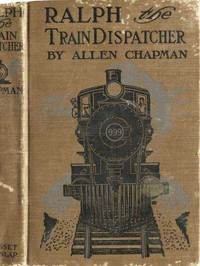
Reading about Jim’s quiet unraveling, how a single lie curls through everything, I remembered waiting for a train one grey afternoon, the way suspense thickens in ordinary spaces. Ralph, the Train Dispatcher; Or, The Mystery of the Pay Car — Reading Companion stirred that same hush, a held breath before the signal changes.
Capture what you thought, learned, and would like to remember.