About 18 minutes
The Tale of Two Bad Mice — A Reader’s Guide
Fantasy Juvenile Worlds
4,090 recorded words. 76 minutes difference from this book's estimate.
View Gutenberg source #45264
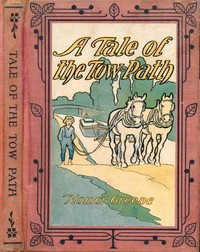
For A Tale of the Tow-Path — Reading Notes, the stored edition analysis reports 21,512 words, 1 hr 34 min estimated reading time, and 7 detected text sections.
The text analysis averages about 14.5 words per sentence, while the detected sections provide another way to judge how the source is divided.
Project Gutenberg metadata also associates the work with “Horses -- Juvenile fiction,” connecting these edition facts with the source record’s subject description.
Explore this collection
These alternatives are selected using recorded categories and estimated reading time.
About 18 minutes
Fantasy Juvenile Worlds
4,090 recorded words. 76 minutes difference from this book's estimate.
View Gutenberg source #45264About 178 minutes
Fantasy Juvenile Worlds
40,904 recorded words. 84 minutes difference from this book's estimate.
View Gutenberg source #55806About 182 minutes
Fantasy Juvenile Worlds
41,702 recorded words. 88 minutes difference from this book's estimate.
View Gutenberg source #46020Search stored excerpts and compare books → Choose by your preferences →
Choices use stored catalog measurements. Estimates vary with reading speed. A shared category is a catalog label, not a claim that two books have the same argument or literary quality.
Search reads excerpt text stored with this catalog and links to its associated Gutenberg record. The connection is stored in the site database; this tool does not recheck that every excerpt is word-for-word identical to that external record. Excerpt search does not cover every chapter and does not verify historical publication dates.
Catalog snapshot checked: 2026-09-26. Coverage: 97 public books, 97 available source excerpts.
Calculated from edition completeness, EPUB availability, text structure and catalogue metadata. Not a user rating.
Total of 100 points, scaled to a 2.5-5.0 range. Editions with an empty description or a missing EPUB file are not scored.
Public-domain source text
The source text is kept in the dedicated reader, separate from this catalogue record and its commentary.
Homer Greene opens A Tale of the Tow-Path with a boy alone in a cornfield, hoeing under a punishing June sun. The prose immediately establishes Joe Gaston's voice through his muttered complaints: "It aint fair!" he says, talking aloud to himself. Greene uses the landscape—a small lake, distant purple mountains—to mirror Joe's longing for freedom, but the real tension emerges from the boy's internal debate about whether to sneak away to fish. This early scene sets up a pattern of moral choices that will play out along the canal.
The novel's first chapter is titled "The Result of a Whipping," and Greene wastes no time showing how a single act of punishment propels the plot. Joe's father is absent, and the boy's fear of a thrashing drives him to run away. Greene does not depict the whipping itself; instead, he focuses on Joe's anticipation and the aftermath. The author's choice to keep the violence offstage makes the boy's panic more palpable. Joe's flight is not a grand adventure but a desperate escape, and Greene anchors it in concrete details: the rough, stony ground, the oppressive heat, the boy's longing for fishing and berrying. The dialogue, rendered in colloquial contractions like "dassent" and "aint," gives Joe an authentic, rural voice that contrasts with the more formal narration.
Old Charlie is more than a horse; he is Joe's confidant and moral anchor. Greene develops their bond through small, physical gestures: Joe puts his arm over the horse's neck, twines his hand in the wet mane, and talks to him "in the old familiar way." The horse responds with mute appeal, turning his head to gaze at Joe when work becomes too hard. Greene's description of Old Charlie's habit—stopping and looking back—is a recurring motif that signals the animal's exhaustion and the boy's empathy. When Captain Bill orders Joe to whip the horse, the boy's refusal becomes a turning point. Greene writes that Joe "passed the handle of the whip to the angry man" and says, "I won't." This moment crystallizes the central conflict: Joe's loyalty to Old Charlie versus the captain's authority.
Captain Bill speaks in brusque, imperative sentences: "You ten' to them hosses," "Mind your business," "He's my hoss now!" Greene uses this clipped dialogue to characterize the captain as a man accustomed to unquestioning obedience. His physical aggression—grabbing Joe's collar, dragging him to his post—contrasts sharply with Joe's hesitant, internalized speech. The captain's world is one of labor and discipline, where a horse is a tool and a boy is a hand. Greene does not make him a villain; instead, he presents him as a product of the canal's harsh economy. The rain, mud, and wind on the tow-path become extensions of the captain's relentless demands, and Joe's struggle is as much against the elements as against the man.
Greene's setting is not just background but an active force. The tow-path is muddy, the rain falls in fierce gusts, and the boat bears down on horse and boy with its own momentum. The author uses these physical details to heighten tension: when Old Charlie stops, the boat's impetus carries it forward, forcing Joe to act. The canal itself is a narrow, confined world where escape is difficult. Greene's descriptions are precise—the "unruffled surface" of the lake, the "line of purple mountains"—but they also serve to isolate Joe. The beauty of the landscape is always just out of reach, a reminder of the freedom he has lost. By grounding the story in the sensory realities of the tow-path, Greene makes the moral dilemmas feel immediate and physical.
Readers should pay close attention to the moments when Joe speaks to himself or to Old Charlie. Greene uses these soliloquies to reveal the boy's inner life without authorial commentary. The dialogue, with its regional flavor and emotional directness, carries much of the story's weight. Notice also how the horse's behavior—stopping, turning, gazing—becomes a silent counterpoint to the human voices. This is a story told as much through gesture and landscape as through plot.
Reading Greene's tow-path tale, I kept thinking about how Joe's loyalty to Old Charlie transcended every rule he was supposed to follow. That quiet friction between duty and devotion reminds me of the quieter, more academic struggles in The Gayton Scholarship: A School Story — Themes and Context, where ambition similarly bends around personal bonds. Both feel like slow water moving beneath ice.
Use these questions to collect your thoughts before moving on.