About 257 minutes
Jack Hardy: A Story of English Smugglers in the Days of Napoleon — Background and Themes
Fantasy Juvenile Worlds
58,975 recorded words. 1 minutes difference from this book's estimate.
View Gutenberg source #43334
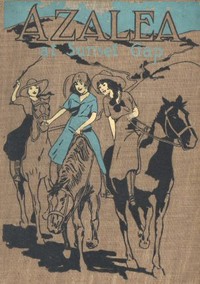
This digital edition of Azalea at Sunset Gap — A Closer Reading is described by source-level measurements including 59,269 words, 4 hr 18 min estimated reading time, and 6 detected text sections.
The text analysis averages about 15.7 words per sentence, while the detected sections provide another way to judge how the source is divided.
Project Gutenberg metadata also associates the work with “Girls -- Juvenile fiction,” connecting these edition facts with the source record’s subject description.
Explore this collection
These alternatives are selected using recorded categories and estimated reading time.
About 257 minutes
Fantasy Juvenile Worlds
58,975 recorded words. 1 minutes difference from this book's estimate.
View Gutenberg source #43334About 256 minutes
Fantasy Juvenile Worlds
58,674 recorded words. 2 minutes difference from this book's estimate.
View Gutenberg source #38969About 261 minutes
Fantasy Juvenile Worlds
59,870 recorded words. 3 minutes difference from this book's estimate.
View Gutenberg source #47966Search stored excerpts and compare books → Choose by your preferences →
Choices use stored catalog measurements. Estimates vary with reading speed. A shared category is a catalog label, not a claim that two books have the same argument or literary quality.
Search reads excerpt text stored with this catalog and links to its associated Gutenberg record. The connection is stored in the site database; this tool does not recheck that every excerpt is word-for-word identical to that external record. Excerpt search does not cover every chapter and does not verify historical publication dates.
Catalog snapshot checked: 2026-09-26. Coverage: 97 public books, 97 available source excerpts.
Calculated from edition completeness, EPUB availability, text structure and catalogue metadata. Not a user rating.
Total of 100 points, scaled to a 2.5-5.0 range. Editions with an empty description or a missing EPUB file are not scored.
Public-domain source text
The source text is kept in the dedicated reader, separate from this catalogue record and its commentary.
The opening chapter of Azalea at Sunset Gap introduces three girls—Azalea McBirney, Annie Laurie Pace, and Carin Carson—riding along a red clay road “that led no-where-in-particular.” The prose lingers on sensory details: blossoming dogwood, snow-white clouds, and a balmy air carrying “delicious perfumes.” Carin explains she does not want to accompany her parents to Europe, fearing she would become “Little-Carin-in-the-Way.” This early dialogue reveals a concern with adult expectations and the girls’ desire for independence.
The catalog lists “Girls -- Juvenile fiction” as a primary subject, and the excerpts do feature three girl protagonists. However, the girls’ agency is often mediated by adult figures. In the opening, Carin’s decision to stay behind is framed as a response to her mother’s potential inconvenience. Later, Azalea’s teaching role is shown through her interactions with the fiddler Haystack Thompson, who calls her “honey-bird” and takes a fatherly tone. The girls are active—Azalea marches with determination—but their actions are frequently guided or commented upon by male characters like Haystack and Keefe O’Connor. The catalog label is accurate but does not capture the extent to which adult voices shape the narrative.
The catalog specifies “Blue Ridge Mountains -- Juvenile fiction” and “North Carolina -- Juvenile fiction.” The excerpts confirm a mountain setting: the road “led no-where-in-particular,” and later scenes take place at Ravenel School and Aunt Zillah’s supper table. Yet the setting is not merely scenic. Haystack Thompson describes his neighborhood as “these yere mountains in all their outcroppings in the two Carolinas,” and he monitors local events like “earthquakes, funerals, singings, weddings, corn huskings.” The mountains are a backdrop for social networks and conflicts, such as the boy kept from school. The catalog subjects do not convey this active, community-centered use of place.
Haystack Thompson appears in multiple excerpts as a fiddler, rescuer, and commentator. He leads a march from the schoolhouse with his violin, producing sounds of “victorious feet; feet marching in brotherhood.” Later, he explains his inquisitiveness: “’Tain’t the kind of inquisitiveness that takes men to big towns … It’s jest the kind that has to know what’s going on in the neighborhood.” He learns of a boy playing with a snake instead of attending school, and he facilitates a rescue. Haystack’s voice—colloquial, rhythmic, and authoritative—dominates these passages. The catalog subjects do not mention him, yet he is central to the excerpts’ action and tone.
Readers should note that the excerpts represent only a fraction of the novel’s 59,269 words. The catalog subjects provide a starting point, but the text itself emphasizes community dynamics and the interplay between youthful initiative and adult guidance. Pay attention to how minor characters like Haystack and Paralee Panther are introduced and how their stories intersect with the main plot.
Years among these shelves taught me that even wild country stories hold a quiet kinship. In Azalea at Sunset Gap, Haystack Thompson's gruff sheltering of that boy reminds me of another unlikely guardian, the old plainsman in The Trail Boys of the Plains; Or, The Hunt for the Big Buffalo — A Reader’s Guide. Both books whisper the same truth: a solitary man, a lost child, and goodwill crossing a grassy divide.
Build a private reading journal entry for this title.