About 210 minutes
The Border Boys with the Texas Rangers — Context and Discussion
Fantasy Juvenile Worlds
48,151 recorded words. 2 minutes difference from this book's estimate.
View Gutenberg source #49002
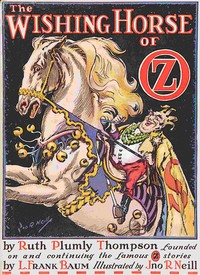
For The Wishing Horse of Oz — Edition Insights, the stored edition analysis reports 47,754 words, 3 hr 28 min estimated reading time, and 7 detected text sections.
The text analysis averages about 17.6 words per sentence, while the detected sections provide another way to judge how the source is divided.
Project Gutenberg metadata also associates the work with “Oz (Imaginary place) -- Juvenile fiction,” connecting these edition facts with the source record’s subject description.
Explore this collection
These alternatives are selected using recorded categories and estimated reading time.
About 210 minutes
Fantasy Juvenile Worlds
48,151 recorded words. 2 minutes difference from this book's estimate.
View Gutenberg source #49002About 211 minutes
Fantasy Juvenile Worlds
48,328 recorded words. 3 minutes difference from this book's estimate.
View Gutenberg source #48537About 216 minutes
Fantasy Juvenile Worlds
49,569 recorded words. 8 minutes difference from this book's estimate.
View Gutenberg source #56073Search stored excerpts and compare books → Choose by your preferences →
Choices use stored catalog measurements. Estimates vary with reading speed. A shared category is a catalog label, not a claim that two books have the same argument or literary quality.
Search reads excerpt text stored with this catalog and links to its associated Gutenberg record. The connection is stored in the site database; this tool does not recheck that every excerpt is word-for-word identical to that external record. Excerpt search does not cover every chapter and does not verify historical publication dates.
Catalog snapshot checked: 2026-09-26. Coverage: 97 public books, 97 available source excerpts.
Calculated from edition completeness, EPUB availability, text structure and catalogue metadata. Not a user rating.
Total of 100 points, scaled to a 2.5-5.0 range. Editions with an empty description or a missing EPUB file are not scored.
Public-domain source text
The source text is kept in the dedicated reader, separate from this catalogue record and its commentary.
The King of Skampavia frowns at a heap of bags and bales, extracting a dry fig with distaste—an opening that immediately establishes a ruler dissatisfied with his realm. Thompson's narrative voice, direct and slightly wry, sets the tone for a story that balances royal complaints with magical intrigue. The early chapters introduce a talking horse and a merchant, hinting at the wish-granting horse of the title.
Later excerpts plunge Dorothy and Pigasus into a predicament: after being ducked under the Black River, both turn black. In a witch's dark laboratory, they debate whether water can destroy this witch as it did the Wicked Witch of the West. The scene showcases Thompson's integration of Baum's lore with her own twists, as Dorothy's silver shoes and the Good Witch's kiss are referenced but given new context.
The story begins not in Oz but in Skampavia, where the king complains that his tribute is insufficient. The first chapter's title, "The King of Skampavia," and the opening line—"Is this all?"—immediately signal a character driven by appetite and discontent. Thompson wastes no time establishing the king's personality through his actions: he "gingerly extracted a fig" and found it dry. The early pages introduce a talking horse, a staple of Oz fantasy, but here the horse belongs to the king, suggesting a dynamic of ownership and perhaps rebellion. The chapter list reveals that the king's horse will later bargain (Chapter 18), so readers should note how the animal's role evolves from royal property to active agent.
A middle excerpt finds Dorothy and Pigasus turned black after being ducked under the Black River by General Blotz. This physical change is not merely cosmetic; it alters how they perceive the witch's dark laboratory. Dorothy notes that they can now see in the dark room "as well as in the forest," a detail that Thompson uses to explore the limits of the transformation. The dialogue between Dorothy and Pigasus reveals their differing attitudes: Pigasus laments the loss of his "satiny pink" color, while Dorothy pragmatically observes that "maybe there's no harm in being black." This exchange, combined with the later extinguishing of the dark lantern, creates a tense atmosphere where visibility becomes a plot point.
Thompson's handling of magic in the excerpts is precise and rule-bound. Dorothy recalls that water melted the Wicked Witch of the West, and Pigasus seizes on this as a potential weapon. However, the laboratory contains "no water of any kind or even a pail," forcing them to reconsider. The room itself is described with specific objects: "ebony cabinets," a "great black crystal ball," and a "dark lantern" casting "curious luminous black rays." These details ground the fantasy in a tangible setting. The witch Gloma is initially perceived as "really good and beautiful," complicating the simple good-versus-evil framework. Readers should watch for how Thompson subverts expectations about who is trustworthy.
The book opens with a letter from Thompson to her readers, a hallmark of the Oz series. She addresses "Dear Boys and Girls" directly, promising "two very mysterious mysteries" and mentioning that "Dorothy has most of the strange adventures in this book." This framing positions the novel as part of an ongoing conversation, with Thompson referencing previous characters like Pigasus and hinting at future books. The chapter titles—such as "A Great Celebration in Oz" and "The Emperor of Oz"—suggest a plot that moves between Skampavia and Oz, with multiple kingdoms and rulers. The serialized structure means that each chapter likely ends on a hook, encouraging readers to continue.
First-time readers of The Wishing Horse of Oz will benefit from paying attention to the early establishment of rules—both magical and social. The king's greed, the horse's wishes, and Dorothy's transformation all set up conflicts that later chapters will resolve. Thompson's style rewards careful reading of dialogue, where characters often reveal their motivations through banter. The book stands as a self-contained adventure but also fits into the larger Oz chronology, so note any references to past events or characters.
Once, shelving late, I held Thompson’s playful witch and thought of another mountain girl, her own quiet magic woven through blue ridges. Both whispered of wishes finding their homes, not in gold, but in steady hearts. There’s a kinship there, like old friends nodding across the stacks: Azalea: The Story of a Little Girl in the Blue Ridge Mountains — Inside the Classic. Each reminds me how courage wears a gentle, patient face.
Answer a few questions and save a private reflection on this device.