About 210 minutes
The Border Boys with the Texas Rangers — Context and Discussion
Fantasy Juvenile Worlds
48,151 recorded words. 1 minutes difference from this book's estimate.
View Gutenberg source #49002
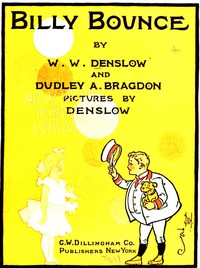
The catalog record for Billy Bounce — Key Ideas to Explore provides practical reading context through 48,328 words, 3 hr 31 min estimated reading time, and 7 detected text sections.
The text analysis averages about 13.5 words per sentence, while the detected sections provide another way to judge how the source is divided.
Project Gutenberg metadata also associates the work with “Fantasy fiction,” connecting these edition facts with the source record’s subject description.
Explore this collection
These alternatives are selected using recorded categories and estimated reading time.
About 210 minutes
Fantasy Juvenile Worlds
48,151 recorded words. 1 minutes difference from this book's estimate.
View Gutenberg source #49002About 208 minutes
Fantasy Juvenile Worlds
47,754 recorded words. 3 minutes difference from this book's estimate.
View Gutenberg source #55851About 216 minutes
Fantasy Juvenile Worlds
49,569 recorded words. 5 minutes difference from this book's estimate.
View Gutenberg source #56073Search stored excerpts and compare books → Choose by your preferences →
Choices use stored catalog measurements. Estimates vary with reading speed. A shared category is a catalog label, not a claim that two books have the same argument or literary quality.
Search reads excerpt text stored with this catalog and links to its associated Gutenberg record. The connection is stored in the site database; this tool does not recheck that every excerpt is word-for-word identical to that external record. Excerpt search does not cover every chapter and does not verify historical publication dates.
Catalog snapshot checked: 2026-09-26. Coverage: 97 public books, 97 available source excerpts.
Calculated from edition completeness, EPUB availability, text structure and catalogue metadata. Not a user rating.
Total of 100 points, scaled to a 2.5-5.0 range. Editions with an empty description or a missing EPUB file are not scored.
Public-domain source text
The source text is kept in the dedicated reader, separate from this catalogue record and its commentary.
From its first chapter, Billy Bounce announces a voice that delights in wordplay and absurdity. The hero’s bouncing suit—a literal device for propulsion—sets the tone for a story where physical laws are bent for comic effect. The narrative frequently breaks into dialogue that parodies formal speech, as when Billy addresses King O’Fudge with a string of flattering titles, only to be accused of treason for saying “your Honor.” The prose moves briskly between slapstick action and verbal sparring, often undercutting its own fantastical settings with mundane details: a herald blows a wheezy fish horn, and the king’s horse is blind.
The language in Billy Bounce is consistently playful, relying on puns and exaggerated formalities. The chapter titles themselves signal this: “Dark Plot of Nickel Plate, the Polished Villain” and “Adventures in Eggs-aggeration” set expectations for a story that winks at the reader. Inside, the dialogue often hinges on misunderstandings of titles and names. When Billy calls the king “your Honor,” the herald whispers “That’s Lèse Majesty,” and Billy innocently replies, “Oh! is that his name?” This pattern repeats, creating a rhythm of confusion and correction that drives the comedy.
The narrative voice also enjoys deflating grandeur. The “Comic Paper Irish King” is described as “faded, worn, torn, uncut, unshaven,” and his retinue rides “the lame, the halt, and the blind.” The prose does not linger on description but cuts quickly to the next absurdity, keeping the pace brisk. The effect is a story that feels like a series of vaudeville sketches, each built around a linguistic joke or a visual gag.
The story’s pace is driven by rapid exchanges and quick scene changes. In the excerpt from O’Fudge’s kingdom, dialogue carries most of the narrative weight. The herald’s repeated “Out of the way” and Billy’s casual retorts create a back-and-forth that mimics the rhythm of a comic routine. The action is minimal—Billy stands, the king rides up—but the verbal sparring fills the space with energy.
This pattern suggests a narrative that values momentum over description. When Billy lands in a new location, the text moves directly to an encounter, often with a character who speaks in a distinctive voice. The “Horn Man” wheezes and calls out; the king affects a stage-Irish dialect. These vocal tics differentiate characters quickly, allowing the story to shift from one absurd situation to the next without slowing down for exposition. The result is a fast-moving tale where the pleasure comes from the next joke rather than from a sustained plot.
The preface declares an intention to “eliminate deceit and gore” and to suggest that “fear alone can harm them.” This moral purpose is reflected in the narrative voice, which treats threats as ridiculous rather than menacing. The “Bogie Man” is mentioned but not described as frightening; instead, the story’s villains are deflated by their own pomposity. King O’Fudge, for all his talk of treason, is a figure of fun, and his court is a collection of decrepit beggars.
The narrator’s tone remains light and ironic, never allowing the reader to feel real danger. When Billy is accused of “Lèse Majesty,” the response is a joke, not a punishment. This consistent undercutting of tension aligns with the stated goal of showing that fear is the only true harm. The voice thus becomes a tool for the moral, demonstrating through its own playfulness that the story’s world is one where wit and good humor prevail over threats.
Readers will find that Billy Bounce rewards attention to its verbal play and its satirical edge. The story’s episodic structure means it can be enjoyed in short bursts, but the cumulative effect of its puns and parodies builds a coherent comic world. Pay particular attention to how the narrator’s tone shifts between scenes—sometimes deadpan, sometimes exaggerated—as this variation is key to the book’s charm.
That rainy afternoon, I laughed at Billy’s deflated suit and the absurd logic of O’Fudge’s court, yet felt a quiet ache beneath the puns. Later, almost by accident, I opened Azalea at Sunset Gap — A Closer Reading, and found that same tender strangeness, but softened into hills and twilight, like the echo of a joke after the room grows still.
Save your reaction, strongest insight, and memorable passage.